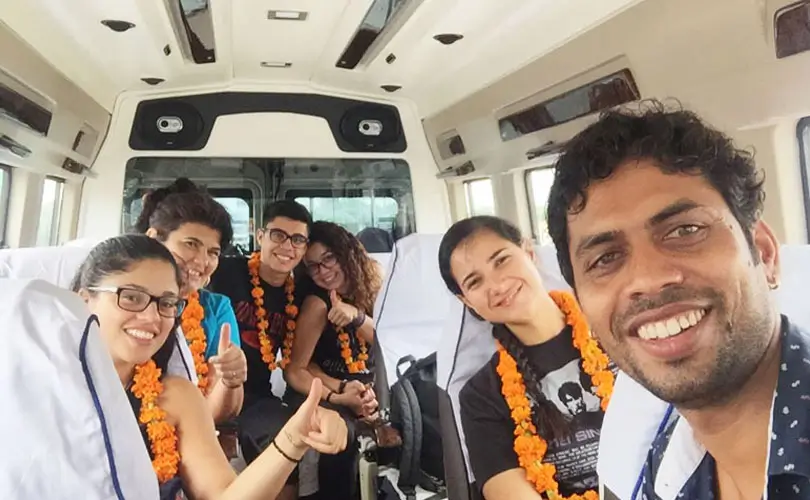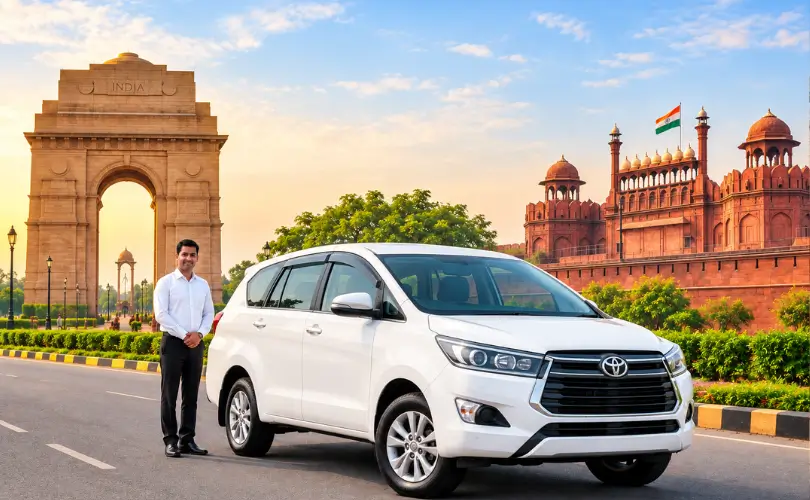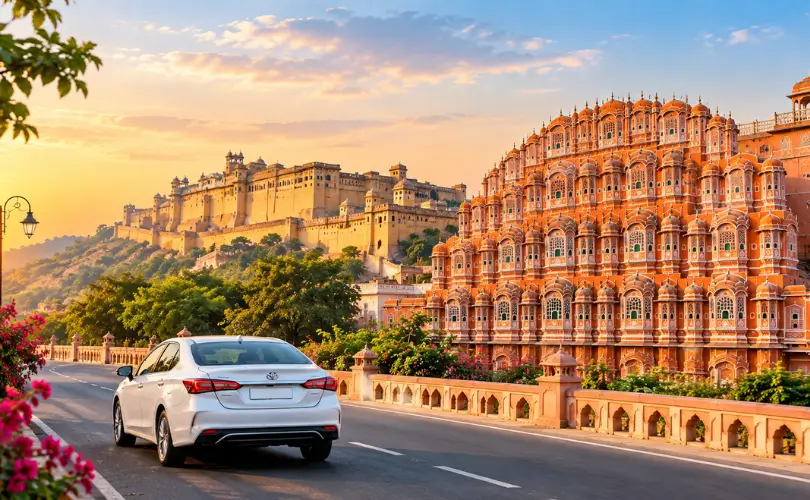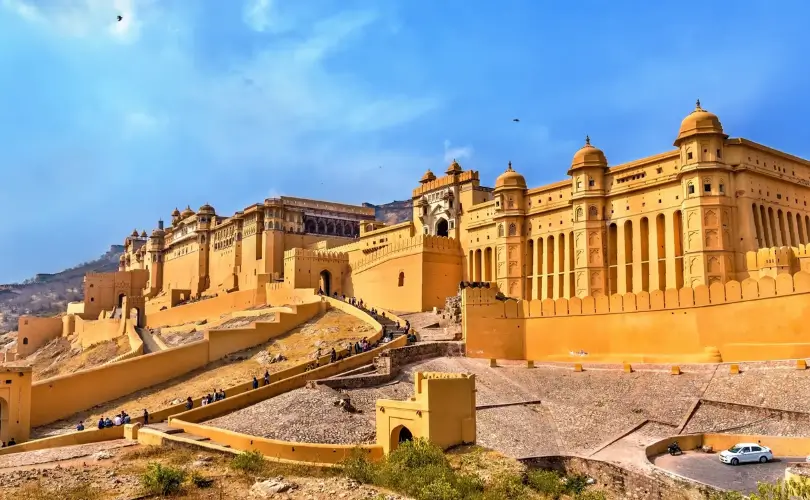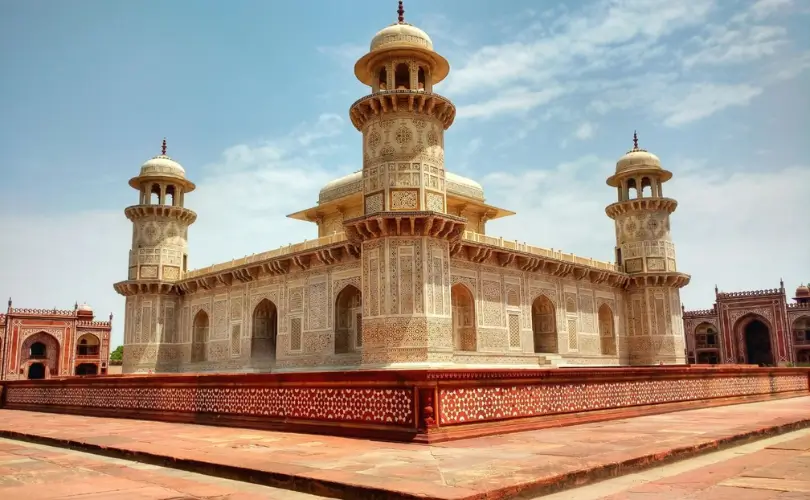
Traveling alone in India gives a visitor complete control over the pace of the trip, hotel choices, sightseeing priorities, meal times, and the amount of time spent in each city. For a woman making her first solo journey to India, however, transportation and day-to-day logistics deserve more attention than they would on a short city break where every attraction is within walking distance. Delhi, Agra, and Jaipur are large, busy destinations, and a typical itinerary involves airports, hotels, crowded monuments, several hundred kilometres of intercity road travel, early morning sightseeing, and movement through unfamiliar areas.
A private India tour for solo female travelers can reduce much of that logistical work. A pre-arranged driver can meet the traveler at Delhi Airport, provide transportation for sightseeing, drive between Delhi, Agra, and Jaipur, wait while monuments are visited, and take the guest directly to the next hotel. Professional local guides can join separately in each city to provide historical commentary and practical assistance inside major attractions.
Hiring a private driver does not mean a traveler should stop using normal personal safety precautions, and no transport arrangement can guarantee that an unexpected problem will never occur. The value is greater predictability. Instead of arranging an unfamiliar taxi after every monument or reaching a railway station late in the evening and searching for onward transport, the traveler already knows who is responsible for the next road sector.
For solo travelers, the biggest disadvantage is price. A couple can divide the cost of a private sedan and guide between two people, while one traveler pays the entire vehicle charge. However, private road transportation in India can still be reasonably priced compared with private chauffeured travel in the United Kingdom, United States, Australia, or much of Western Europe.
A first-time solo visitor does not necessarily need a guide beside her every hour of the holiday. A more practical arrangement is often a dedicated private car and driver in India for transportation, combined with professional guides at the major historical destinations where specialist knowledge genuinely adds value.
A private driver primarily solves transportation problems. The driver is not a personal security officer, tour escort, hotel representative, or professional monument guide unless those services have been specifically contracted. The driver's core responsibility is to operate the vehicle safely, handle the agreed road itinerary, coordinate pickups, manage parking, and transport the traveler and luggage between destinations.
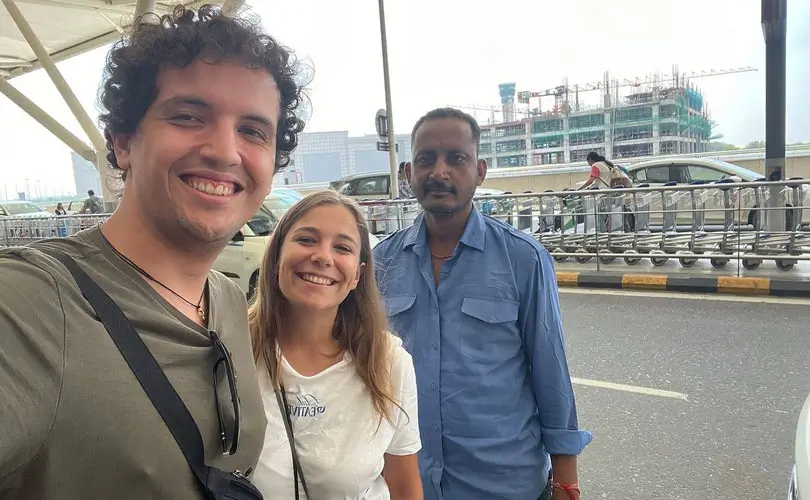
That role becomes particularly useful immediately after arrival. A solo traveler landing at Indira Gandhi International Airport after a long international flight can have a pre-arranged Delhi Airport private pickup rather than deciding on transportation while tired and carrying luggage. The pickup instructions should state where the traveler meets the representative or driver, and the operator should have the correct flight number so delays can be handled appropriately.
Once the traveler reaches the hotel, the same principle applies to sightseeing. Delhi's major attractions are spread across a wide area. A private vehicle can collect the guest from the hotel, drop her near the appropriate entrance, and remain available for the next stop. There is no need to repeatedly negotiate fares or explain the next destination to a new driver.
The advantage becomes even greater on intercity routes. Delhi to Agra is approximately 220 to 230 kilometres from central areas and commonly requires around three to four hours under reasonable road conditions. Agra to Jaipur is roughly 240 kilometres, while Jaipur to Delhi is around 270 to 300 kilometres depending on the exact route and hotel locations. These are substantial road sectors, particularly for someone unfamiliar with the country.
A female solo Golden Triangle tour with private driver keeps those sectors within one organized transportation arrangement. Large luggage can remain in the vehicle during the journey, rest stops can be made when required, and the traveler is delivered directly to the next hotel.
There is also a practical communication advantage. After several days, the traveler and driver understand the normal pickup routine, luggage requirements, preferred rest frequency, and general schedule. That continuity can be more comfortable than beginning a new transportation interaction every few hours.
The traveler should still keep the operator's main contact number separately from the driver's number. If a problem arises with the vehicle or driver, there should be someone else to contact.
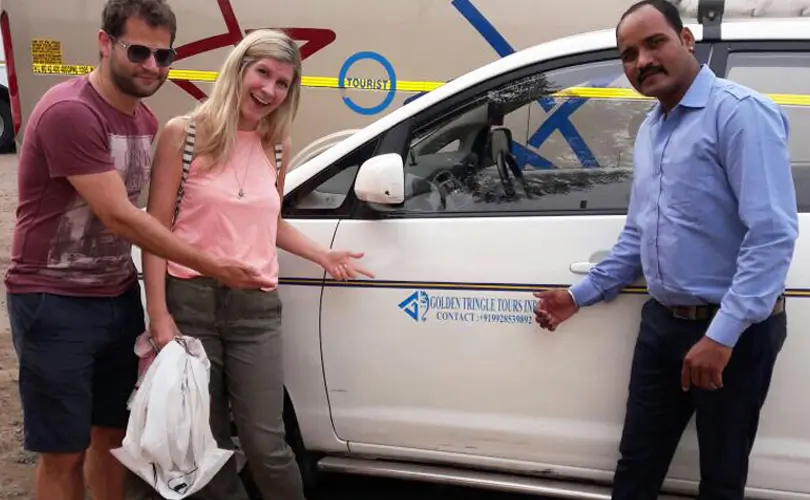
The driver's name, phone number, and vehicle details should ideally be shared before the service begins or as soon as operationally available. If the operator changes the driver during a multi-city route, the traveler should be informed rather than being surprised by an unknown vehicle at the hotel.
Private transport also allows a solo traveler to reject unwanted stops. If shopping is not part of the requested itinerary, the traveler can state that clearly. Jaipur, Delhi, and Agra have worthwhile textile, jewelry, carpet, marble, and handicraft businesses, but no private sightseeing day should depend on compulsory retail visits.
A solo traveler pays for the complete vehicle rather than one seat, so private driver India cost should be considered at the beginning of the budget.
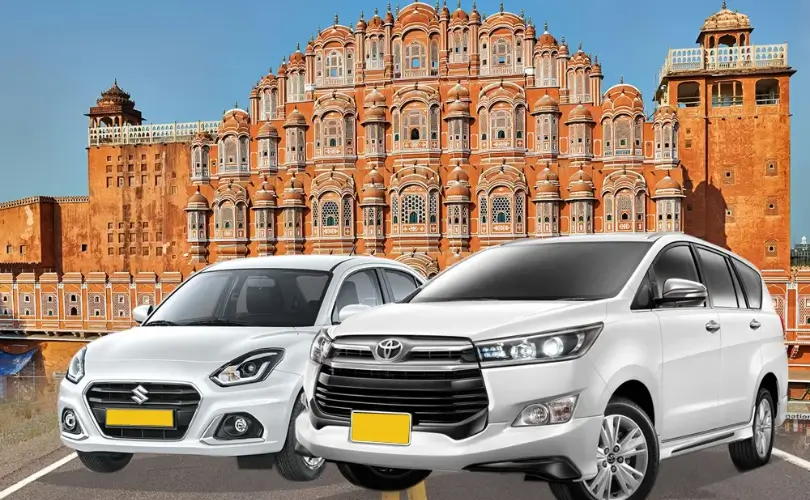
For a multi-day Golden Triangle journey, a sedan is usually the most economical private vehicle. A five-day Delhi–Agra–Jaipur road arrangement may broadly cost around ₹20,000 to ₹30,000 for a sedan, depending on mileage, pickup and drop locations, total duty, road charges, and service conditions.
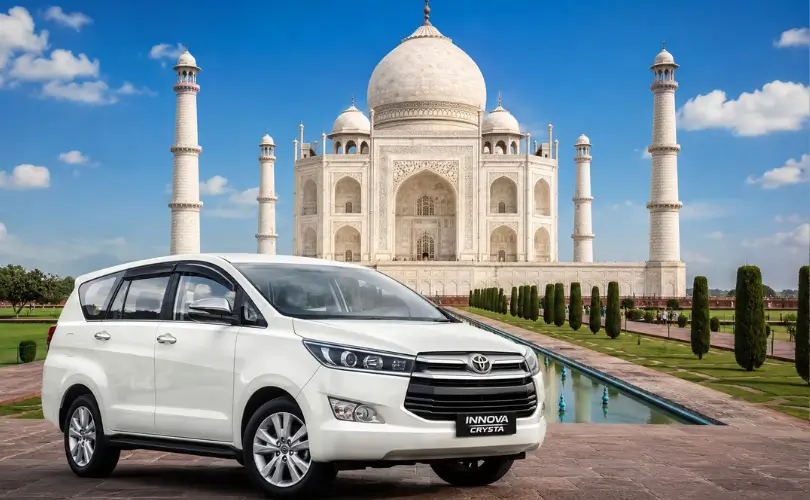
An Innova-type vehicle may cost around ₹30,000 to ₹45,000, while an Innova Crysta can broadly cost approximately ₹35,000 to ₹50,000 or more for a similar multi-day duty.
A solo traveler usually does not need an Innova unless she carries substantial luggage, wants considerably more space, or simply prefers the higher vehicle category. A clean, well-maintained, air-conditioned sedan is sufficient for many individual travelers.
For local sightseeing, costs are lower. A private sedan for a full day in Delhi, Agra, or Jaipur can broadly fall around ₹3,000 to ₹5,500, depending on the city, included kilometres, duty hours, parking, and exact itinerary.
The important issue is whether the quoted amount is genuinely close to the final payable amount.
Ask whether fuel, tolls, parking, driver allowance, interstate charges, and applicable taxes are included. If the driver remains with the traveler for several nights, ask whether driver accommodation and related operating costs are already covered by the quotation.
A cheap base fare can become much less attractive after these items are added.
The booking should also state whether there is a daily mileage or duty-hour limit. A traveler may decide to have dinner outside the hotel after sightseeing or request an additional evening activity. If the car exceeds the agreed hours, overtime charges may apply.
Ask for the rate before the trip.
A five-day sedan costing ₹25,000 works out at around ₹5,000 per day before considering hotels, guides, meals, and monument tickets. For a solo international traveler who values door-to-door transportation, that can be a reasonable part of the total holiday budget.
The driver should never be expected to remain awake indefinitely simply because the vehicle is privately booked. If a day begins with a sunrise Taj Mahal visit and ends with a late-night road transfer, safe driver rest must remain part of the schedule.
A private guide for solo female travelers in India can be valuable, but there is little reason to pay for a guide to accompany the traveler during every meal, hotel stay, and road transfer unless a fully escorted service is specifically desired.
Local professional guides are most useful during sightseeing.
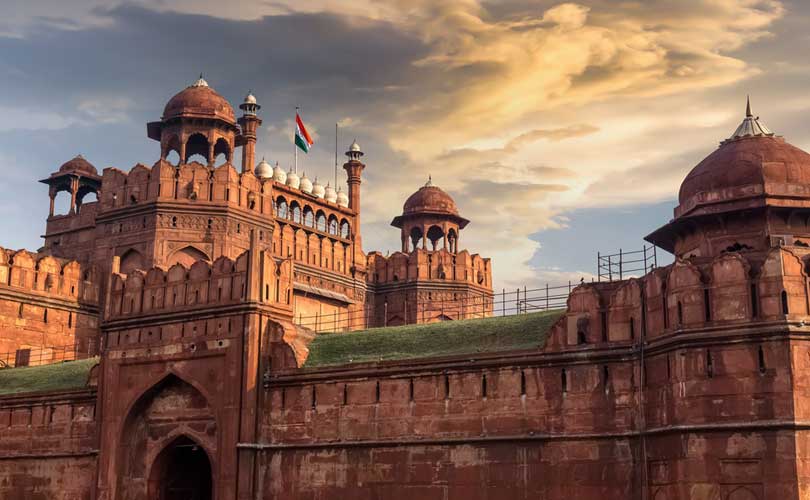
Delhi contains monuments and neighborhoods from several historical periods, and a guide can help connect Old Delhi, Mughal sites, Sultanate architecture, colonial New Delhi, and modern city landmarks. A private guide can also make movement through crowded areas easier for someone on a first visit.
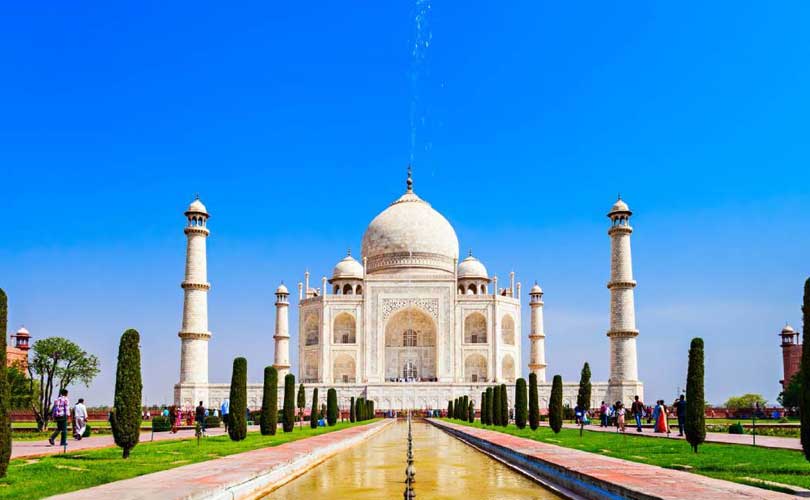
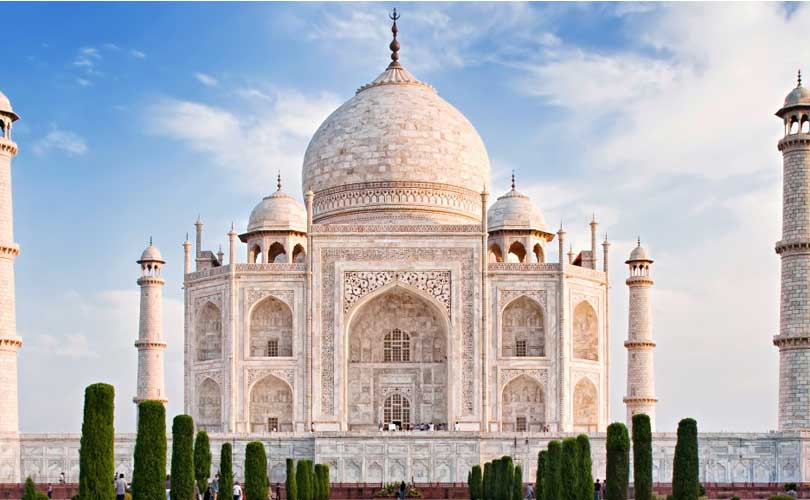
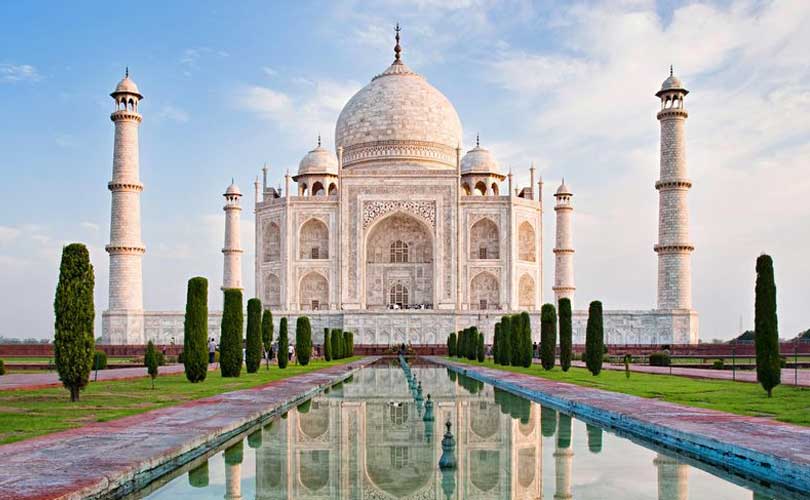
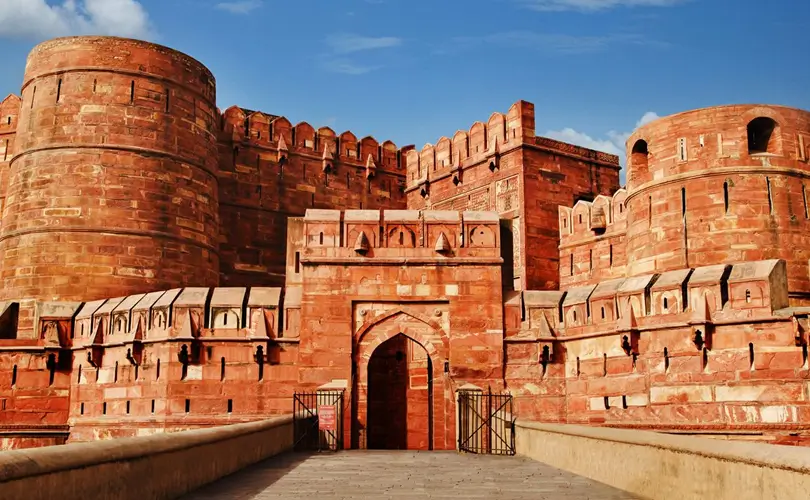
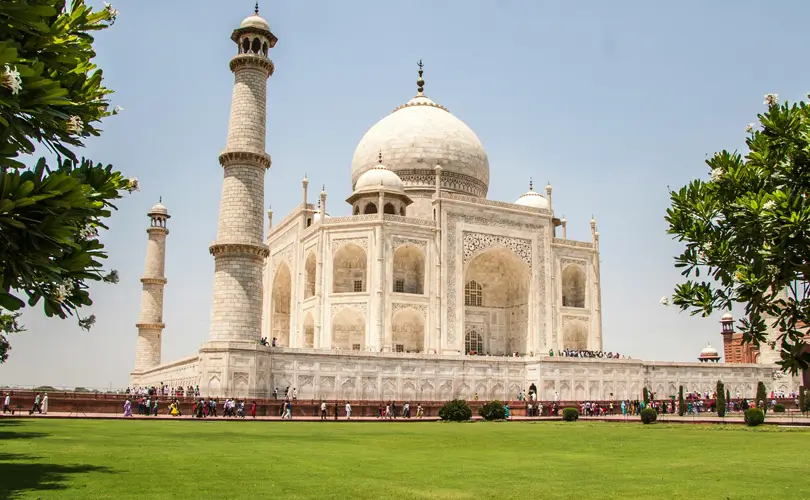
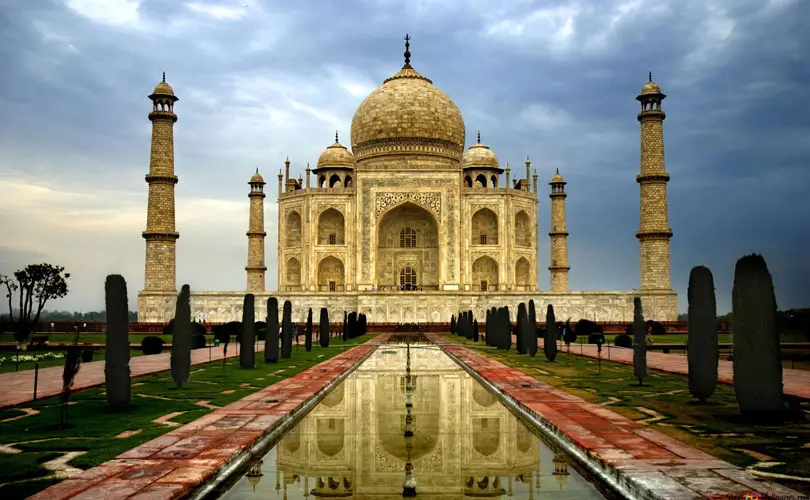
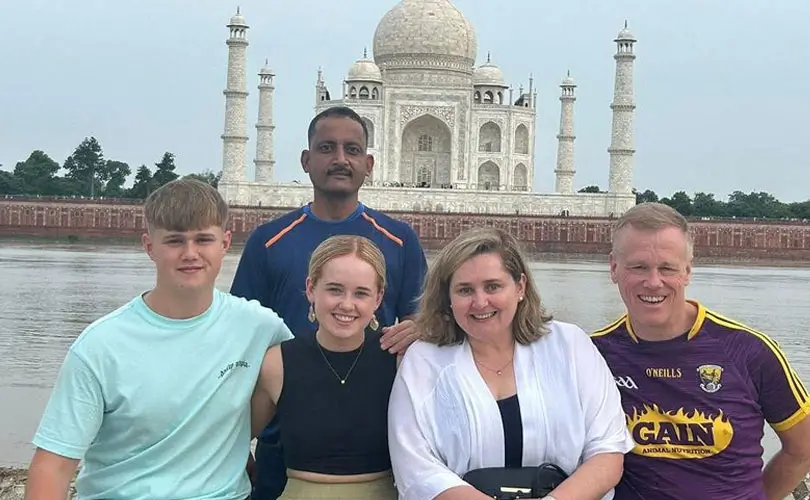
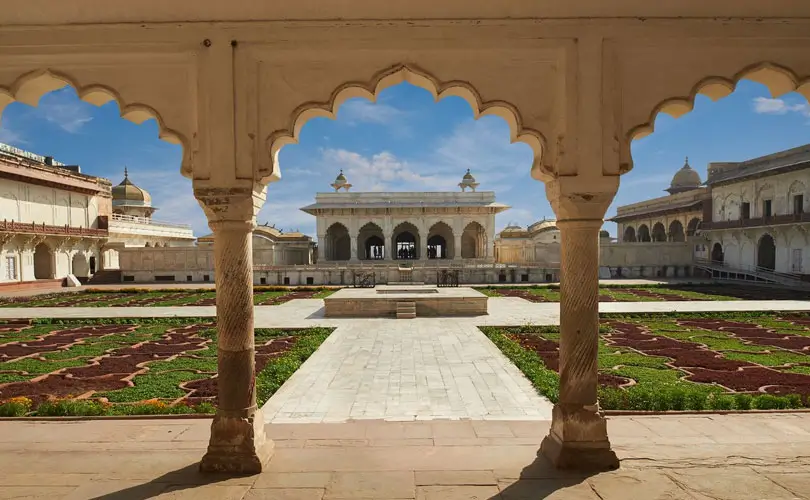
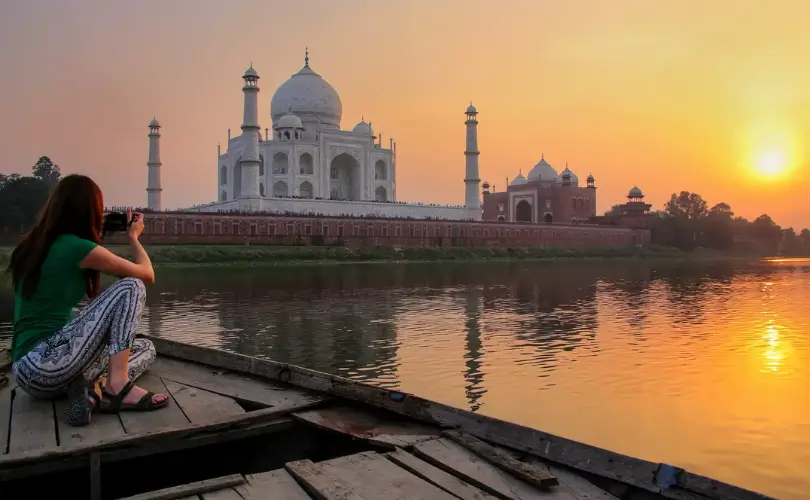
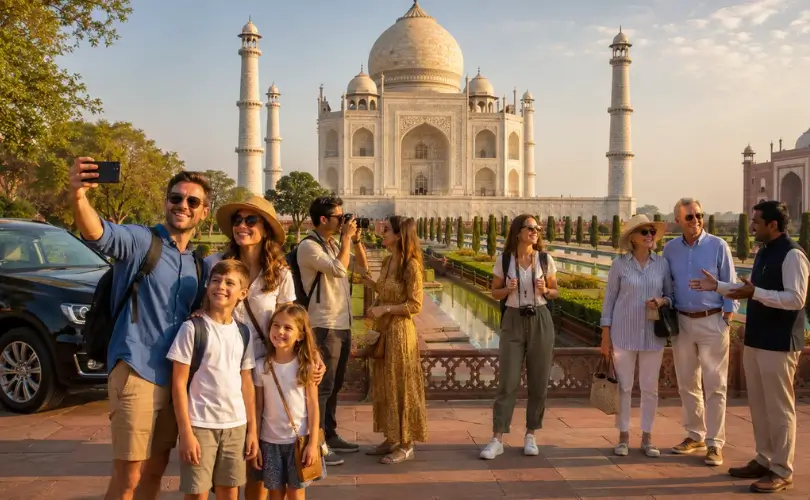
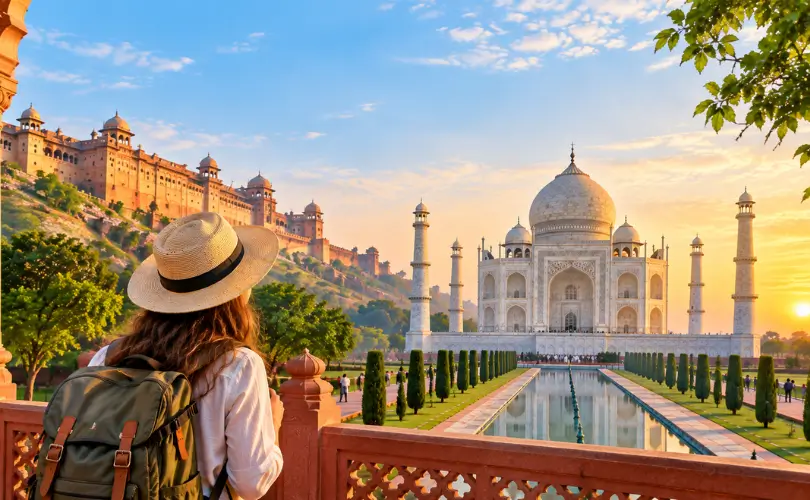
Agra is another city where professional guiding adds clear value. At the Taj Mahal, a guide can explain the history of Shah Jahan and Mumtaz Mahal, marble inlay work, architectural symmetry, calligraphy, garden layout, and the purpose of surrounding buildings. At Agra Fort, the guide can connect the imperial complex with the broader Mughal story.
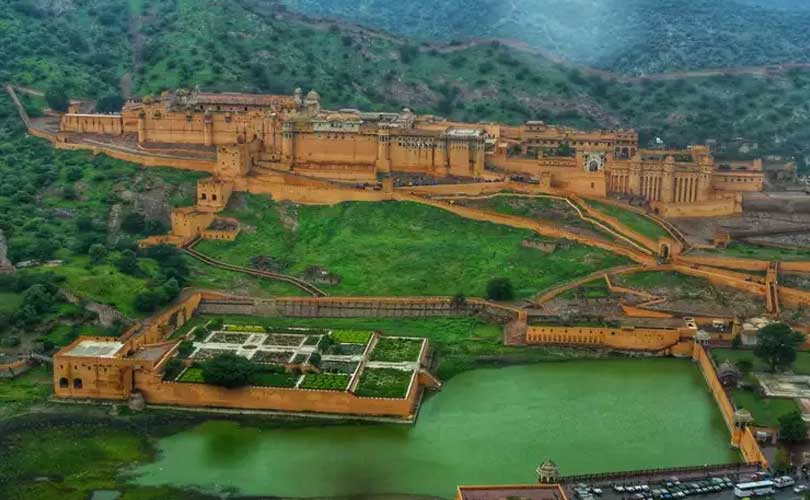
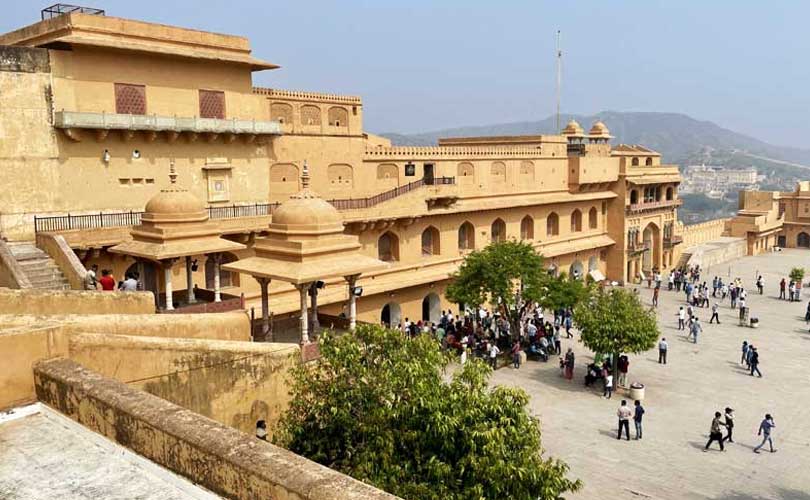
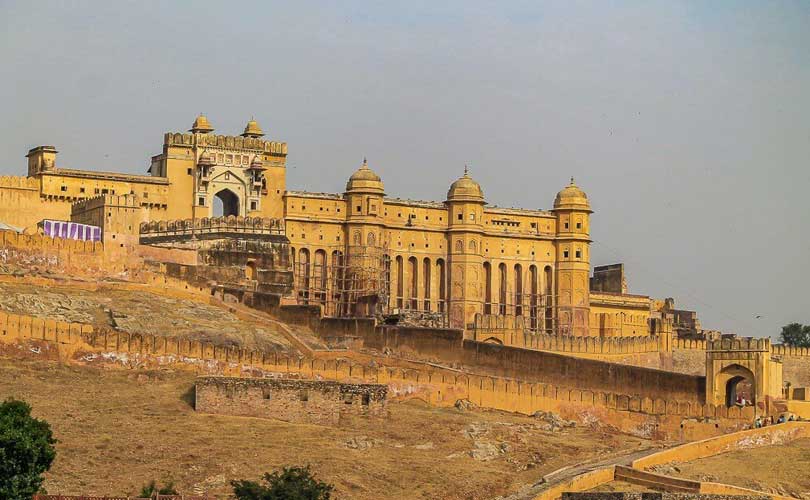
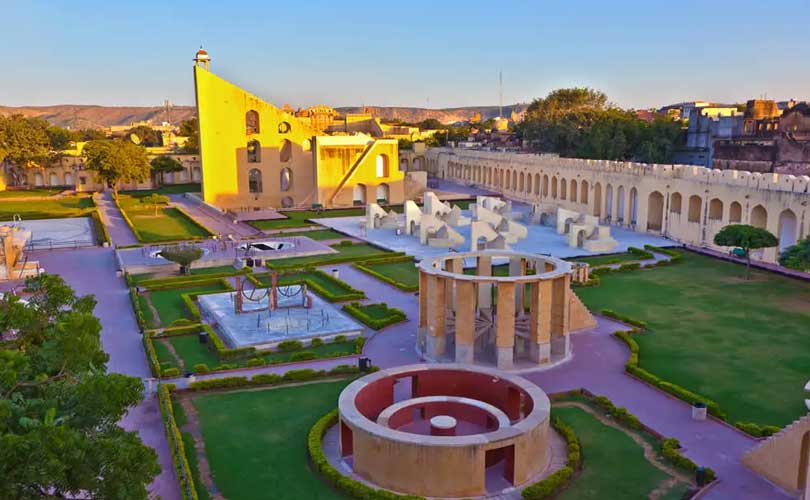
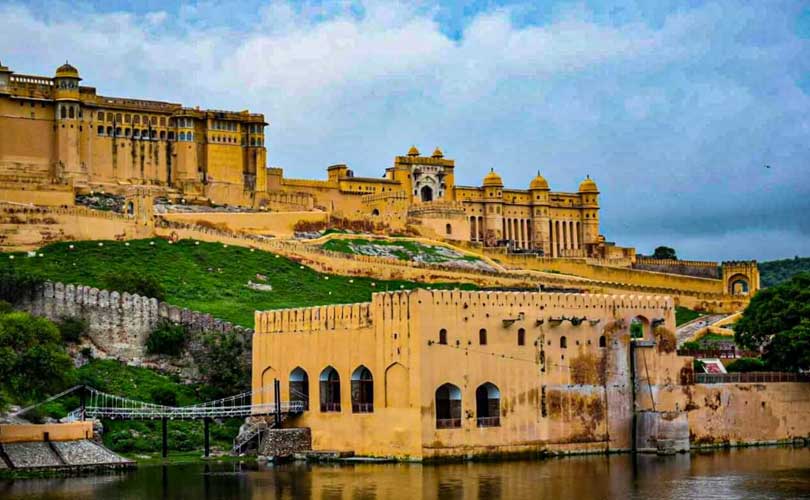
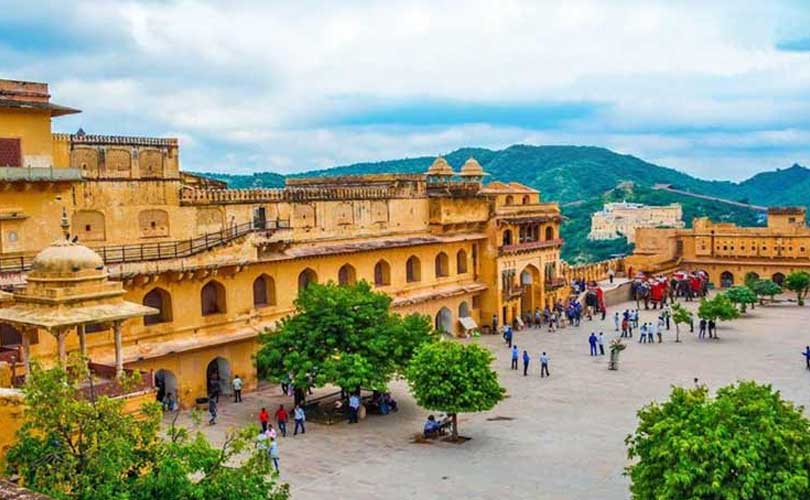
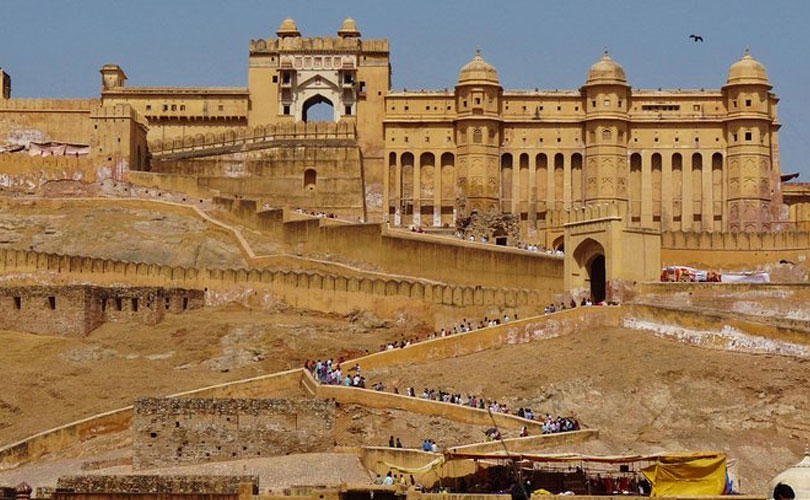
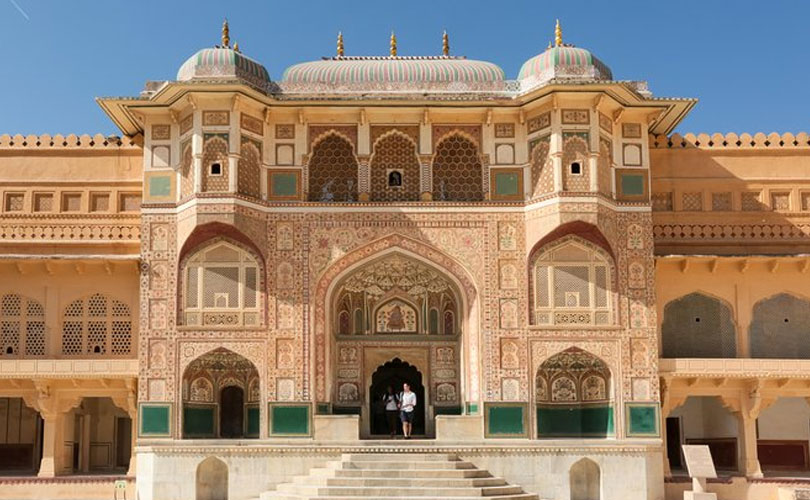
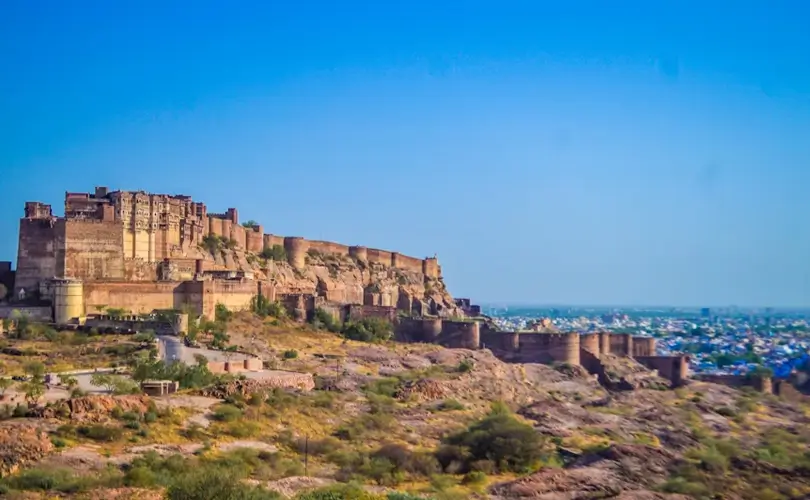
Jaipur's Amber Fort, City Palace, and Jantar Mantar also benefit from explanation. Jantar Mantar in particular can be difficult to appreciate fully without someone explaining how the astronomical instruments function.
An English-speaking private guide may broadly cost around ₹1,500 to ₹4,000 or more per city or sightseeing session, depending on duration and service level. Foreign-language and specialist guides may cost more.
For a solo traveler, that entire cost is paid by one person, so it makes sense to use guides where they provide the most value.
A practical approach might include a full-day guide in Delhi, a guide for the Taj Mahal and Agra Fort, and a full-day guide in Jaipur. Road transfer days can remain driver-only unless sightseeing stops such as Fatehpur Sikri require additional guiding.
The traveler should confirm whether the guide meets her at the hotel or directly at the first monument.
Guide fees should be agreed before sightseeing begins.
The guide should not pressure the traveler into shopping, restaurants, or additional paid activities. Recommendations are normal; pressure is not necessary.
A woman who would feel more comfortable with a female tour guide in India can request one in advance. Availability varies by city, language, date, and required qualifications, so this request should be made early rather than on the morning of sightseeing.
A first solo trip becomes easier when the itinerary does not require constant late-night arrivals or dawn departures.
A comfortable solo female Golden Triangle itinerary can begin with two or three nights in Delhi. The arrival day can remain light, giving the traveler time to check into the hotel, sleep, eat, and become familiar with the surroundings.
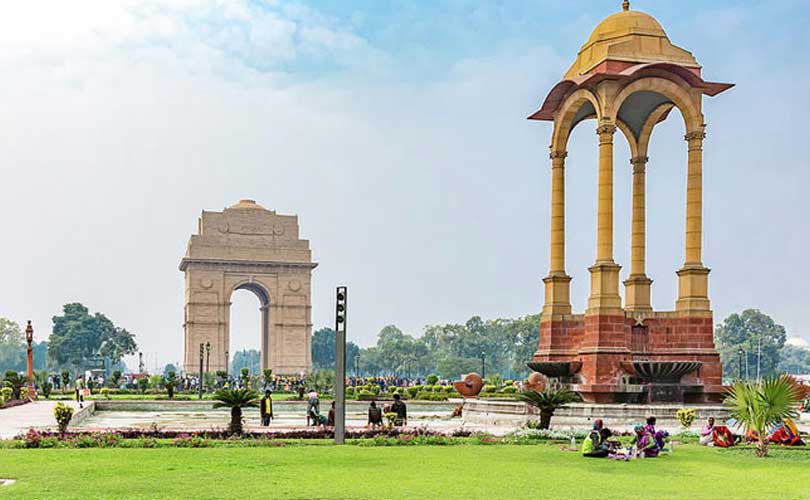
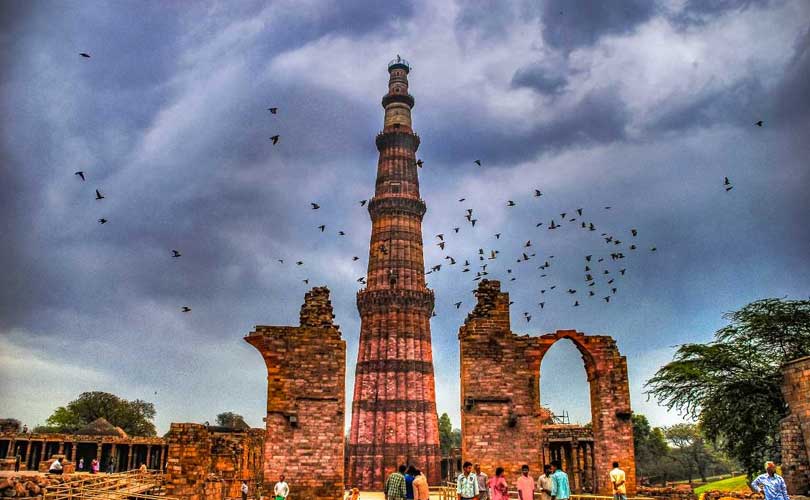
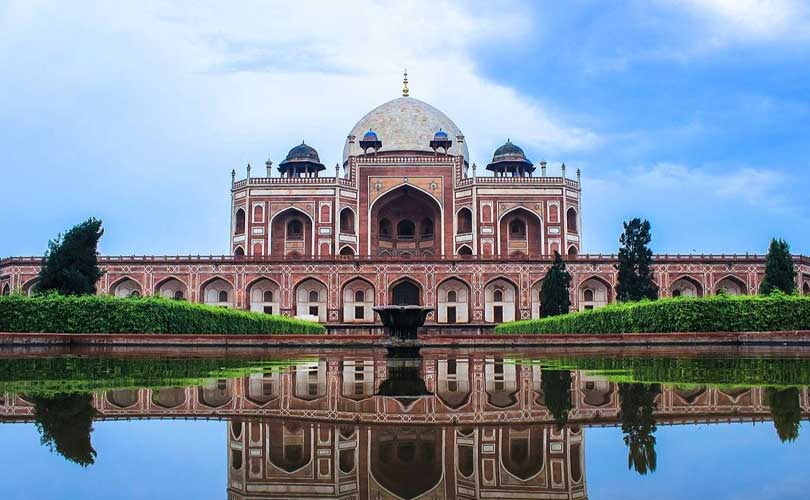
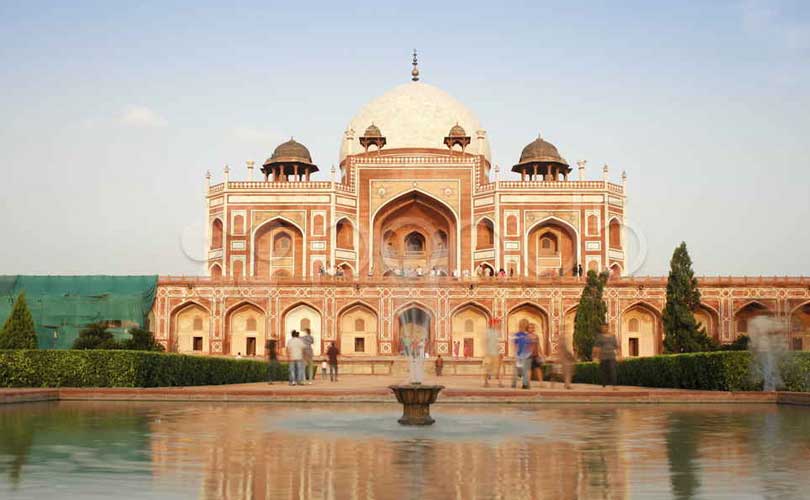
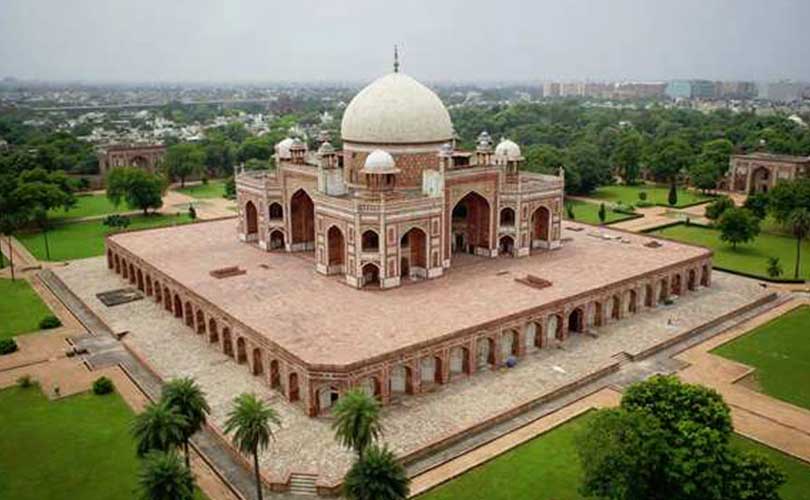
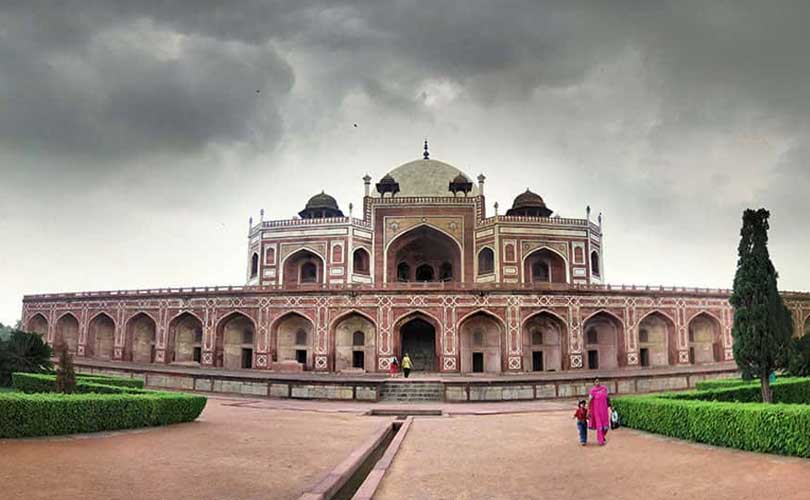
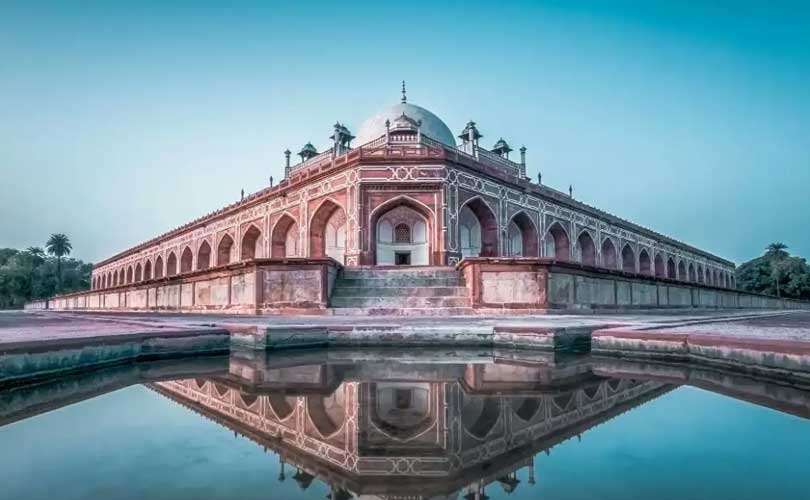
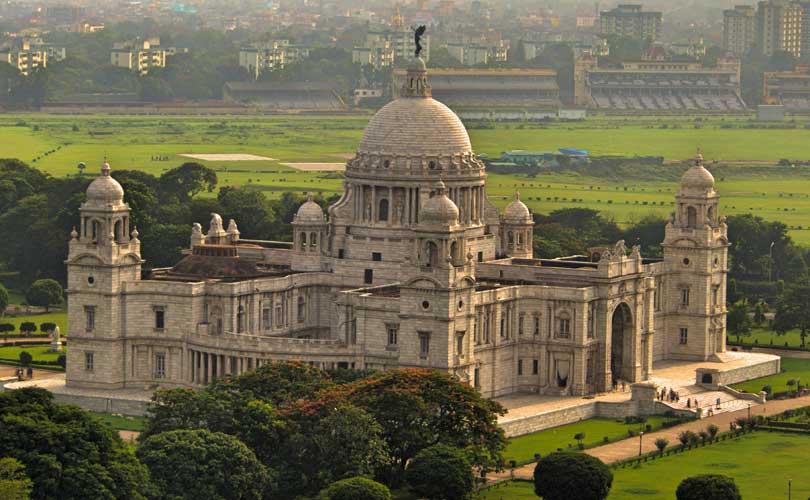
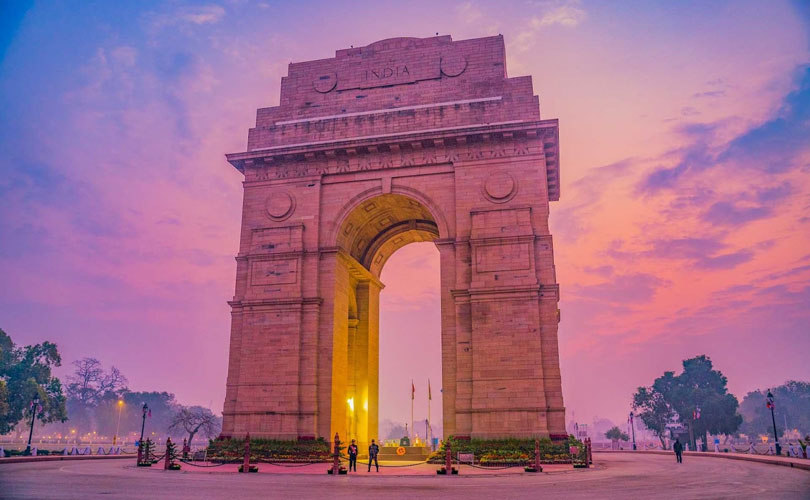
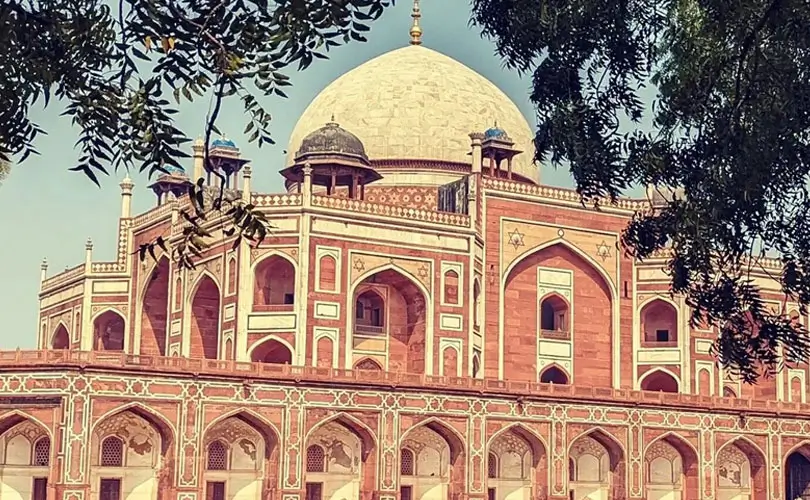
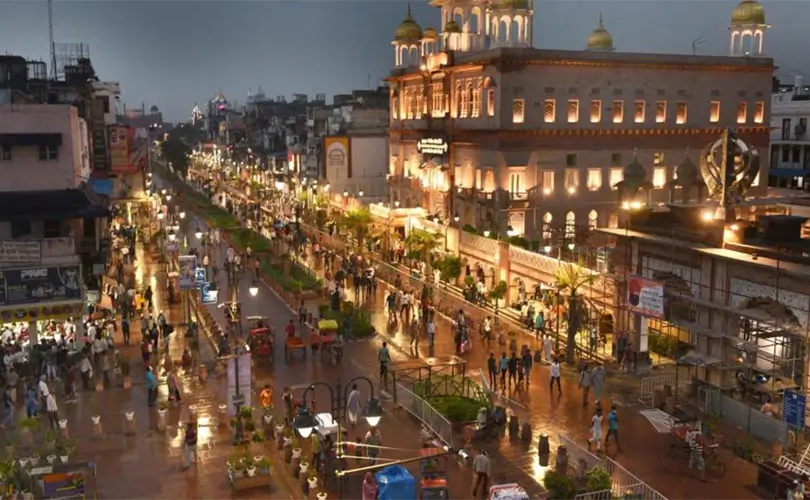
A full Delhi sightseeing day can follow. Depending on personal interests, the route can include Old Delhi, Humayun's Tomb, Qutub Minar, India Gate, selected religious sites, markets, and other landmarks.
The journey to Agra can begin after breakfast the following day. Driving approximately three to four hours is much more comfortable than combining a complete Delhi sightseeing day with a late arrival in Agra.
After reaching Agra, the traveler can visit Agra Fort or another smaller attraction during the afternoon.
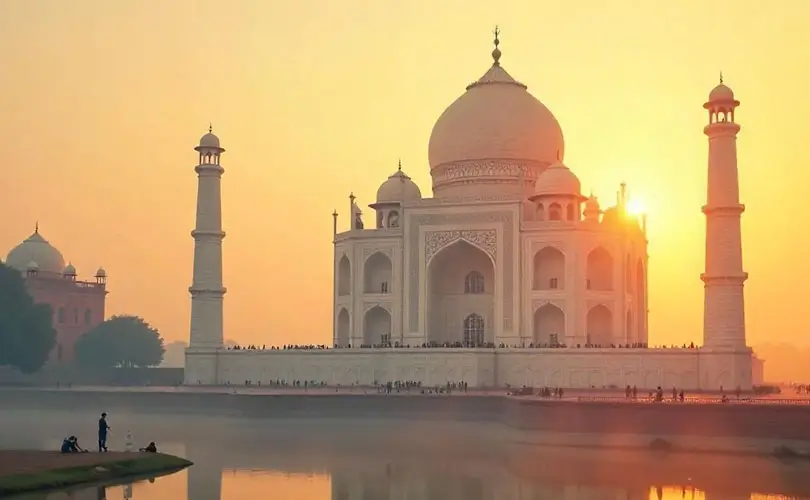
The Taj Mahal can be visited early the following morning. The monument generally opens around sunrise and closes around sunset on normal visiting days. It is closed to general visitors on Fridays.
An international visitor should broadly budget around ₹1,100 for standard Taj Mahal admission plus approximately ₹200 for access to the main mausoleum. Current official pricing should be checked before the visit.
After breakfast or the Taj Mahal visit, the road journey toward Jaipur can begin.
Fatehpur Sikri can be added because it lies naturally on the broader route. Abhaneri's Chand Baori can also be included if the traveler wants a longer sightseeing transfer.
With both stops, lunch, and road breaks, Jaipur arrival may be in the late afternoon or early evening. The traveler can check into the hotel rather than trying to complete another major sightseeing program after dark.
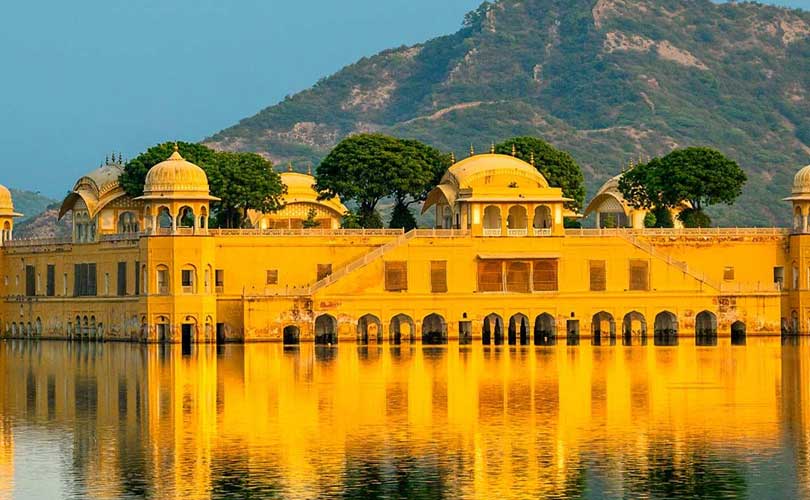
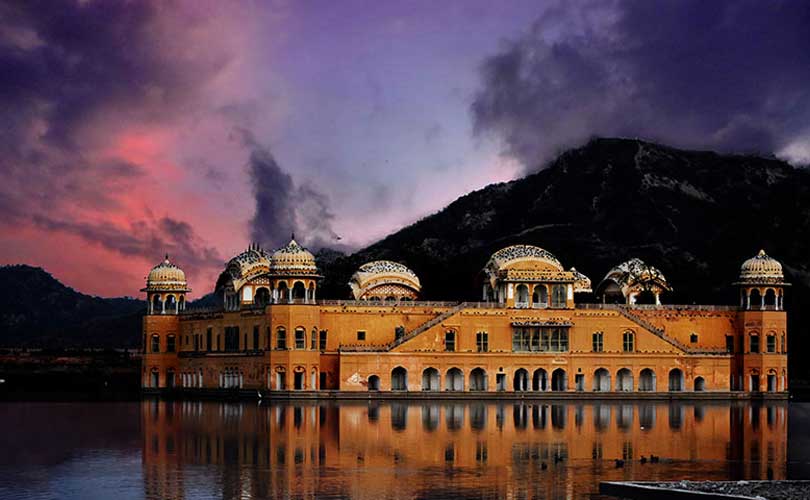
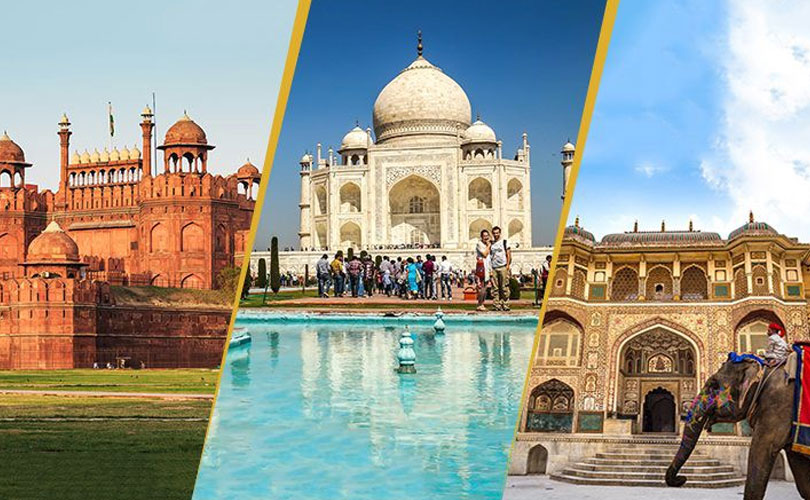
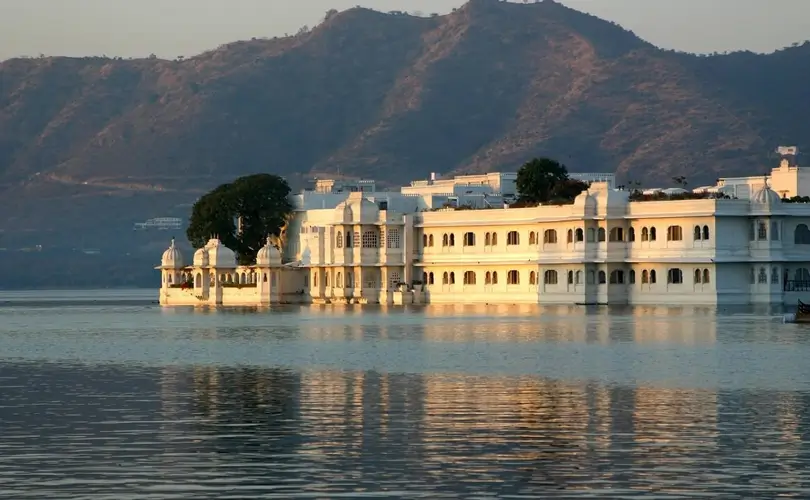
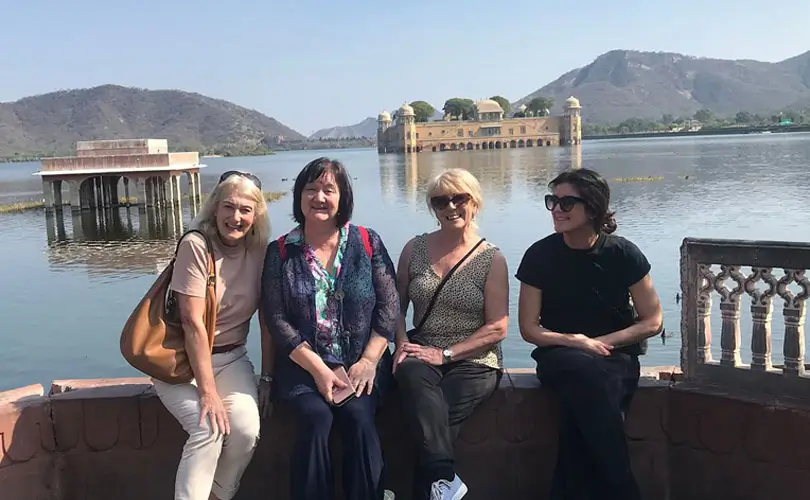
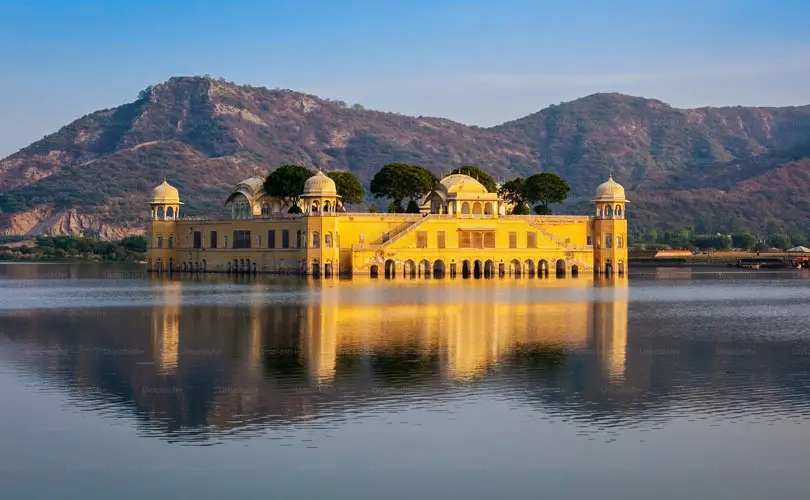
Two nights in Jaipur allow one complete day for Amber Fort, Jal Mahal, City Palace, Jantar Mantar, and Hawa Mahal.
An additional Jaipur night is useful for someone interested in shopping, crafts, museums, or a slower pace.
The return drive to Delhi generally requires around five to six hours or more depending on traffic.
If the international flight departs from Delhi, it is sensible to avoid a tight connection between a long Jaipur road journey and the flight. Staying in Delhi before departure can provide valuable protection against road delays.
Hotel selection has a direct effect on how comfortable a solo trip feels. The cheapest room is not always the best value if the property is isolated, difficult for drivers to access, or far from the areas the traveler intends to visit.
In Delhi, a well-located established hotel can reduce daily time spent in traffic. Travelers should check recent guest feedback, reception availability, room access, transport arrangements, and the surrounding location.
For a good mid-range hotel, a solo traveler can broadly budget around ₹4,000 to ₹8,000 per room per night. A quality four-star hotel may cost around ₹7,000 to ₹14,000, while a five-star property can start around ₹12,000 to ₹25,000 or more.
Rates vary significantly according to season and demand.
The cost disadvantage for solo travelers appears again because hotel rooms are generally priced per room rather than per person. A couple can divide a ₹10,000 room between two travelers; a solo guest pays the full ₹10,000.
That makes carefully selected four-star hotels attractive for many solo visitors. They can provide strong comfort without forcing the entire holiday into luxury-level pricing.
In Agra, proximity to the Taj Mahal can be useful, particularly for an early morning visit. Travelers paying extra for a Taj-facing room should confirm the exact room category.
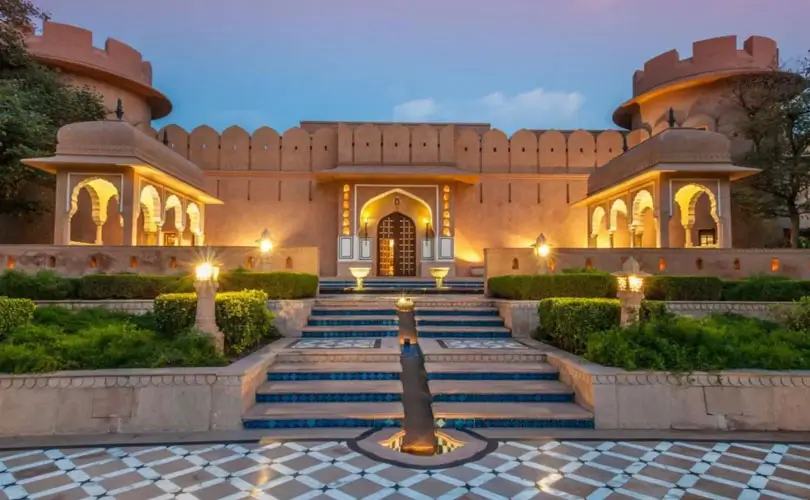
Jaipur has both modern and heritage properties. Heritage hotels can be memorable, but solo travelers should check practical details such as reception hours, room access, lifts, stairs, and whether the property feels suitable for their preferences.
Airport transfers should be arranged through the hotel or tour operator when needed, particularly for very late arrivals or early departures.
The traveler should keep the hotel address and phone number accessible offline in case mobile data is temporarily unavailable.
Flight timing should influence the first hotel and transport arrangement.
A solo traveler arriving at Delhi Airport at 2:00 a.m. should not have to begin searching for the correct city transfer after leaving the terminal. A pre-arranged driver with clear meeting instructions is much more convenient.
The operator should have the flight number so the pickup can account for delays.
The traveler should also have the driver's name and contact information when possible, together with a separate number for the tour company.
If a late-night pickup feels unclear, the traveler should contact the operator before leaving the terminal rather than entering an unconfirmed vehicle.
Early morning sightseeing requires similar coordination.
A sunrise Taj Mahal visit may involve leaving the hotel before normal breakfast hours. The pickup time should be confirmed the previous evening, and the hotel can often arrange an early breakfast box if requested in advance.
There is no reason to walk alone from a distant hotel to a monument entrance before dawn simply to save a short transfer fare when private transportation has already been arranged.
Late-night intercity driving should be minimized where possible. A route that repeatedly reaches new cities at midnight is not particularly comfortable for any traveler, and solo visitors may prefer arriving while the hotel reception and surrounding area are fully active.
A solo traveler can keep the trip comfortable by using straightforward habits rather than spending the entire holiday worrying about hypothetical problems.
Keep the phone charged during long sightseeing days. A portable power bank is useful because navigation, photography, messaging, and mobile data can drain a battery quickly.
Save the hotel, tour operator, and driver contact details.
Keep passport, money, cards, essential medication, and valuable electronics in a day bag rather than leaving them inside the vehicle during long sightseeing visits.
Large suitcases can remain with the arranged vehicle during intercity stops when appropriate, but high-value items should remain with the traveler.
Do not share unnecessary personal details with strangers. A traveler is not required to explain where she is staying, whether she is alone, or the exact details of the following day's route to someone she has just met.
Crowded monuments and markets require normal attention to bags and phones, just as busy tourist locations do in many countries.
Alcohol consumption should be handled with the same judgment used at home, particularly when returning alone to a hotel.
If an interaction with a driver, guide, shopkeeper, or another person feels inappropriate, the traveler can end it and contact the tour operator or hotel.
Private travel should provide flexibility rather than creating an obligation to remain with a particular guide or shop visit.
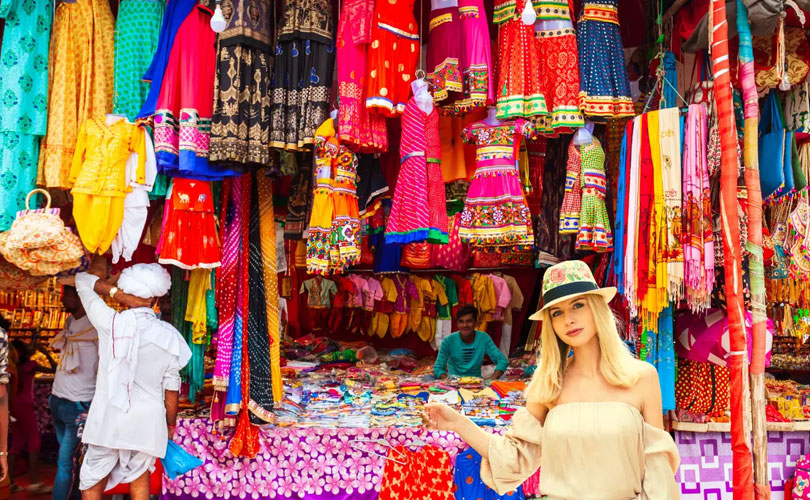
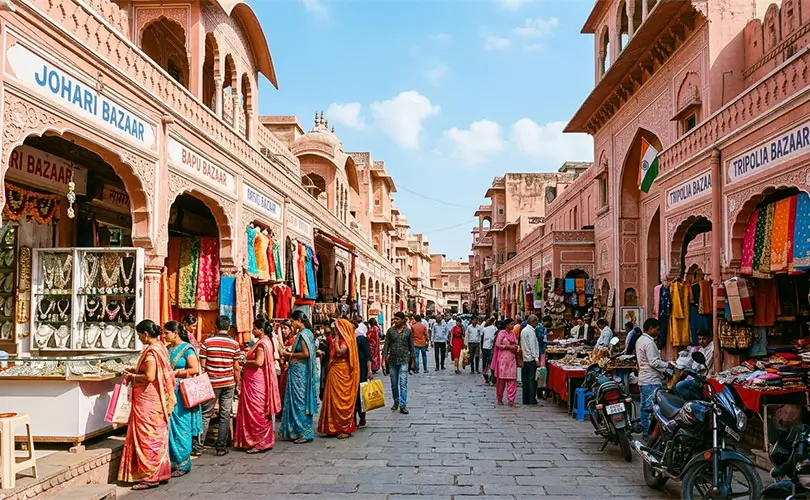
Delhi, Agra, and Jaipur are major shopping destinations. A solo traveler may genuinely want to buy textiles, jewelry, handicrafts, marble products, carpets, spices, clothing, or souvenirs.
The important point is that shopping should happen because the traveler wants it.
A private India sightseeing tour should not automatically contain multiple retail stops that were never requested.
Before the day begins, a traveler can simply tell the guide and driver that she wants no shopping stops. If she does want to shop, she can specify the type of product.
High-value purchases require more care. Gemstones, jewelry, carpets, and marble products can involve significant amounts of money. Travelers should compare prices, ask for documentation where appropriate, and avoid making expensive decisions under time pressure.
Restaurant recommendations work in a similar way.
A guide or driver can suggest places to eat, but the traveler should remain free to select another restaurant.
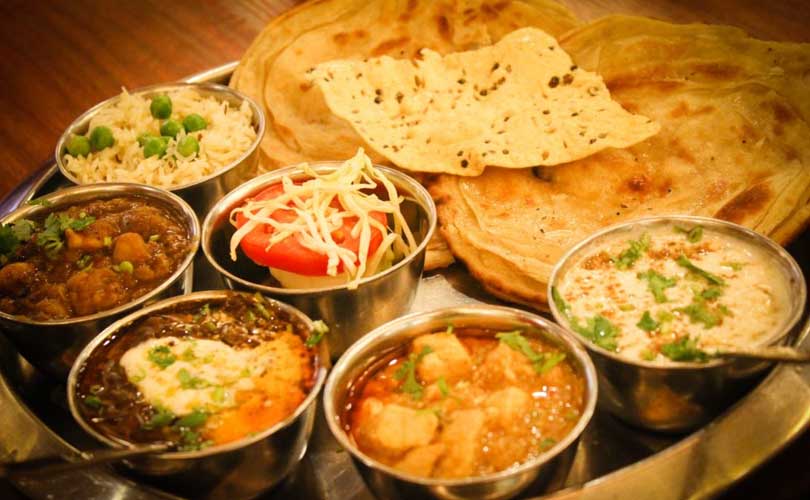
A comfortable lunch at a good tourism-oriented restaurant can broadly cost around ₹700 to ₹1,500 per person, while premium dining can reach ₹2,000 to ₹4,000 per person or more.
Solo travelers may also choose to eat at their hotel after a long sightseeing day rather than adding another evening transfer.
A seven-day solo private Golden Triangle tour will usually cost more per person than the same trip shared by a couple.
Suppose a private sedan costs approximately ₹25,000 for the relevant road itinerary. Six nights of good four-star accommodation averaging ₹9,000 per night would add around ₹54,000. Private guides across Delhi, Agra, and Jaipur might add roughly ₹8,000 to ₹10,000 depending on duration.
The basic total is already approximately ₹87,000 to ₹89,000 before monument tickets, meals, tips, and personal expenses.
Adding major international visitor tickets, airport arrangements, and other services can take a comfortable solo itinerary into the region of ₹1,00,000 to ₹1,30,000 or more.
A five-star version can cost considerably more because the solo traveler bears the entire room charge.
A more economical trip using carefully selected mid-range hotels may come in below that amount.
This is why solo travelers should compare the complete package rather than only the daily car price.
The value of private transportation is not that it makes the trip cheap. It makes movement between unfamiliar cities much more predictable.
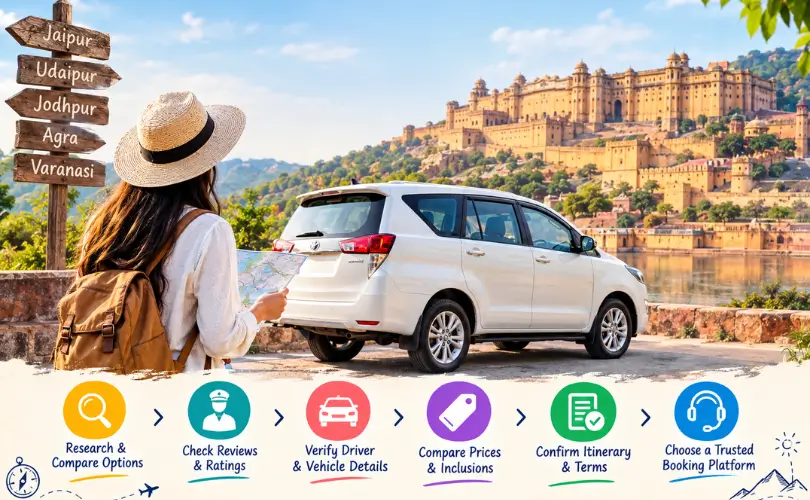
Before paying, request the complete itinerary in writing. It should show the route, hotel nights, sightseeing, transportation, and major services.
Ask for the vehicle category and total transportation price.
Confirm whether tolls, parking, fuel, driver allowance, interstate charges, and taxes are included.
Request the hotel names and room categories rather than accepting only “three-star” or “four-star.”
Confirm whether breakfast is included.
Ask which cities include professional guides and whether the guide is English-speaking or another requested language.
If a female guide is preferred, make the request before booking.
Monument tickets should be marked as included or excluded.
Read the cancellation policy and payment schedule before sending money.
For airport pickup, provide the flight number and arrival date.
Keep written proof of payments and the operator's contact details.
Golden Triangle Tours India can arrange India tours for solo female travelers using private transportation, selected hotels, and local guides according to the guest's route, arrival schedule, preferred vehicle, and accommodation level. The booking should be built around realistic travel times and clearly documented services rather than relying on vague package descriptions.
For many women traveling alone for the first time, a private driver plus local guides offers a useful middle ground. The traveler remains independent and decides how the holiday is spent, while the most repetitive logistical work—airport transfers, hotel-to-hotel transport, parking, and intercity driving—is already arranged.
Many women travel independently in India, and a private tour for solo female travelers can make transportation and sightseeing logistics easier. No arrangement removes every travel risk, so normal personal safety precautions and current official travel advice should still be followed.
A sedan for approximately five days can broadly cost around ₹20,000 to ₹30,000, depending on mileage, route, and inclusions. An Innova or Innova Crysta will generally cost more.
No. Many travelers use a dedicated driver for transportation and hire professional local guides only for major sightseeing in Delhi, Agra, and Jaipur. This provides historical context without paying for full-time escort services.
Yes, a female private guide can be requested in major tourism cities, subject to availability, language, date, and required qualifications. The request should be made in advance.
A pre-arranged Delhi Airport private transfer is particularly convenient after a long international flight or during a late-night arrival because the transport and destination are already confirmed before leaving the airport.
A sedan is usually sufficient for one traveler with normal luggage. An Innova or Innova Crysta is useful when additional space or a higher comfort level is preferred.
A comfortable seven-day private trip using quality four-star accommodation can broadly reach around ₹1,00,000 to ₹1,30,000 or more, depending on hotels, guides, tickets, meals, and vehicle arrangements. Five-star travel can cost considerably more.
Where practical, daytime or early-evening arrivals are more comfortable because travelers reach hotels during normal operating hours and avoid unnecessary fatigue. Some flight schedules require late transfers, in which case pre-arranged transportation is particularly useful.
Yes. Shopping should be optional on a private India tour. Travelers can state clearly that they want only sightseeing, or they can request specific shopping categories that genuinely interest them.
Request the written itinerary, hotel names, room category, vehicle details, guide services, inclusions and exclusions, payment schedule, cancellation terms, airport pickup arrangements, and the operator's contact information before making the final payment.