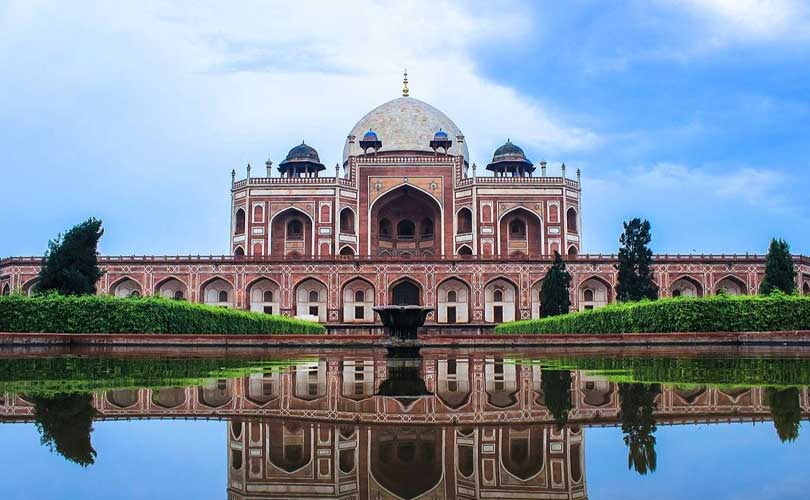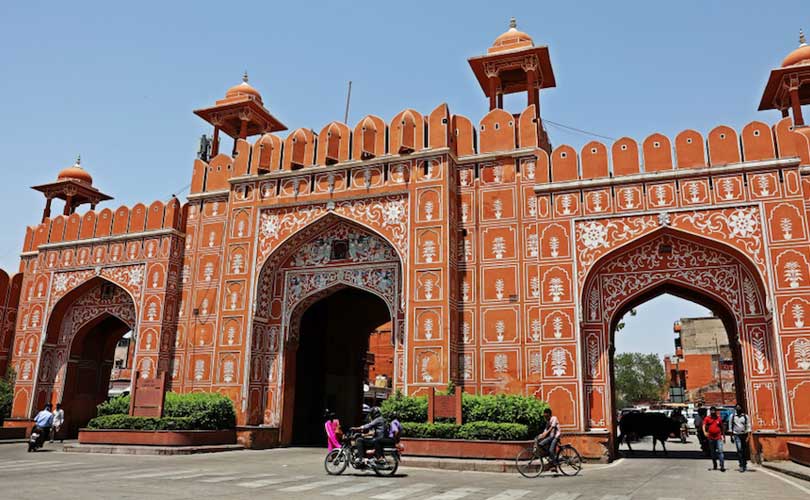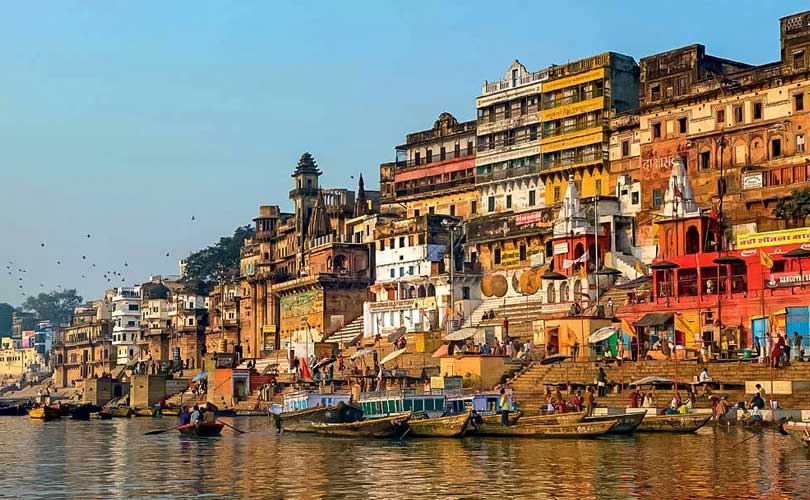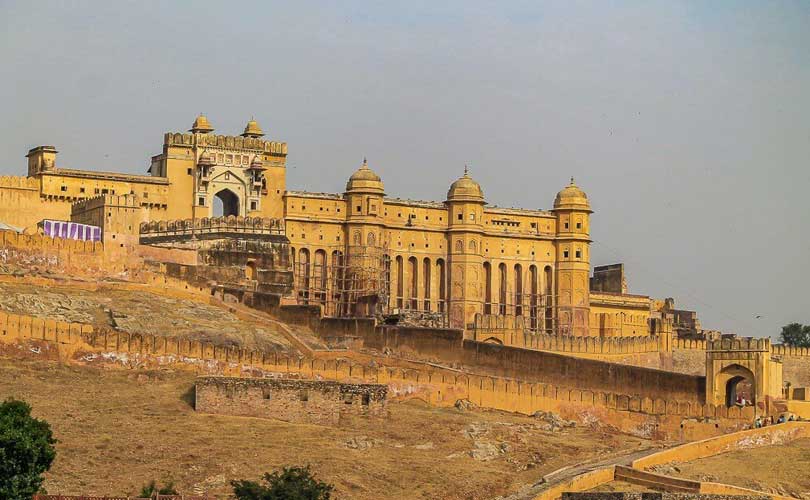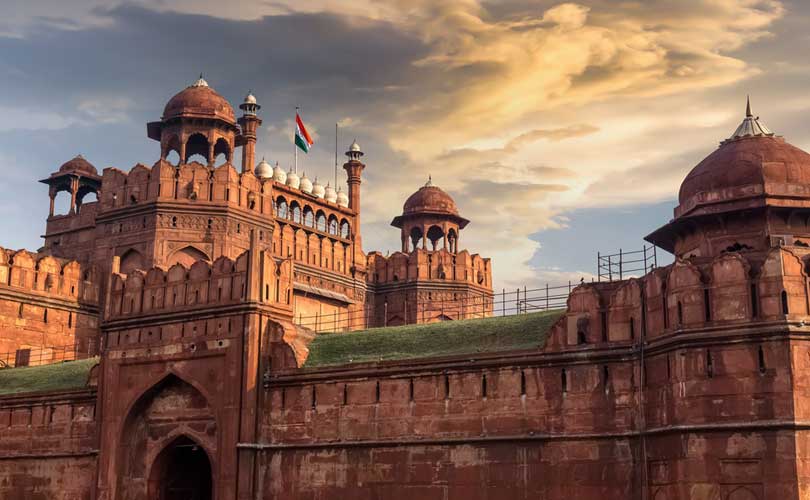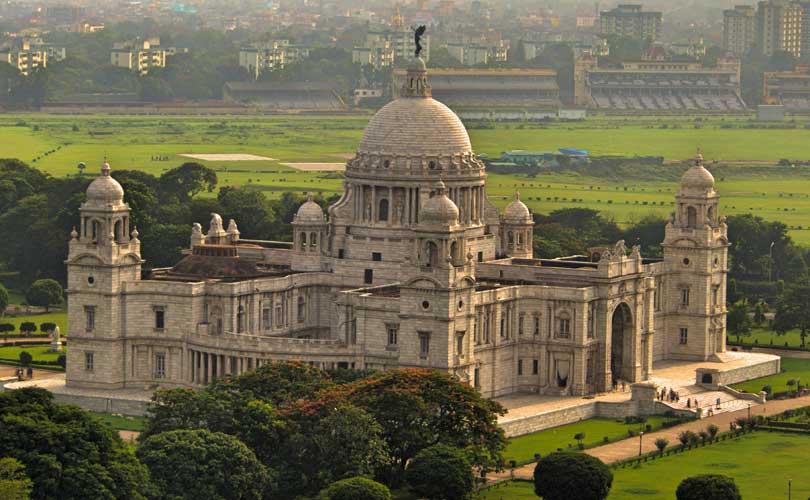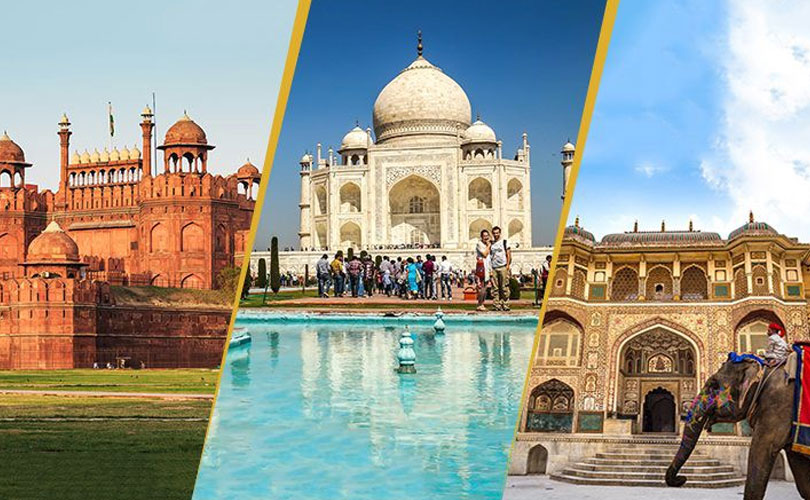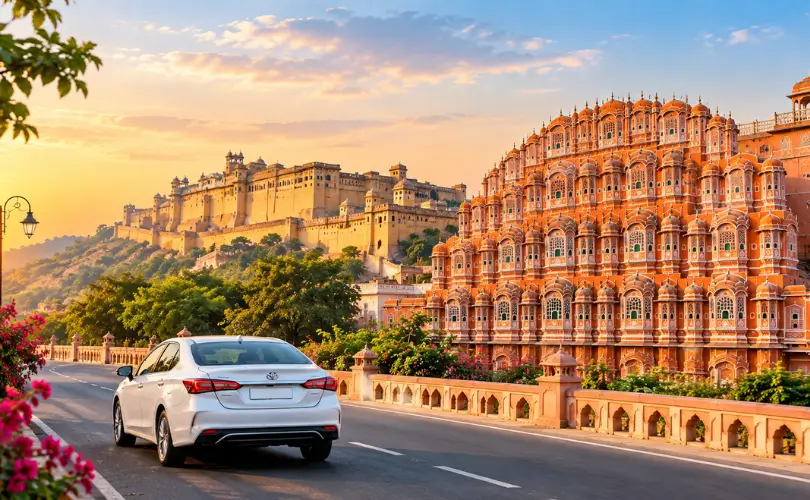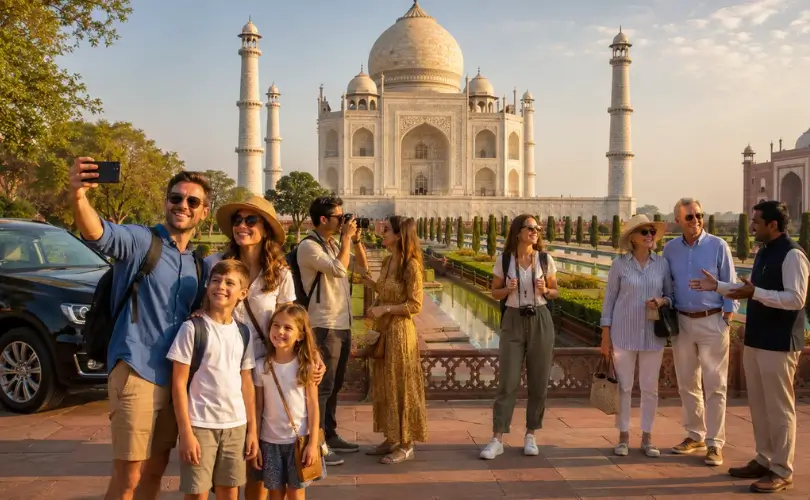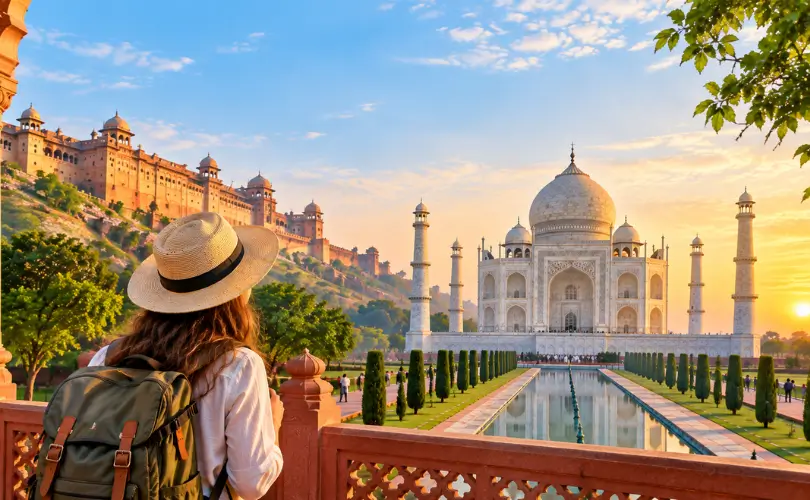
The Golden Triangle of India gives travelers some of the strongest sunrise and sunset opportunities in northern India because Delhi, Agra and Jaipur each offer a different kind of skyline. Agra provides the soft marble glow of the Taj Mahal, Jaipur offers hilltop forts and elevated city views, while Delhi combines historic monuments with broad urban horizons. The best photographs and the most memorable moments usually come from choosing the right location for the right time of day rather than trying to visit every famous attraction at sunset.
Light changes quickly in these cities. A place that looks ordinary at 2:00 p.m. can become completely different during the final thirty minutes before sunset, while a sunrise visit can transform a crowded monument into a calmer experience with softer colors and fewer distractions. Travelers interested in Golden Triangle photography should therefore build their schedule around light rather than treating sunrise and sunset as minor additions after sightseeing.
Timing also changes throughout the year. Sunrise can occur relatively early during warmer months and later during winter, while sunset can range from early evening to much later depending on the season. Travelers should check the exact local sunrise and sunset time for Delhi, Agra or Jaipur on the specific day of travel rather than relying on one permanent schedule. Arriving 30 to 45 minutes before sunrise or 45 to 60 minutes before sunset is generally a safer approach because it gives enough time for security, walking and finding a suitable position.
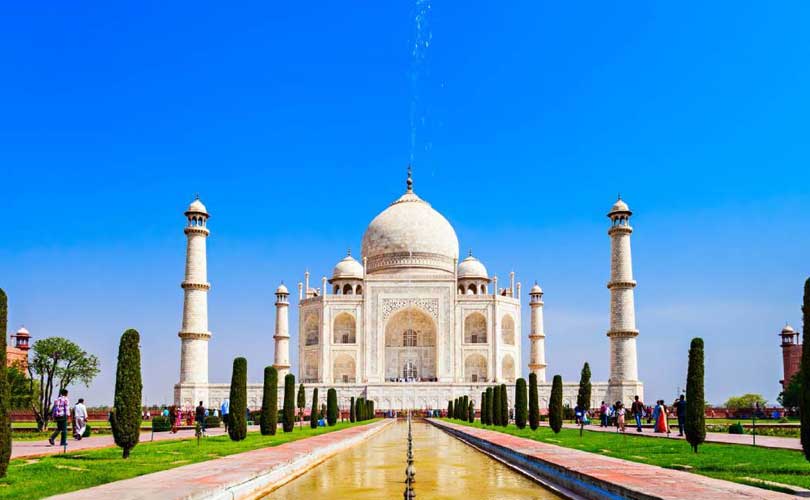
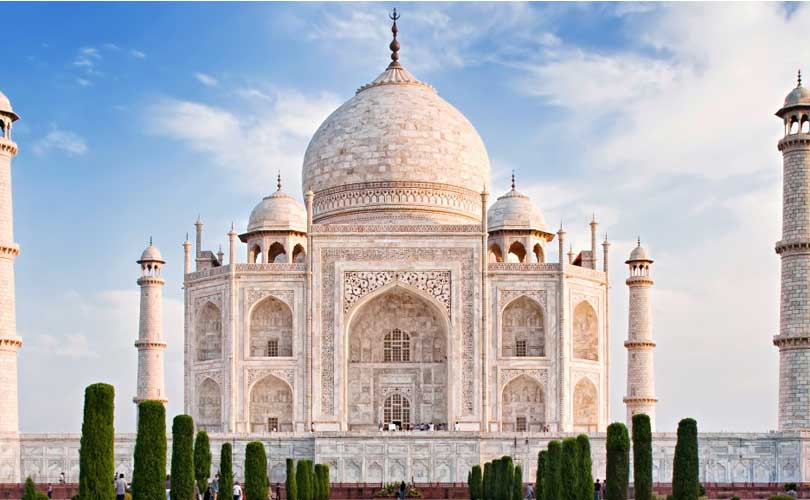
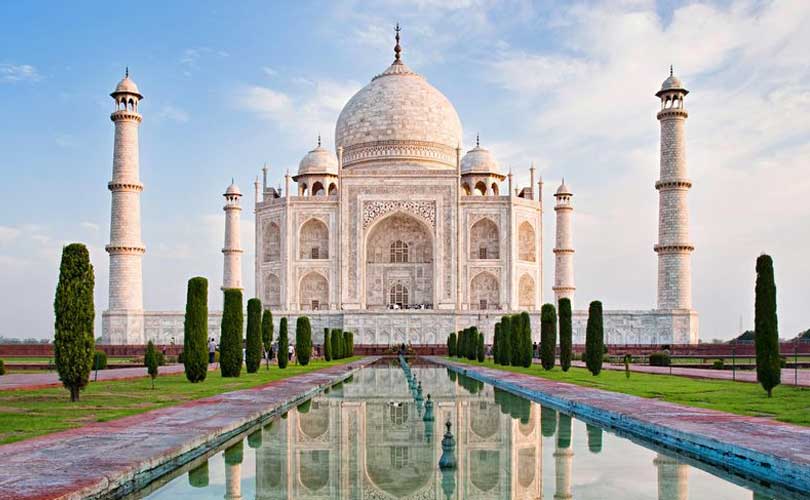
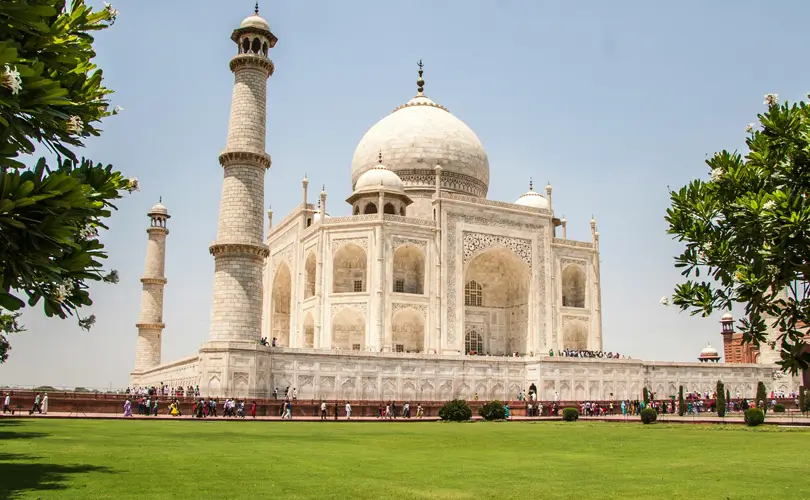
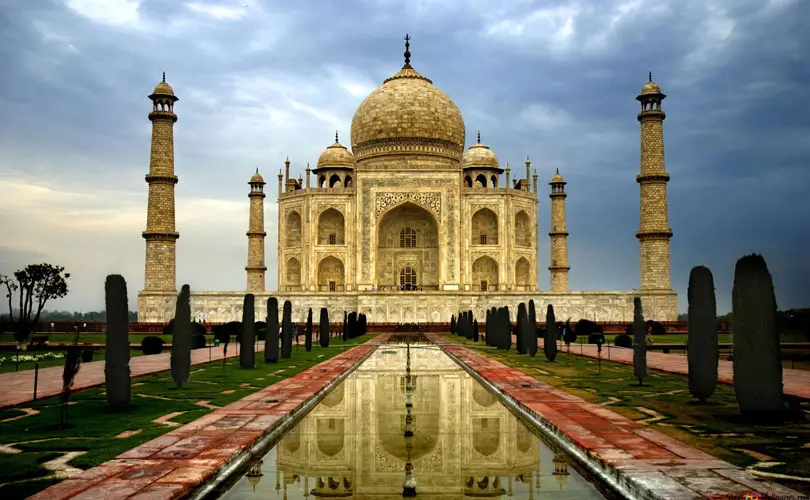
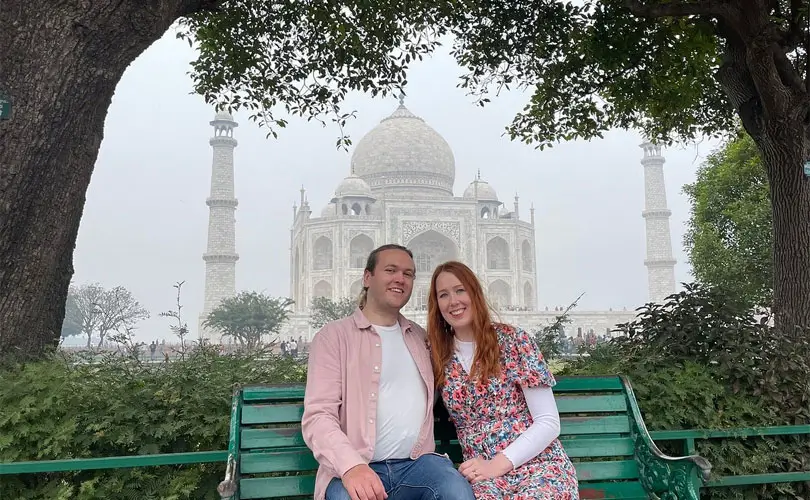
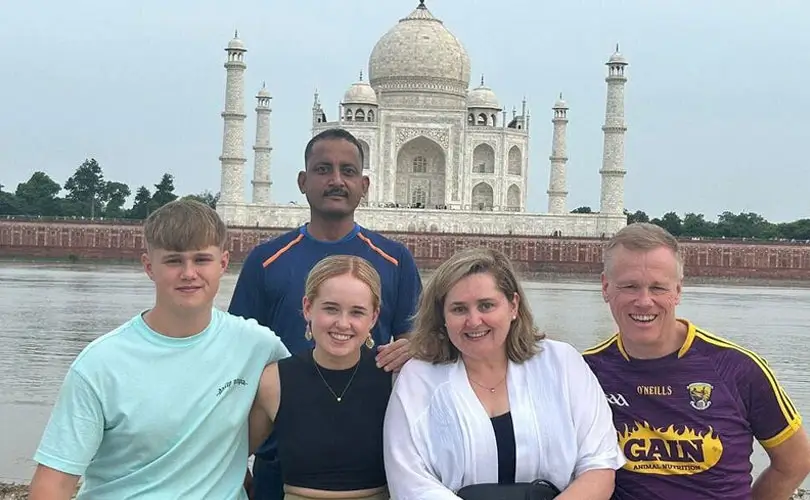
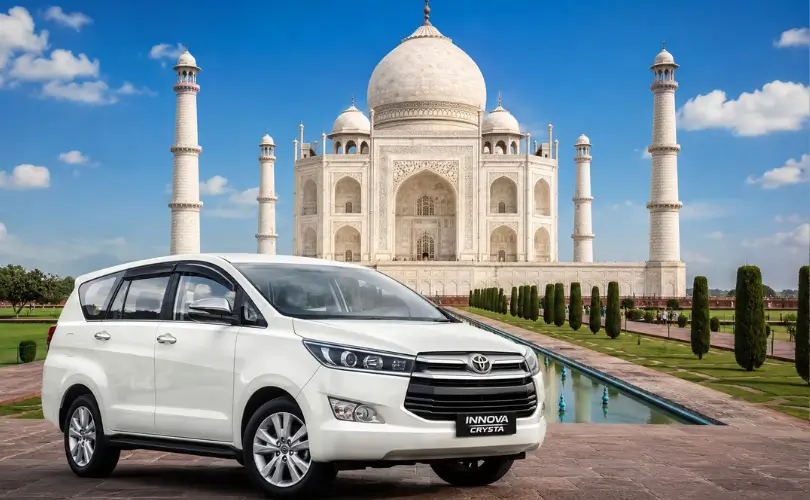
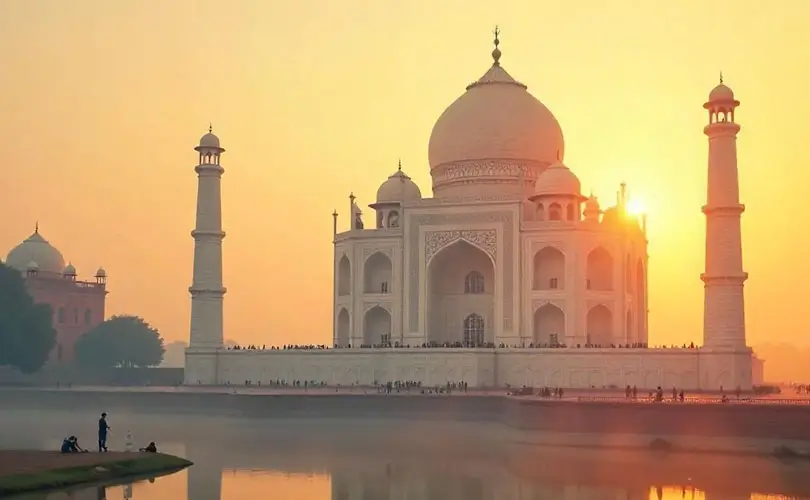
For many international visitors, Taj Mahal sunrise is the most important early-morning experience on the entire Golden Triangle route. The monument can appear dramatically different in soft morning light compared with the stronger brightness of midday. White marble reflects changing sky conditions, and the atmosphere can feel calmer before the daytime visitor flow reaches its highest level.
A sunrise visit requires an early start. Travelers should reach the appropriate entry area before the monument opens and allow time for security procedures. The Taj Mahal's opening time is linked to sunrise, and access arrangements can vary according to official rules, so visitors should check the current Archaeological Survey of India information shortly before the visit.
The Taj Mahal remains closed on Fridays for general tourist visits, which is one of the most important itinerary details for Golden Triangle travelers. Anyone reaching Agra on Thursday evening and intending to visit the Taj Mahal on Friday morning will face a major scheduling problem. This should be checked before hotel and transport arrangements are finalized.
A practical sunrise visit may require leaving the hotel around 5:00 a.m. to 6:00 a.m., depending on the season, hotel location and current opening time. Travelers staying near the Taj Mahal have an advantage because they can avoid a longer early-morning road transfer.
The east and west gates have different approach patterns, and crowd conditions can vary. A local guide or experienced driver can help with the most convenient entry point based on the hotel location and current arrangements.
Photography is strongest when visitors do not rush directly to the central marble platform. The first views through the main gateway, reflections around the garden axis and changing light across the dome can all be important. The marble may appear cooler before direct sunlight and warmer as the sun rises higher.
A sunrise Taj Mahal tour should generally allow two to three hours for a comfortable visit. Travelers interested only in one iconic photograph may leave sooner, but architecture and photography enthusiasts benefit from the additional time.
The main mausoleum requires a separate additional ticket beyond the general entry ticket when applicable under current rules. International travelers should check the latest official admission prices before arrival because ticket structures can change.
From the first golden rays over the Taj Mahal to unforgettable sunsets above Jaipur’s historic forts, experience Delhi, Agra and Jaipur at the moments when they look their most extraordinary.
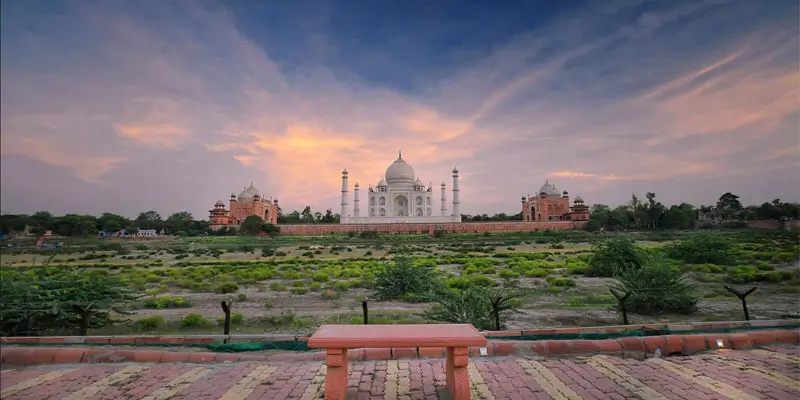
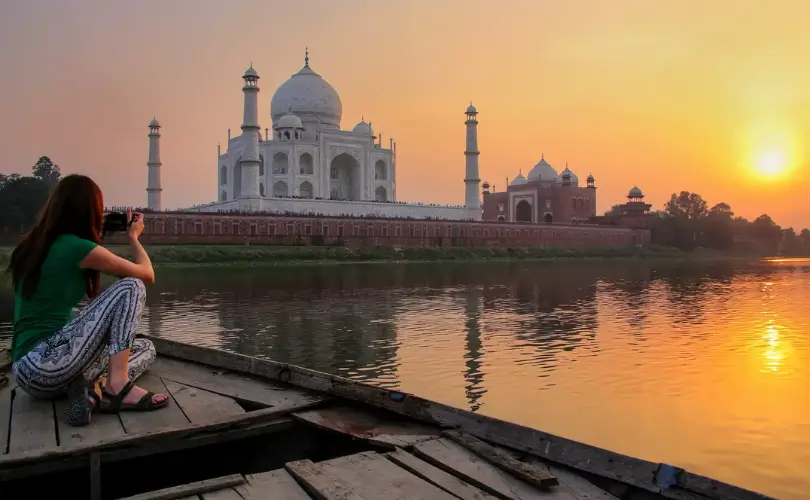
For sunset, Mehtab Bagh provides one of the best-known alternative views of the Taj Mahal. Located across the Yamuna River, the garden creates a direct line of sight toward the monument and gives travelers an entirely different perspective from the formal entrance inside the Taj complex.
The strongest time to arrive is generally 45 to 60 minutes before sunset. This provides enough time to enter, walk toward the river-facing area and watch the light change without rushing.
The main attraction is the gradual shift in color rather than one single moment. Depending on weather, the Taj Mahal can move from bright white to warmer tones before fading into a cooler evening appearance. Haze, cloud cover and air quality can strongly influence visibility, so travelers should not treat a dramatic orange sunset as guaranteed.
Mehtab Bagh can work particularly well on the afternoon before a sunrise Taj Mahal visit. A traveler arriving in Agra from Delhi can check into the hotel, visit Agra Fort or another monument, reach Mehtab Bagh in the late afternoon and then see the Taj Mahal from inside the following morning.
This creates two completely different experiences without repeating the same visit.
The garden should not be confused with a free roadside viewpoint. It is a protected heritage site with formal access and admission arrangements. Ticket prices and closing times should be checked before arrival.
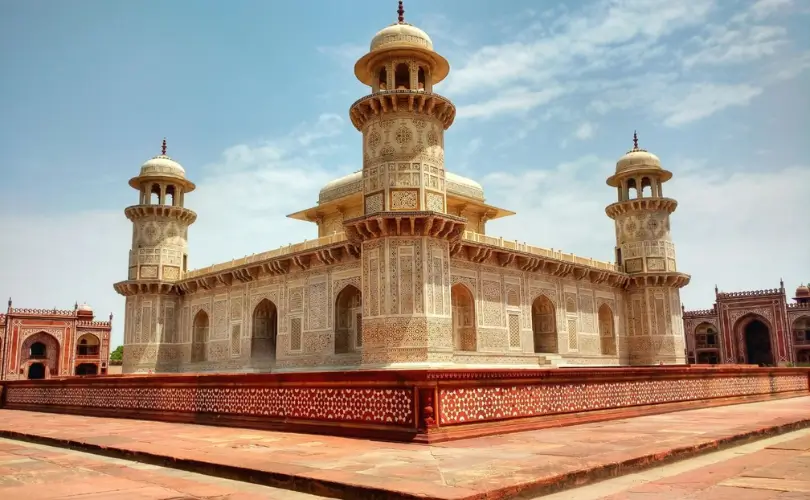
Travelers using a private car in Agra can combine Mehtab Bagh with Itmad-ud-Daulah because both lie on the eastern side of the river. This reduces repeated city crossings and makes the afternoon more efficient.
For photography, a moderate telephoto lens can help isolate the Taj Mahal across the river, while a wider lens can include the riverbank and surrounding landscape. Tripod rules should be checked because professional equipment restrictions can apply at protected sites.
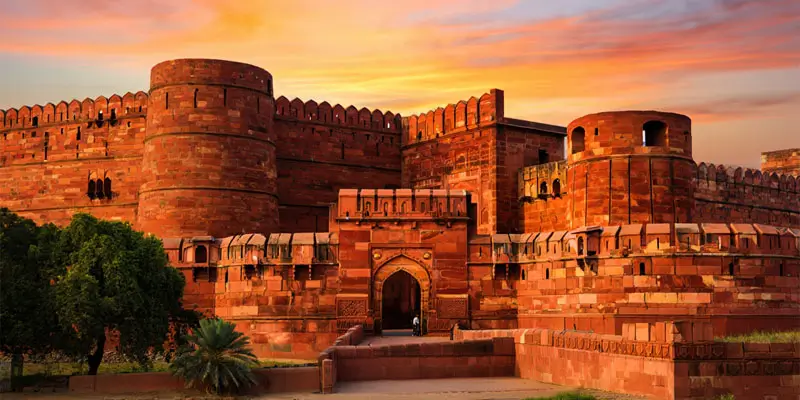
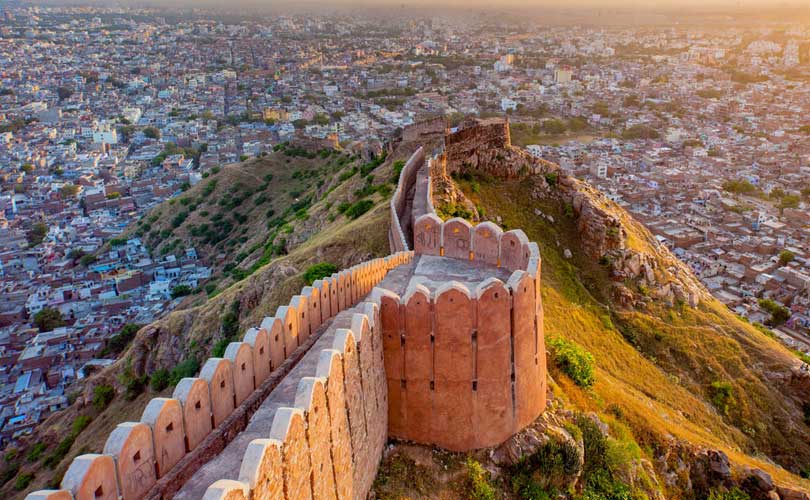
Jaipur offers one of the strongest sunset experiences on the Golden Triangle at Nahargarh Fort. Positioned on the Aravalli hills above the city, the fort provides a broad view across Jaipur's urban landscape and is particularly popular in the late afternoon.
The appeal is scale. From the elevated position, visitors can see how Jaipur spreads across the plains below, with the city gradually changing color as the sun lowers.
A practical arrival time is around 60 to 90 minutes before sunset, particularly on weekends or busy travel dates. Road traffic toward the fort can increase in the evening, and visitors arriving too late may spend the most attractive light sitting inside a vehicle.
The fort itself has historical value, so travelers should avoid treating it purely as a viewing platform. Allow enough time to walk through accessible sections before focusing on the city panorama.
Current entry charges and fort timings should be checked before visiting. Some areas or associated dining spaces may have separate charges.
The road to Nahargarh is winding, and travelers using a private Jaipur driver should make sure the vehicle is suitable and that the driver is comfortable with the route. After sunset, traffic can become concentrated because many visitors leave at roughly the same time.
Photography works well with both wide-angle and telephoto lenses. A wide lens captures the scale of Jaipur, while a longer lens isolates landmarks and neighborhoods below.
Travelers should also account for haze. Jaipur's city view can be extremely clear on some days and much softer on others. Winter atmospheric conditions can affect visibility considerably.
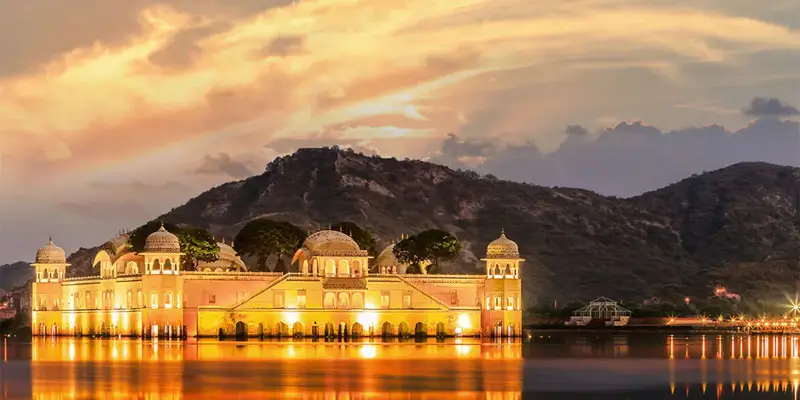
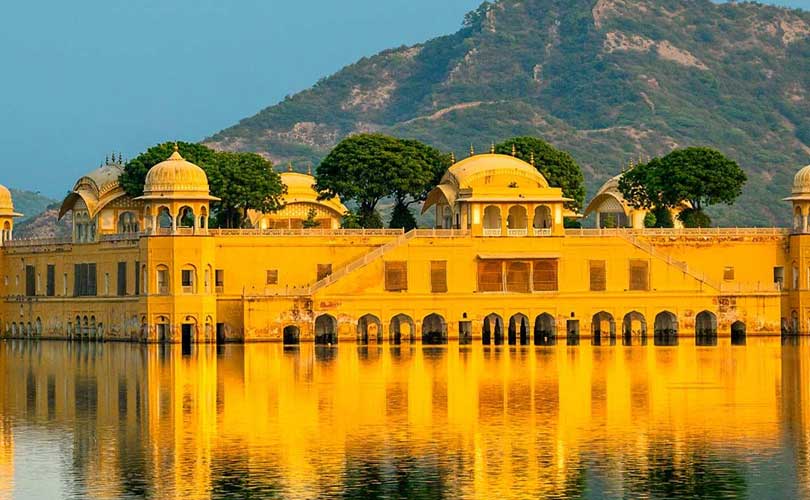
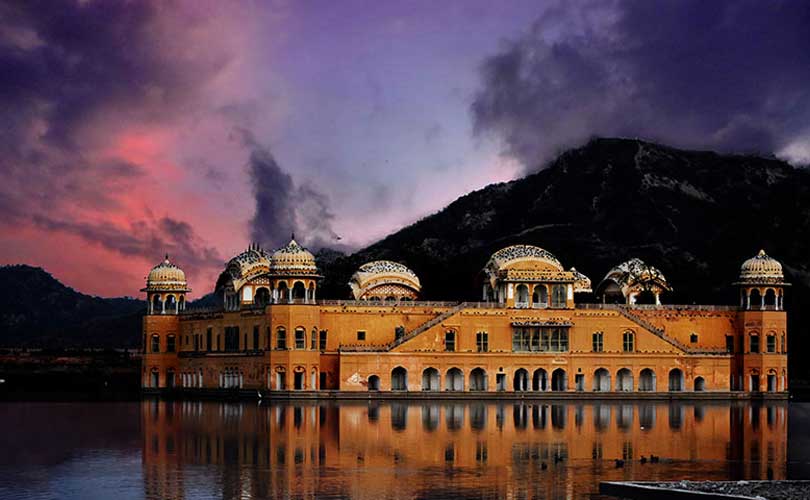
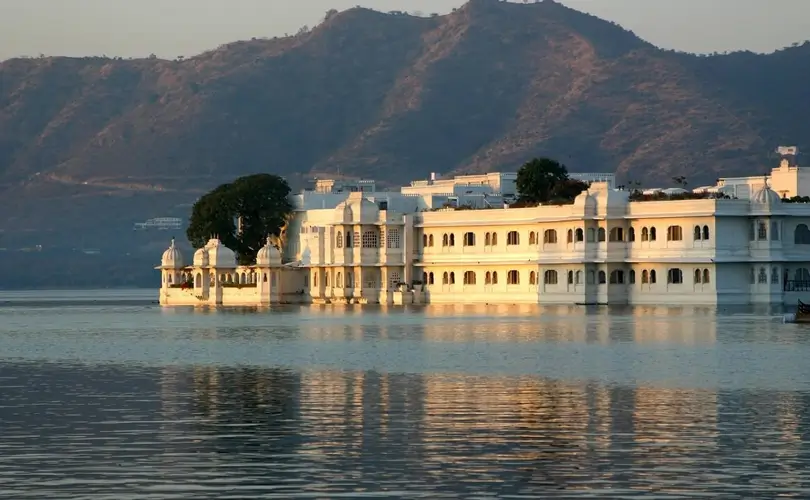
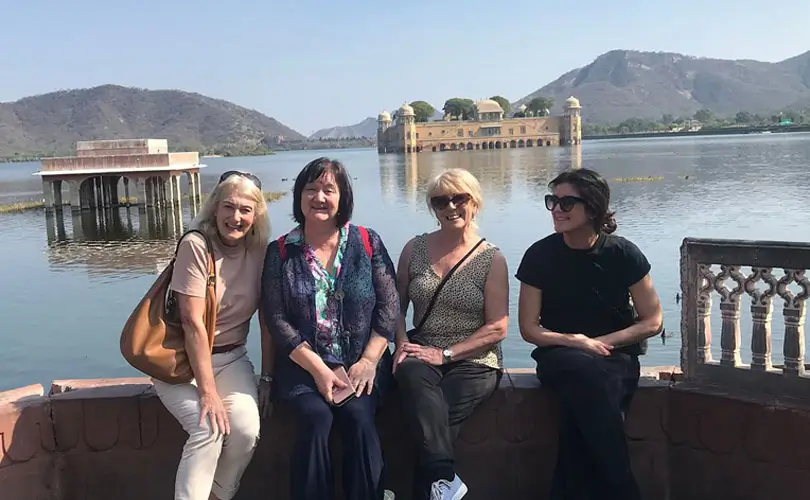
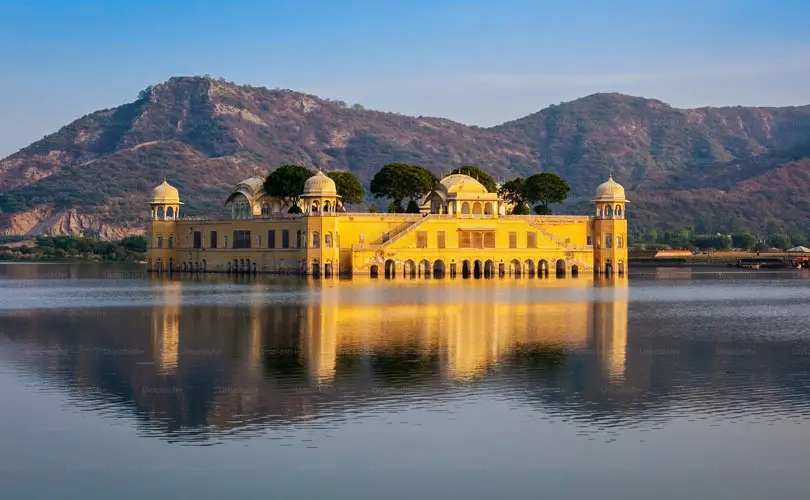
Jal Mahal provides a very different photographic experience because the palace sits within Man Sagar Lake rather than on a hilltop or inside a fort complex. Visitors generally photograph it from the roadside promenade rather than entering the palace itself.
Early morning can produce soft reflections when wind conditions are favorable, while late afternoon can add warmer light to the palace facade and surrounding hills.
A sunrise stop at Jal Mahal works particularly well before heading toward Amber Palace because both are located on the northern side of Jaipur. Travelers can leave the hotel early, stop near the lake for photographs and continue toward Amber before the daytime crowds become heavier.
Approximately 20 to 40 minutes is sufficient for most visitors because Jal Mahal is primarily a viewing stop.
The roadside area can become busy with vendors and visitors later in the day. Morning provides a calmer atmosphere and may be preferable for photographers.
A Jaipur sunrise itinerary using Jal Mahal should be structured around the actual opening time of the next monument. There is little value in reaching the lake extremely early and then waiting a long time outside Amber Palace.
The strongest photograph often comes from waiting for the light to develop rather than taking one image immediately after stepping out of the vehicle. Reflections change with wind, and the palace can appear much brighter as the sun rises.
Make your itinerary work around the moments that matter. With carefully planned sightseeing, private travel and expert local guidance, experience the Golden Triangle’s.
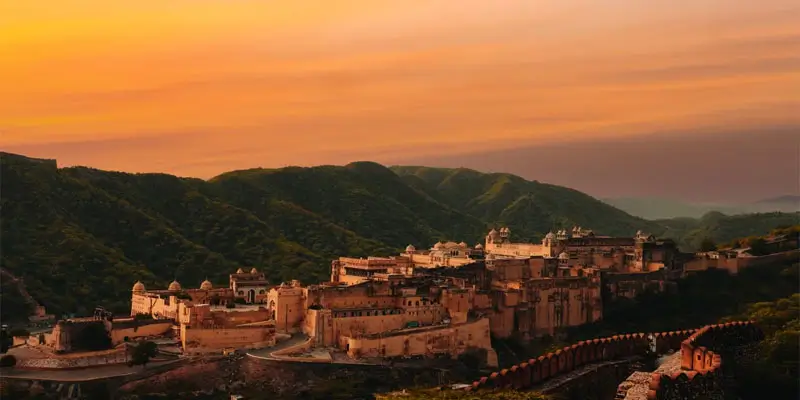
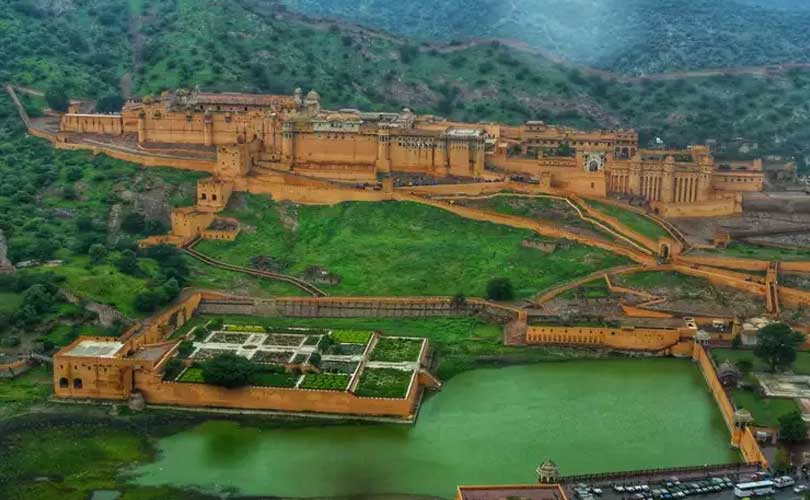
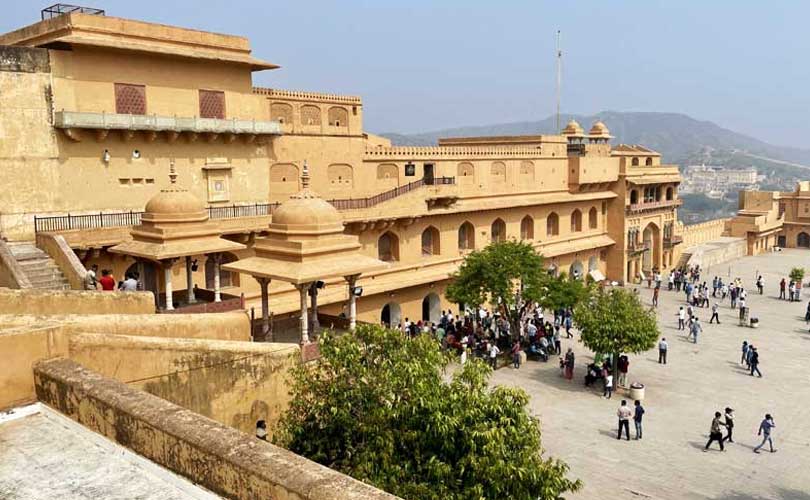
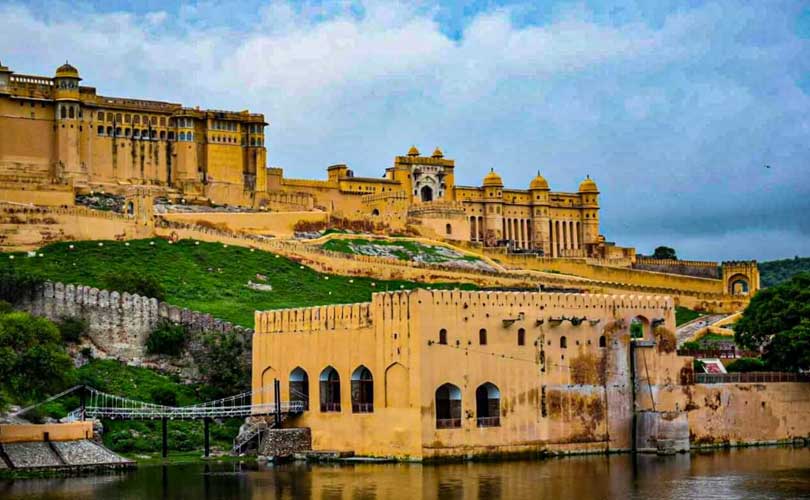
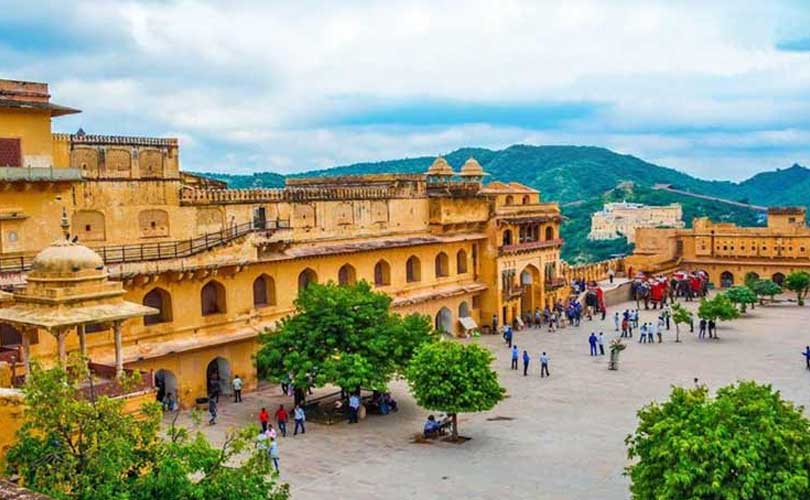
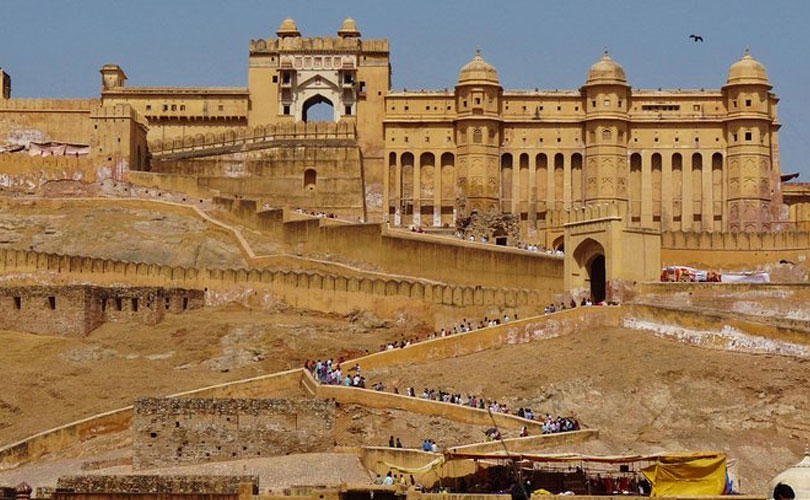
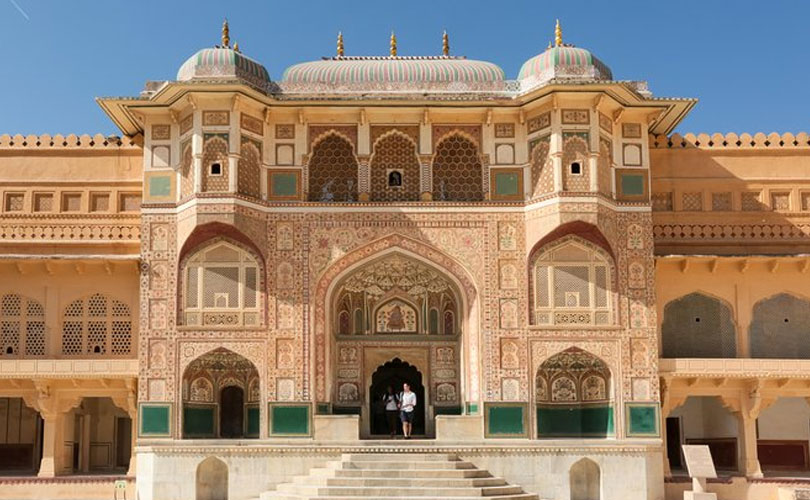
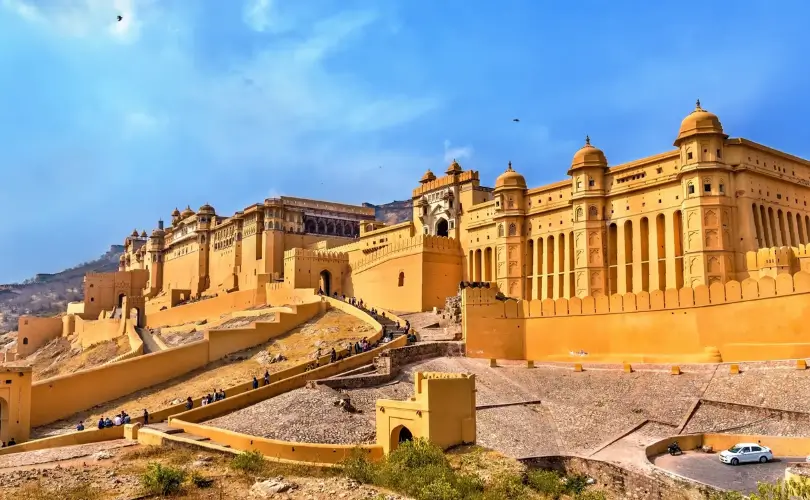
Amber Palace is more commonly associated with morning sightseeing than formal sunrise access, but the surrounding landscape can be beautiful during the early part of the day. The fort complex sits among rugged hills, and lower morning light creates stronger texture across the sandstone and surrounding slopes.
Travelers should check Amber Palace opening hours before attempting an early visit because reaching the area before public access begins does not provide entry to the interior.
The advantage of going early is reduced heat and smaller visitor numbers rather than witnessing sunrise from inside every part of the fort.
The approach road and exterior viewpoints can still provide excellent photographs. The palace reflected in Maota Lake is one of Jaipur's classic compositions, particularly when the water is calm.
Allow two to three hours for Amber Palace if the visit includes courtyards, palace interiors and viewpoints. Rushing through in one hour simply to reach another attraction reduces the value of the experience.
For photographers, morning generally works better than harsh midday conditions because architectural relief and hill textures become easier to capture.
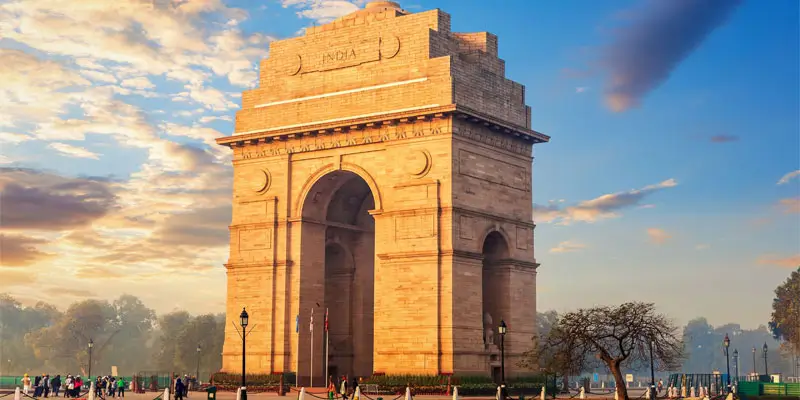
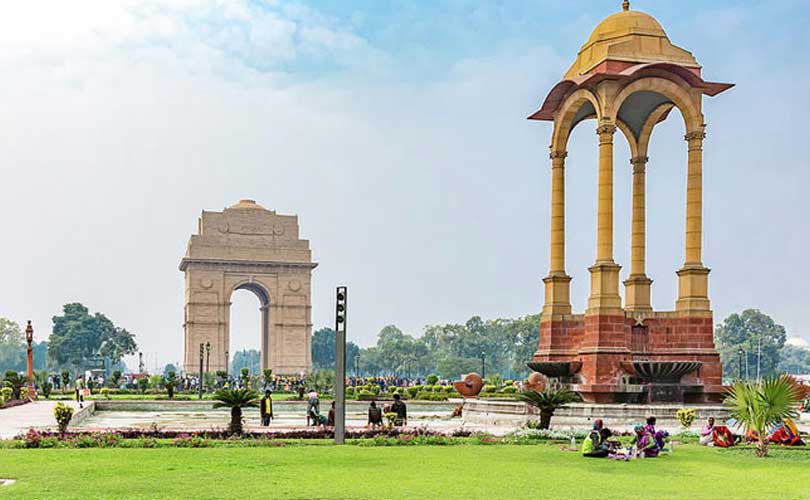
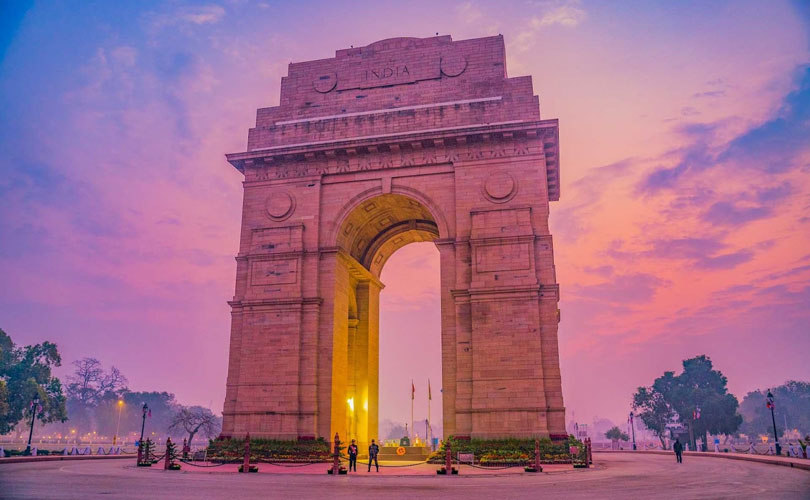
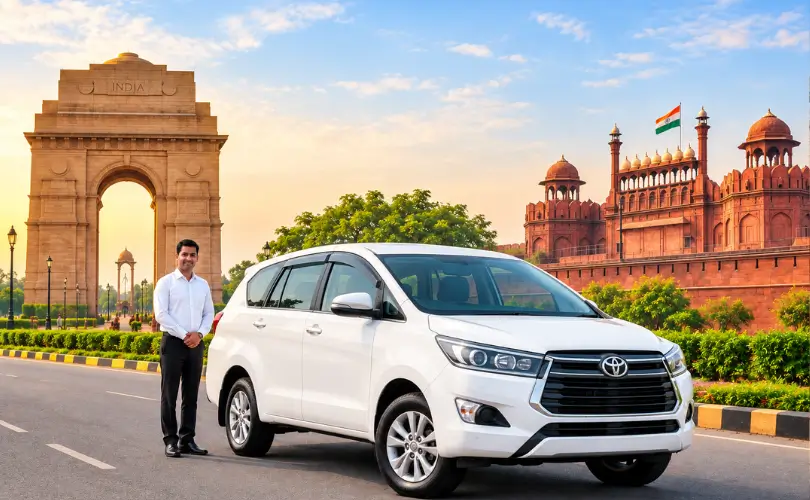
Delhi does not have one single sunrise monument with the same worldwide recognition as the Taj Mahal, but India Gate at dawn can provide a peaceful city experience before traffic and pedestrian activity increase.
The broad avenues around central New Delhi look very different early in the morning. Softer light, lower traffic and open sightlines create a calmer atmosphere than the middle of the day.
Sunrise photography works especially well when the sky is clear and the air quality is favorable. During periods of heavy haze, the monument can lose contrast quickly.
A visit of 30 to 60 minutes is generally enough for India Gate itself, but travelers can combine the stop with a drive through central New Delhi toward other morning attractions.
Security restrictions and access patterns around government areas can change, so visitors should follow current local instructions and avoid assuming every road remains permanently open to vehicles.
For travelers starting a Delhi sightseeing tour early, India Gate can function as an atmospheric first stop before monuments with fixed opening hours begin admitting visitors.
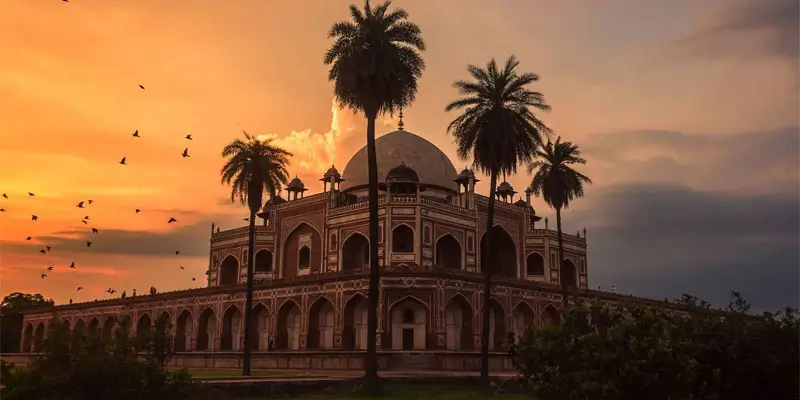
Travelers who want an early-morning experience without formal monument ticketing can consider Lodhi Garden. The large landscaped park contains historic tombs, mature trees, pathways and open lawns, giving it a completely different atmosphere from the crowded streets and major sightseeing complexes of Delhi.
Early morning is the strongest period because local walkers, runners and photographers use the garden before the day becomes hotter and busier. The combination of old stone tombs, trees and soft morning light creates a peaceful setting that works particularly well for travelers who have already seen Delhi’s major monuments and want a slower start.
A visit of 45 minutes to one-and-a-half hours is usually enough, although photographers may stay longer. Since the garden is outdoors and spread over a broad area, comfortable footwear is important.
The main appeal is not one fixed sunrise viewpoint. Light moves through trees and around historic structures, creating several changing compositions as the morning develops. This makes Lodhi Garden more flexible than a location where everyone competes for one famous frame.
For a traveler staying in central or southern Delhi, Lodhi Garden sunrise can be followed by breakfast and later sightseeing once ticketed monuments open. It is especially useful on a free morning when the traveler does not want another formal heritage visit.
Jaipur offers several places where late-afternoon sightseeing can be paired naturally with sunset. The key is not trying to reach multiple elevated viewpoints during the final hour. Traffic and road distances make that unrealistic.
A strong option is to spend the afternoon around Jaigarh Fort or Amber Palace and then continue toward Nahargarh Fort for sunset. Another option is to remain closer to central Jaipur and use Jal Mahal for softer evening light before returning to the city.
Travelers should choose the viewpoint according to the type of image they want. Nahargarh gives a large urban panorama, Jal Mahal provides a palace-and-water composition, while the Amber area focuses more on hills, fort walls and architectural scale.
A Jaipur sunset tour should allow for at least 60 to 90 minutes before sunset at the final location. Driving toward a viewpoint during the final twenty minutes creates unnecessary stress and frequently results in missing the best light.
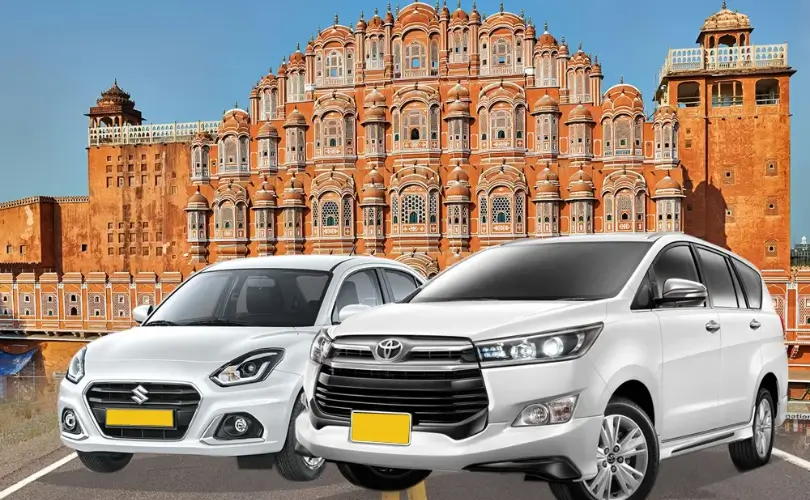
Private transportation is especially useful because the driver can stay nearby and handle the return after dark. Travelers using app-based taxis should check mobile signal, pickup access and availability before reaching a hilltop location.
Agra’s strongest morning is almost always built around the Taj Mahal at sunrise, but travelers can add another early stop afterward if the schedule is not overloaded.
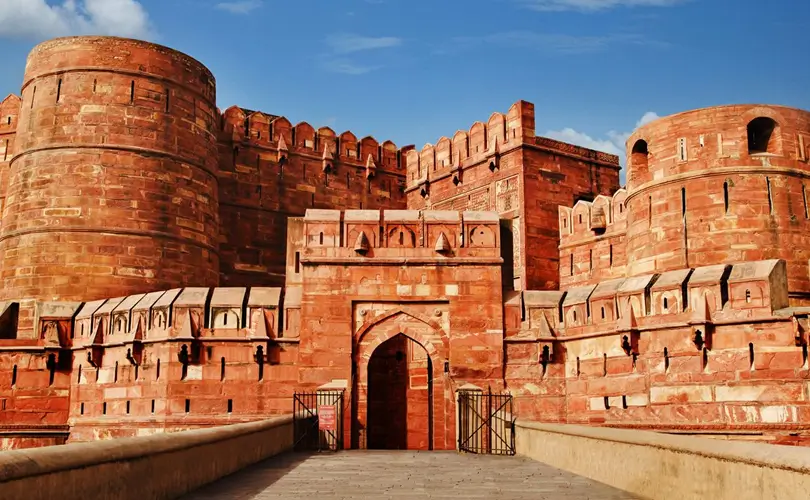
A typical sequence might begin with the Taj Mahal, followed by breakfast and then Itmad-ud-Daulah or Agra Fort. The advantage is that the most sensitive light is reserved for the Taj, while the remaining monuments are visited once full daylight has developed.
Another option is to see the Taj Mahal from Mehtab Bagh during late afternoon on the day of arrival and then enter the Taj itself the following morning. This gives the traveler two very different views without needing to repeat the same route.
Photographers should avoid trying to fit both sunrise and sunset at the Taj Mahal on one short day if it means sacrificing the rest of Agra. The city has enough architectural variety that a better Agra photography itinerary uses different locations for different periods of light.
Sunrise and sunset quality depends heavily on season. The exact times change throughout the year, and atmospheric conditions can completely alter visibility.
During warmer months, sunrise occurs earlier, which means travelers may need to leave the hotel before 5:30 a.m. for some locations. The benefit is cooler air and more comfortable outdoor sightseeing before midday heat develops.
Winter brings later sunrises and earlier sunsets, making mornings easier but reducing the length of the sightseeing day. Haze can also become more noticeable in Delhi and Agra, especially during periods of poor air quality.
A hazy morning is not automatically useless for photography. Softer light can create atmospheric images, especially around the Taj Mahal or large city views, but distant details may disappear.
The strongest approach is to check the local sunrise and sunset time for each city on the actual travel date and build the day around that information. Fixed statements such as “sunset is always at 6:30 p.m.” are not reliable across different months.
Travelers should also remember that monument opening hours do not always match astronomical sunrise or sunset. A viewpoint may look ideal on a map but remain inaccessible during the most attractive light.
Most travelers do not need professional equipment to capture good sunrise and sunset images along the Golden Triangle. Modern smartphones can perform extremely well in soft light, especially when the traveler avoids excessive digital zoom and keeps the lens clean.
A dedicated camera provides more flexibility. A wide-angle lens is useful for the Taj Mahal, Amber Palace and Qutub Minar, while a moderate telephoto lens works well for distant Taj Mahal views from Mehtab Bagh and city details from Nahargarh.
Tripods are more complicated because monument rules can restrict professional equipment. Travelers should check the specific policy before carrying a large tripod through security. A small camera support is not automatically permitted simply because it fits inside a bag.
Batteries should be charged the night before a sunrise outing. Cold mornings can reduce battery performance, while long video recording can drain a phone much faster than expected.
Avoid carrying every lens and accessory during crowded sightseeing. A smaller bag with only the equipment needed for the specific location is easier to manage.
The best Golden Triangle travel photography often comes from patience rather than equipment. Waiting ten minutes for a group to move, walking slightly farther from the obvious viewpoint or returning attention to the changing light can create a better image than using an expensive camera from the busiest position.
For most travelers, the Taj Mahal at sunrise is the strongest sunrise experience on the Golden Triangle because the marble changes character as the light develops and early morning can be calmer than midday. Lodhi Garden in Delhi and Jal Mahal in Jaipur are also worthwhile morning locations.
Nahargarh Fort is one of Jaipur’s best-known sunset locations because it provides a broad elevated view across the city. Travelers should arrive at least 60 to 90 minutes before sunset to account for traffic, parking and walking.
Yes. Mehtab Bagh offers a direct view toward the Taj Mahal from across the Yamuna River and is particularly attractive in late-afternoon light. Visibility depends on weather, haze and river conditions, so dramatic sunset colors are never guaranteed.
Travelers should generally arrive before the monument opens, allowing enough time for security and entry procedures. Since opening is tied to sunrise and timings vary by season, the current official schedule should be checked for the actual visit date.
The Taj Mahal is closed to general tourists on Fridays. Golden Triangle itineraries should be arranged so that the Agra stay does not depend on a Friday tourist visit to the monument.
Both can work, but early morning at Jal Mahal often provides a calmer roadside environment and softer reflections when wind conditions are favorable. Late afternoon can produce warmer light but usually brings more visitors and traffic.
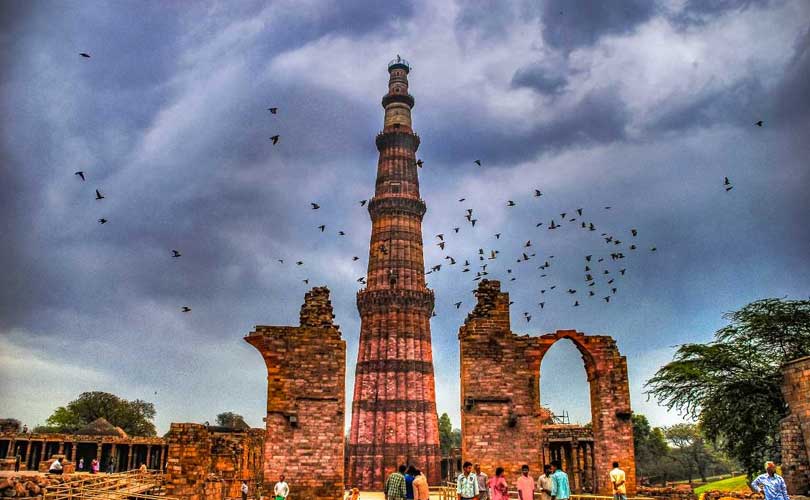
Yes. The sandstone surfaces of Qutub Minar respond well to late-afternoon light, creating stronger texture and shadows. Travelers should arrive well before closing rather than expecting to remain inside the complex after sunset.
A practical rule is to arrive 45 to 60 minutes before sunset, and 60 to 90 minutes early for hilltop or crowded locations such as Nahargarh Fort. This allows time for traffic, security and finding a suitable position.
The three cities are relatively close compared with India’s full geographic scale, but sunrise and sunset still vary by date and location. Travelers should check the exact local time for each city on the day of the visit rather than using one fixed Golden Triangle timing.
Each city offers a different strength. Agra is strongest for the Taj Mahal and Mughal riverfront views, Jaipur provides forts, hills and elevated city panoramas, while Delhi offers a wider mix of monuments, gardens and urban architecture. The best city depends on whether the traveler prefers symmetry, landscapes, street scenes or historic architecture.