Traveling from Delhi to Jaipur by road gives international visitors a straightforward way to move between two of North India's most important tourism cities without depending on train schedules, airport transfers, or shared coaches. A Delhi to Jaipur private car collects travelers from their hotel, airport, or another agreed location and takes them directly to their Jaipur accommodation, with rest or sightseeing stops added when the schedule permits.
The road distance between Delhi and Jaipur is generally around 270 to 300 kilometres, depending on the pickup location, final hotel, and selected route. Travelers should normally allow approximately five to six hours of driving, but a door-to-door journey can take longer. Delhi NCR congestion, road construction, highway traffic, meal breaks, weather, and traffic entering Jaipur can all affect the arrival time.
The lowest advertised taxi fare is not always the actual amount a traveler pays. A proper Delhi to Jaipur car rental with driver may involve fuel, highway tolls, parking, driver allowance, interstate operating costs, airport waiting, and additional mileage for stops. Some companies include these charges in one quotation; others display a low base fare and collect road expenses separately.
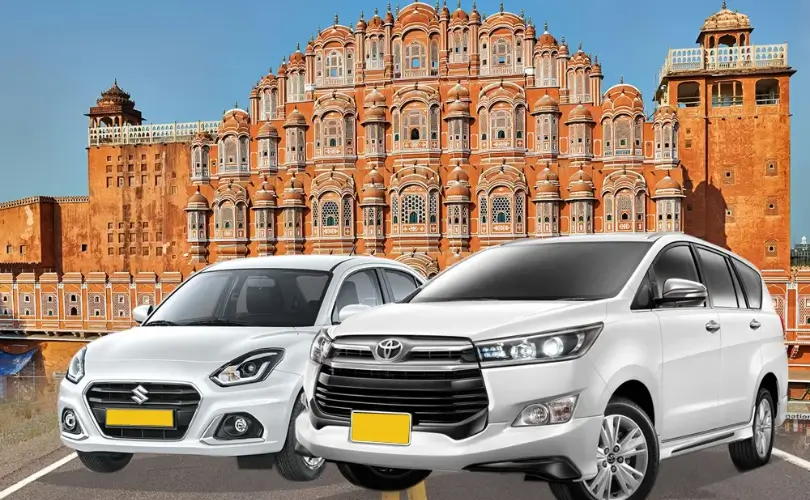
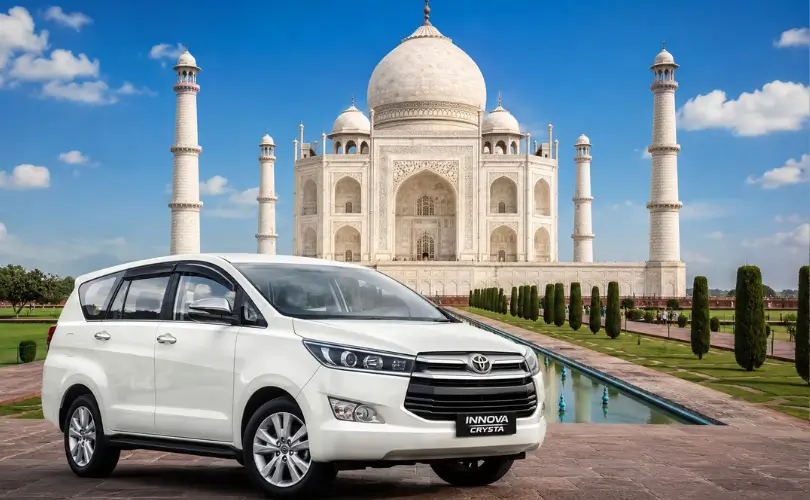
Vehicle selection also changes the price. One or two travelers with moderate luggage can usually use a sedan. Three or four adults, families, senior visitors, and travelers carrying large international suitcases generally have a better road experience in an Innova-type vehicle. An Innova Crysta from Delhi to Jaipur costs more but provides useful extra space during a journey that can occupy much of the day.
The road transfer can also become part of the sightseeing experience. Neemrana, Shahpura, and selected attractions around the route may be possible depending on the chosen highway and available time. The important point is to decide on stops before receiving the final vehicle quotation because detours can change both mileage and driving hours.
A simple online map can make the Delhi to Jaipur road distance appear more predictable than it really is.
The first variable is the pickup location.
A traveler staying near Connaught Place begins from a very different point than someone staying in Aerocity, Gurugram, Noida, or Old Delhi. Crossing Delhi NCR can itself take a significant amount of time.
The final destination creates the same issue.
A Jaipur hotel near the old city, Bani Park, C-Scheme, Civil Lines, or Kukas may require different local driving after the vehicle reaches the Jaipur region.
For most travelers, a practical estimate is approximately 270–300 kilometres and around five to six hours under reasonable road conditions. It is safer to allow additional time when the arrival is connected to a hotel event, dinner reservation, railway departure, or flight.
Road conditions and preferred routes can change because highway projects and traffic diversions are not permanent. A professional driver should select the appropriate operational route for that day rather than following an old online itinerary blindly.
An early departure can make a considerable difference.
Leaving a central Delhi hotel around 6:00 a.m. or 7:00 a.m. often reduces exposure to the heaviest city traffic and can put the vehicle on the highway earlier. With a breakfast or coffee stop, travelers may reach Jaipur around midday or early afternoon when road conditions are favorable.
A departure around 9:00 or 10:00 a.m. is still possible, but travelers should expect to spend more of the day in transit.
International travelers arriving at Delhi Airport sometimes want to drive directly to Jaipur.
A Delhi Airport to Jaipur private car is practical, but flight timing should influence the decision.
Suppose an international flight lands at 2:00 a.m. After immigration, baggage collection, customs, and meeting the driver, the traveler may not leave the airport until considerably later. Starting a five-to-six-hour road journey immediately after a long-haul flight can be exhausting.
For travelers comfortable with that schedule, a direct transfer avoids a Delhi hotel night. For senior travelers, families with children, or visitors arriving after a very long journey, resting in Delhi first may provide a better start to the holiday.
A daytime airport arrival creates a different issue: traffic.
If a flight lands during busy daytime hours, the car must first move through Delhi NCR before making progress toward Rajasthan.
Private transportation cannot eliminate congestion, but it removes several other complications. Travelers do not need to travel from the airport to a railway station, manage luggage through platforms, wait for a scheduled train, and arrange another vehicle after arriving in Jaipur.
The car travels door to door.
This becomes particularly valuable for visitors carrying two or three large suitcases.
Season should also influence road expectations.
Winter mornings in northern India can occasionally bring dense fog and reduced visibility. The driver may need to travel more slowly. Arrival time should never be prioritized over road safety.
Summer creates fewer fog concerns but much hotter daytime conditions. A properly functioning air-conditioning system is essential.
Monsoon periods can bring heavy rainfall, water accumulation, slower traffic, and temporary road disruptions.
The quoted travel time should therefore be treated as a reasonable estimate rather than a guarantee.
The Delhi to Jaipur taxi price varies according to vehicle category and service conditions.
For a one-way private transfer, international travelers using a reliable tourism vehicle can broadly budget around ₹7,000 to ₹10,000 for a sedan.
An Innova-type vehicle may broadly cost around ₹10,000 to ₹14,000, while an Innova Crysta Delhi to Jaipur transfer may reach approximately ₹12,000 to ₹16,000 or more.
Premium vehicles, larger vehicles, unusual pickup hours, additional sightseeing, waiting time, peak demand, and extended mileage can increase the amount.
These are practical budgeting ranges rather than fixed fares.
A quote should be judged according to what it includes.
Consider two sedan offers.
The first company quotes ₹6,000 but excludes tolls, parking, interstate costs, driver allowance, and additional pickup mileage.
The second quotes ₹8,500 with most normal road expenses included.
The ₹6,000 advertisement may look cheaper, but the final payable amount could move much closer to the second quotation once extras are added.
Travelers should therefore ask for the all-inclusive Delhi to Jaipur private car cost wherever possible.
Fuel should be addressed first.
For a one-way intercity tourism transfer, the quotation should state whether fuel for the agreed journey is included.
Tolls are another obvious expense.
The road between Delhi and Jaipur includes toll sections depending on the operating route. Travelers should not assume the driver will personally absorb these costs if the quote states that tolls are extra.
State or permit-related charges should also be clarified.
A commercially operated tourist vehicle crossing state boundaries must comply with applicable transport requirements. The traveler does not need to manage the paperwork, but should know whether the related operating costs are included.
Driver allowance matters because this is not a short local taxi ride.
A driver may spend the majority of the day taking the travelers to Jaipur and must also account for the vehicle's onward operational requirements.
Airport pickups can affect the price because parking and waiting may be involved.
If the service begins at Indira Gandhi International Airport, travelers should give the flight number and arrival time. If the flight is delayed, the operator needs enough information to track or manage the pickup appropriately.
The final hotel location in Jaipur should also be included when requesting the quotation.
A drop in central Jaipur is different from a resort located far outside the city. Properties toward Kukas or other peripheral areas can change the mileage.
A Delhi to Jaipur private transfer should ideally be quoted door to door rather than simply “Delhi city to Jaipur city.”
A lower car price is useful only when the vehicle is actually suitable for the passengers.
For one international traveler, a sedan is normally the most economical option.
For a couple, a sedan can remain comfortable if luggage is limited to one or two normal suitcases plus cabin bags.
The problem appears when seat capacity is confused with luggage capacity.
A sedan may technically carry four passengers, but four international travelers with four large suitcases cannot reasonably expect the same comfort.
For Delhi to Jaipur by private sedan, one or two passengers are usually the most practical configuration when significant luggage is involved.
Three adults should strongly consider an Innova-type vehicle.
The additional cabin room becomes valuable during a five-to-six-hour journey. Passengers have more space to sit comfortably, and luggage management is generally easier.
An Innova with driver from Delhi to Jaipur also suits families.
Children often travel with additional bags, snacks, jackets, electronics, and other personal items. Having some unused cabin space makes a long road transfer easier.
Senior travelers may value a larger vehicle for another reason: comfort during rest stops and extended sitting.
An Innova Crysta is usually priced above a standard Innova-type option but is popular among international visitors seeking a more premium road transfer.
For three or four travelers, the additional vehicle cost is divided among the passengers, so the per-person difference can become relatively modest.
Suppose a sedan costs ₹8,000 and a Crysta costs ₹13,000.
For one passenger, the ₹5,000 difference is significant.
For four passengers, the difference equals only ₹1,250 per person while providing substantially more shared space.
That calculation helps explain why private Innova Crysta hire in India is common among small international groups.
Larger families or groups may need a Tempo Traveller or another tourism vehicle.
Trying to place too many passengers and bags into a smaller car to save money can make a five-hour journey uncomfortable and potentially create luggage-safety problems.
Air conditioning should be fully functional regardless of vehicle category.
International travelers booking during hotter months should not treat air conditioning as a premium extra. It is a basic requirement for a comfortable Delhi–Jaipur road journey.
Travelers can also ask about seat belts and general vehicle condition when confirming the booking.
A tourism vehicle is part of the trip for several hours, so cleanliness and maintenance matter.
A direct transfer is the fastest choice, but travelers with enough time may want to turn the road journey into a more interesting day.
Neemrana is one of the best-known names associated with the Delhi–Jaipur corridor.
Neemrana Fort Palace is a restored heritage property in Rajasthan. Depending on current access rules, hotel policies, events, and day-visitor availability, travelers may be able to stop in the area for a meal or visit.
However, access should never be assumed.
Heritage hotels can restrict non-resident visitors during private events, high occupancy, weddings, or operational periods. Travelers specifically wanting to enter Neemrana Fort Palace should confirm current visitor rules in advance.
A Delhi to Jaipur transfer via Neemrana also requires extra time.
Even when the detour itself is not enormous, leaving the highway, entering the town, parking, visiting the property, eating, and returning to the road can add several hours to the day.
For travelers interested in heritage hotels, this can be worthwhile.
For visitors who want to reach Jaipur early enough for afternoon sightseeing, a long Neemrana stop may not make sense.
Shahpura and other areas along the broader route can provide additional break opportunities, but stops should be chosen for a genuine reason rather than simply filling the itinerary.
A highway restaurant or clean rest facility is often the most practical break.
On a five-to-six-hour drive, one 20-to-30-minute rest stop is reasonable for many travelers. Families and senior visitors may prefer more frequent breaks.
Meal timing should also be considered.
Leaving Delhi at 6:00 a.m. allows travelers to stop for breakfast after making progress out of the city.
Leaving at 9:00 a.m. may make a lunch stop more appropriate.
A good private driver can suggest practical facilities, but travelers are free to decide whether they want to stop.
If dietary requirements are important, tell the operator before the journey.
Vegetarian food is widely available, but travelers requiring vegan meals, gluten-free options, severe allergy precautions, or a specific cuisine may need a more carefully selected restaurant.
A sightseeing stop should be agreed before finalizing the car price.
A driver quoting for a direct Delhi Jaipur private taxi may calculate mileage and duty hours differently from a service involving several detours and four additional hours of waiting.
The same applies to shopping stops.
Some travelers want to visit outlets or handicraft stores on the way. Others want no shopping at all.
Shopping should never be compulsory.
If the goal is a direct transfer, state that preference clearly.
Whether sightseeing is practical on arrival depends on the departure time from Delhi.
A traveler leaving Delhi around 6:00 a.m. may reach Jaipur near midday under favorable conditions. After hotel check-in and lunch, several hours can remain for lighter sightseeing.
However, it is usually better not to schedule the most important Jaipur attraction immediately after a long drive.
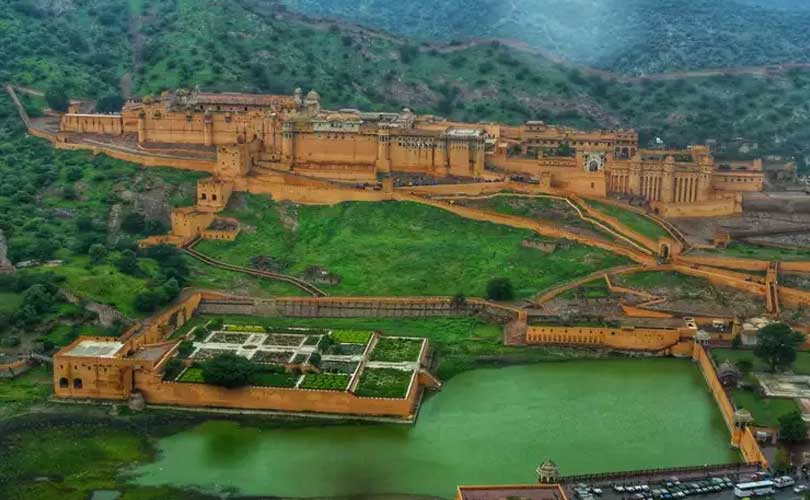
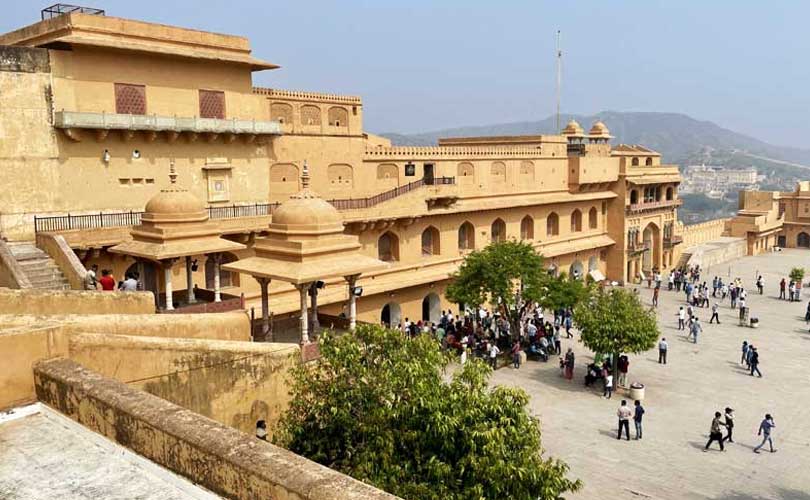
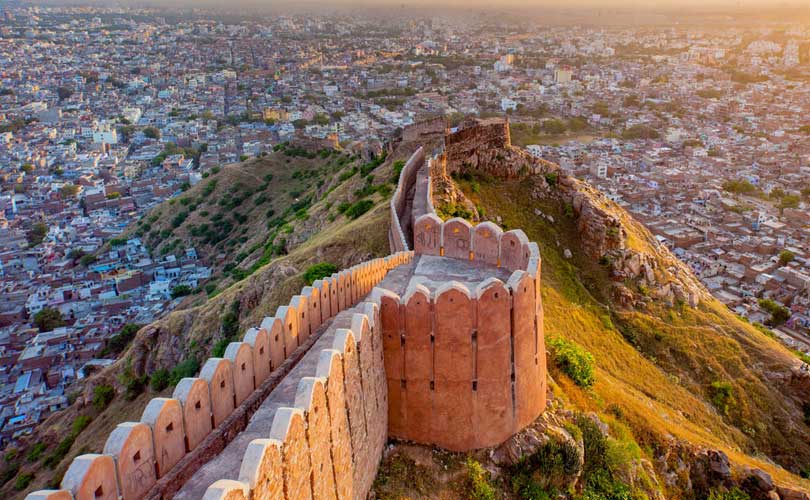
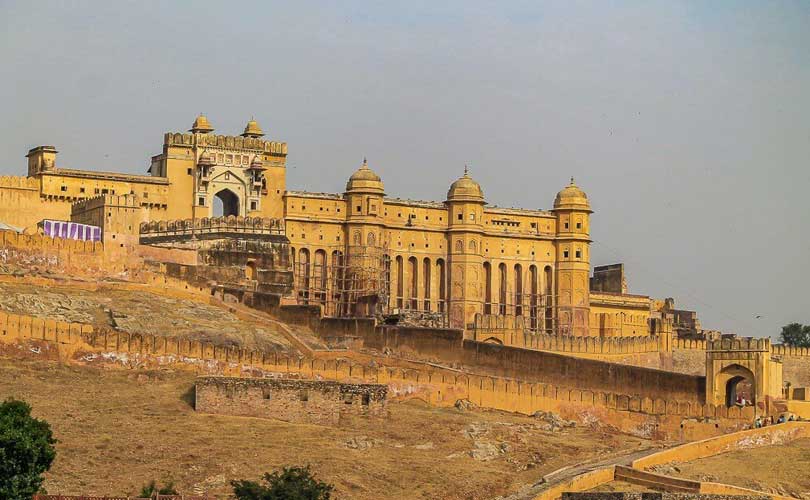
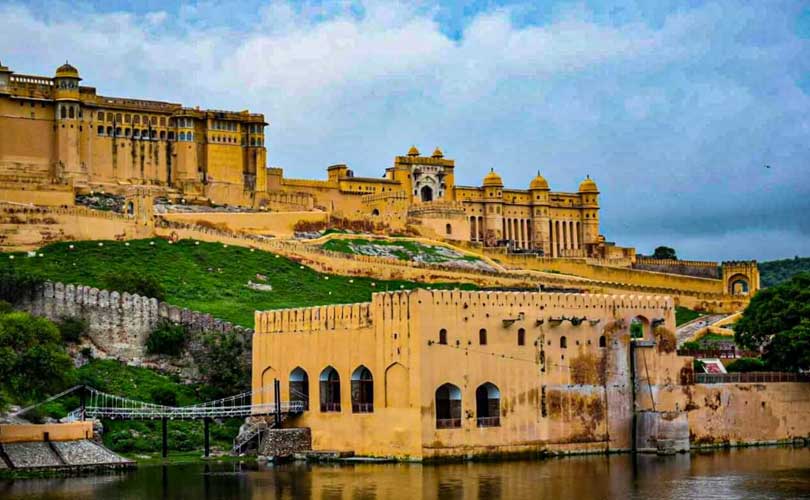
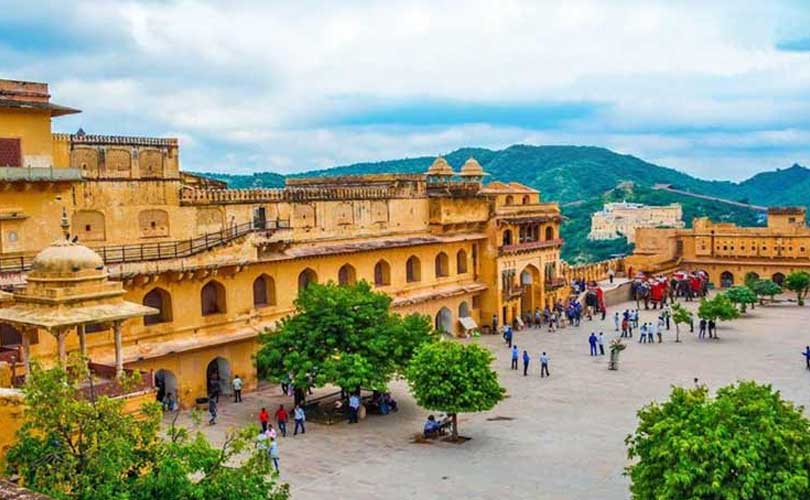
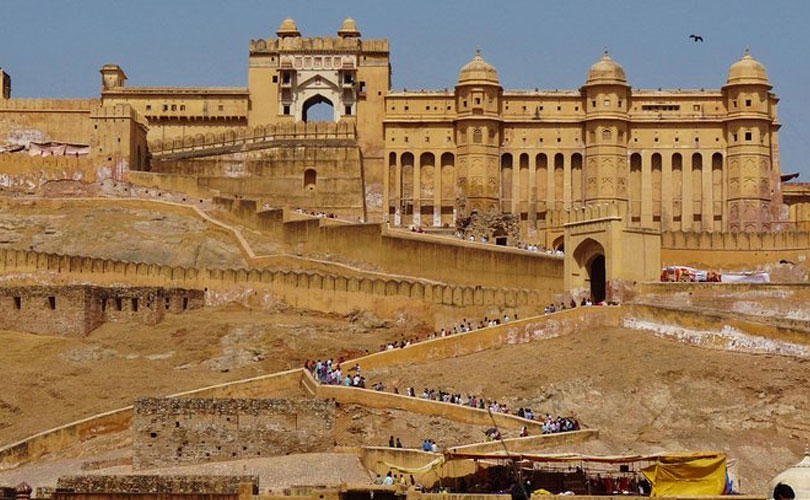
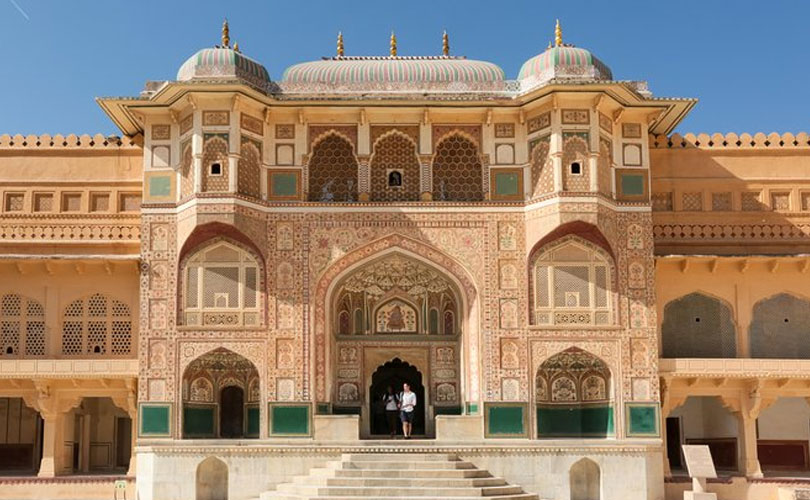
Amber Fort deserves sufficient time and is generally better suited to a morning visit.
The fort is located approximately 10–12 kilometres from central Jaipur, depending on the starting point. Traffic and visitor volume can affect the journey.
A full Amber Fort visit can take two hours or more, particularly with a guide.
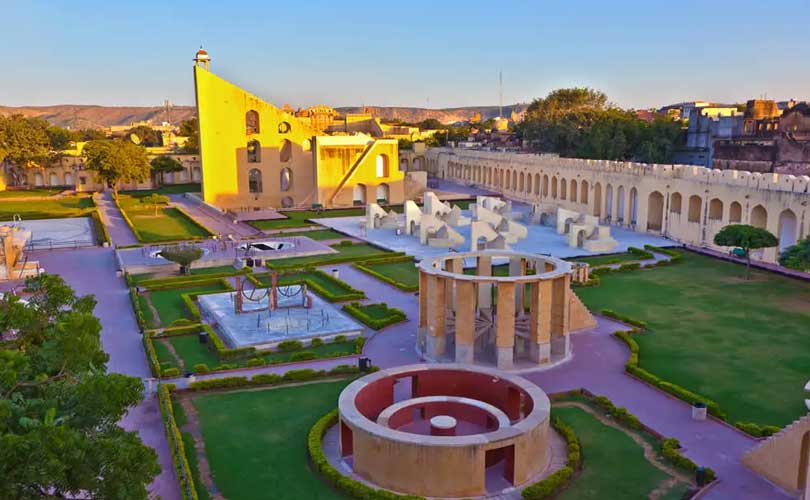
City Palace and Jantar Mantar are located in the old-city area and can work well together.
International visitor ticket prices for Jaipur attractions vary according to the site and ticket type. Travelers should expect major paid attractions to charge foreign visitor rates that can range from several hundred rupees to over ₹1,000 per person depending on the attraction and access selected.
Current official rates should be checked shortly before visiting because ticket structures can change.
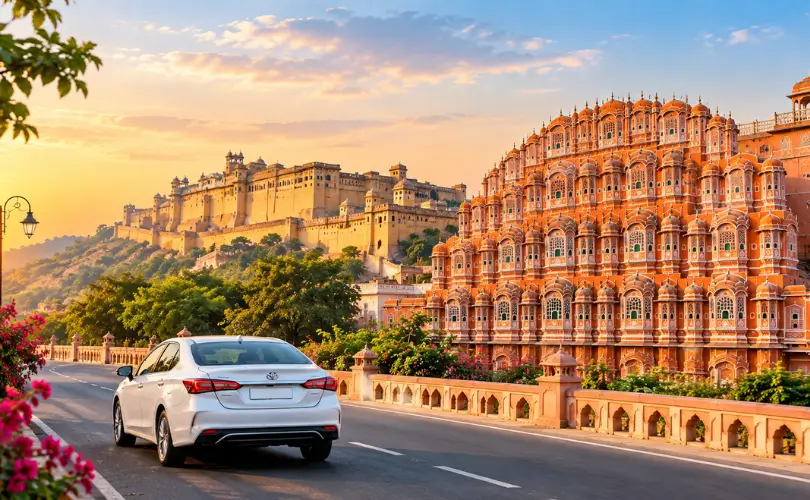
Hawa Mahal is another major Jaipur landmark. Many travelers photograph its famous façade from the street area, while those wanting to enter should allow additional time.
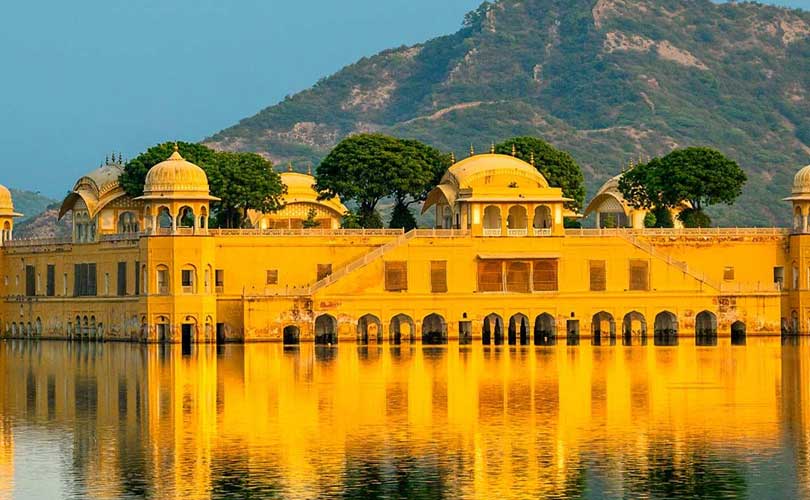
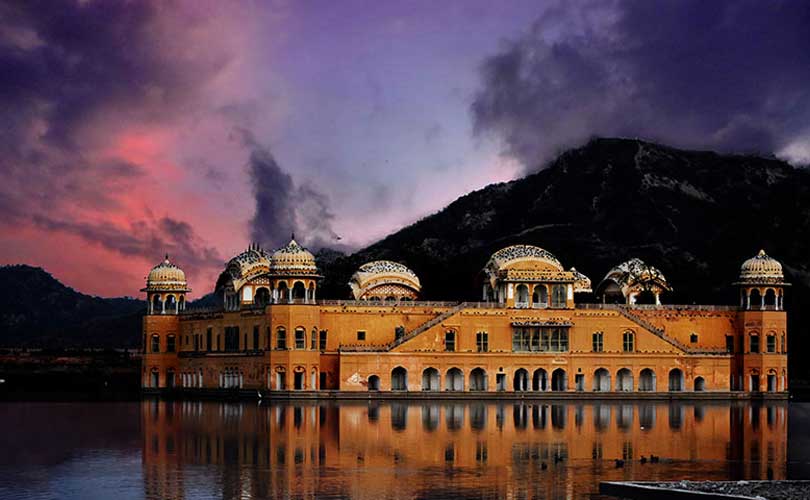
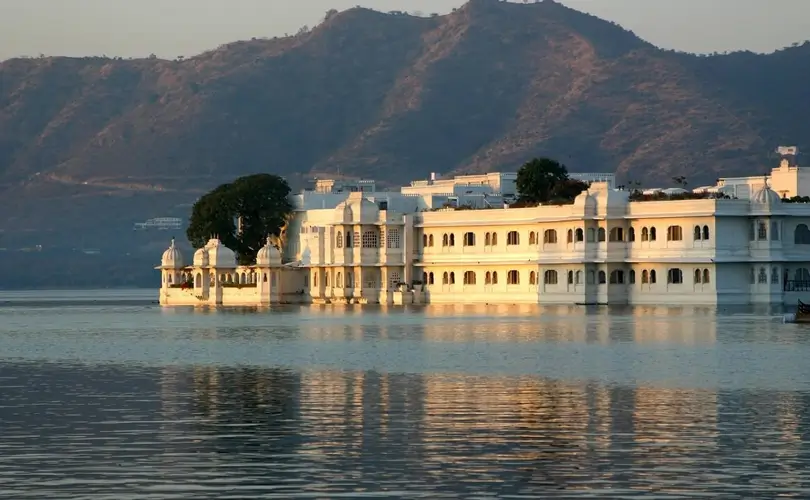
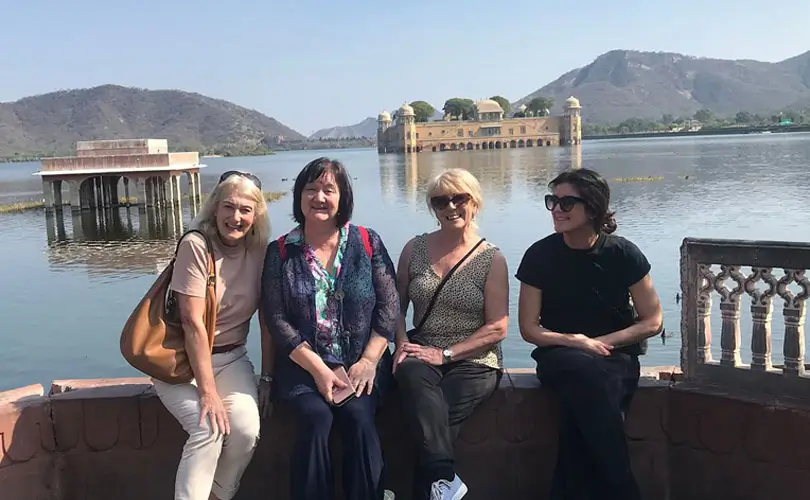
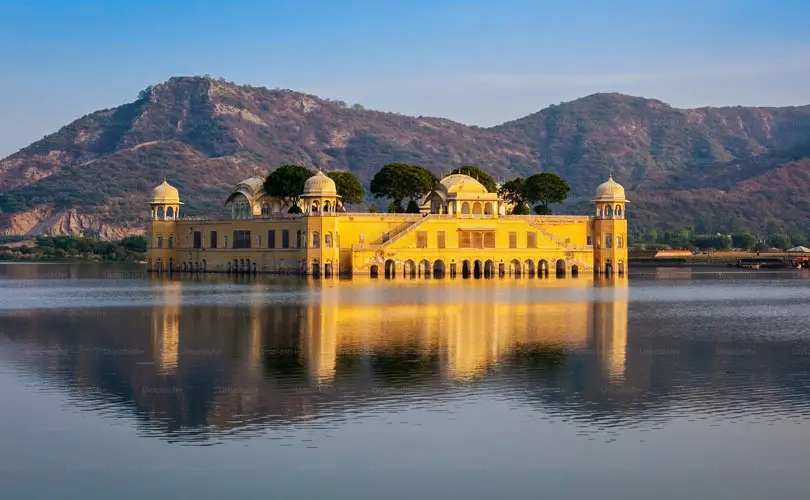
Jal Mahal is normally viewed from the roadside promenade because the palace itself is not ordinarily visited as a standard interior tourist attraction.
For someone arriving in Jaipur around 2:00 p.m., a sensible afternoon might involve hotel check-in followed by City Palace, Jantar Mantar, or a relaxed old-city visit depending on closing hours.
Travelers arriving around 5:00 or 6:00 p.m. should not expect to complete normal monument sightseeing.
In that case, the evening can be used for dinner or rest before a full private Jaipur sightseeing tour the following morning.
This is another reason not to judge a Delhi–Jaipur road transfer purely by speed. Reaching Jaipur safely and comfortably is more important than saving 20 minutes only to arrive tired.
A Delhi Airport to Jaipur taxi with driver removes the need for an overnight Delhi stay when the travel schedule supports a direct transfer.
The driver can meet travelers at the agreed airport pickup point and take them directly to Jaipur.
For an international arrival, immigration and baggage collection can take time. The actual road departure may be an hour or more after the scheduled landing time.
Flight delays create another variable.
Travelers should provide the correct flight number rather than only saying, “My flight arrives at 8:00 a.m.”
The operator can then identify the flight associated with the pickup.
Airport parking and waiting conditions should be stated in the quotation.
Very late-night or early-morning pickups may be subject to different operational charges.
Travelers should also think about fatigue.
A passenger who has just completed a 10-hour international flight may not enjoy another six hours on the road immediately afterward.
For some visitors, staying one night near Delhi Airport and leaving for Jaipur after breakfast is worth the additional hotel cost.
For others, getting the long transfer completed immediately and waking up in Jaipur the next morning is preferable.
Both approaches are valid.
Families with very young children and older visitors should give particular consideration to rest requirements.
If driving directly from the airport, keep water and essential medication accessible rather than packing everything into a suitcase.
Travelers should not leave passports, wallets, or expensive electronics unattended in the vehicle during rest stops.
Before paying for a private car from Delhi to Jaipur, ask for the final amount in writing.
The quotation should state the pickup point and Jaipur drop location.
It should identify the vehicle category.
It should explain whether fuel is included.
Tolls and parking should be marked as included or extra.
Applicable interstate or permit-related charges should be addressed.
Driver allowance should be clarified.
If a sightseeing stop such as Neemrana has been requested, the stop should appear in the itinerary.
Ask whether extra kilometres are charged and at what rate.
Waiting conditions should be clear, particularly for airport pickups and extended sightseeing stops.
Check whether applicable taxes are included in the quoted amount.
Travelers should also receive the operator's contact information and driver details close to the service date.
Extremely cheap rates deserve additional questions.
A private intercity tourism vehicle has real operating expenses. Fuel, tolls, vehicle maintenance, commercial permits, driver time, and positioning all cost money.
A quote dramatically below the normal market range may exclude several of these elements or use a vehicle standard different from what the traveler expects.
The objective should be a reliable Delhi to Jaipur private transfer, not simply the smallest number displayed online.
Golden Triangle Tours India can arrange Delhi-to-Jaipur transportation as a standalone transfer or as part of a longer Delhi–Agra–Jaipur itinerary. Vehicle selection can be matched to passenger count, luggage quantity, hotel location, airport requirements, and requested stops.
Travelers who provide complete information before booking are far more likely to receive an accurate price and realistic travel schedule.