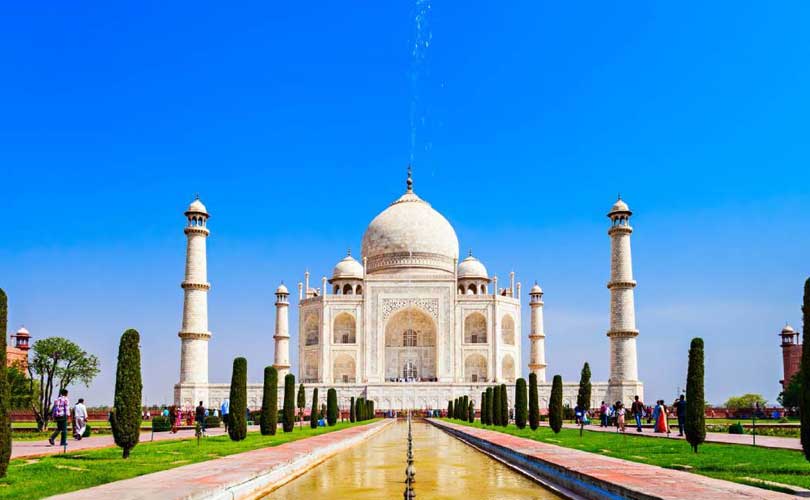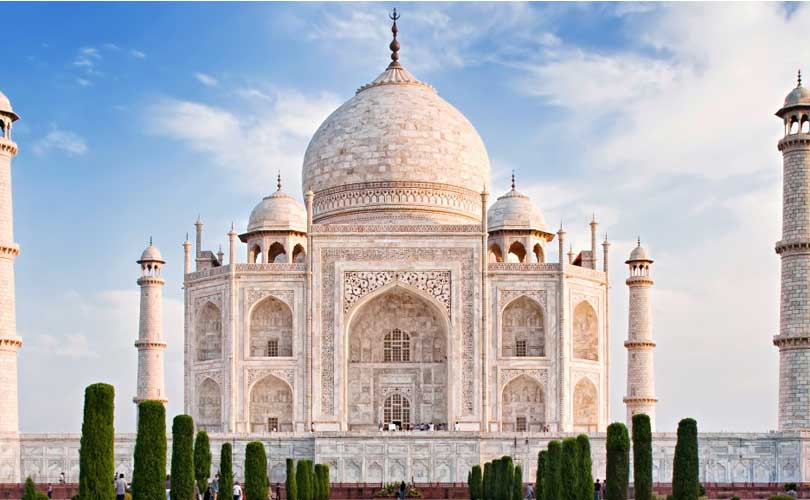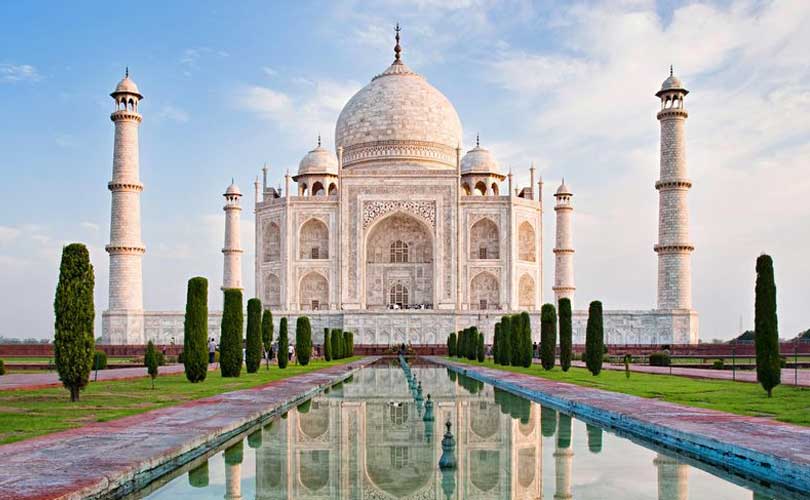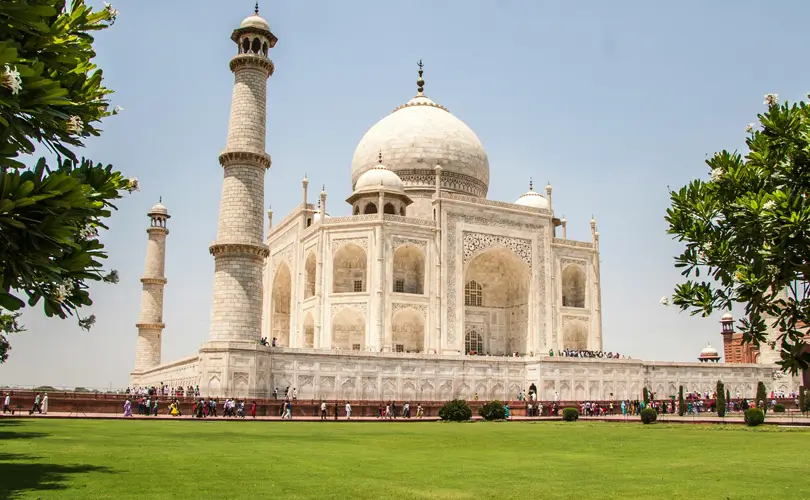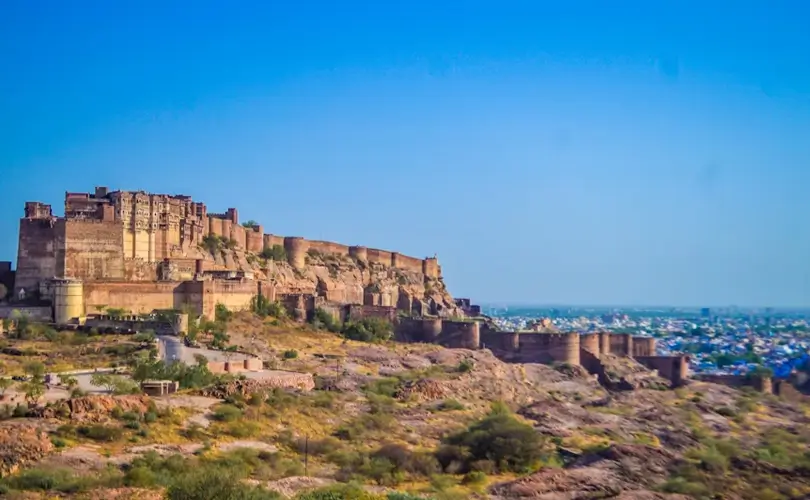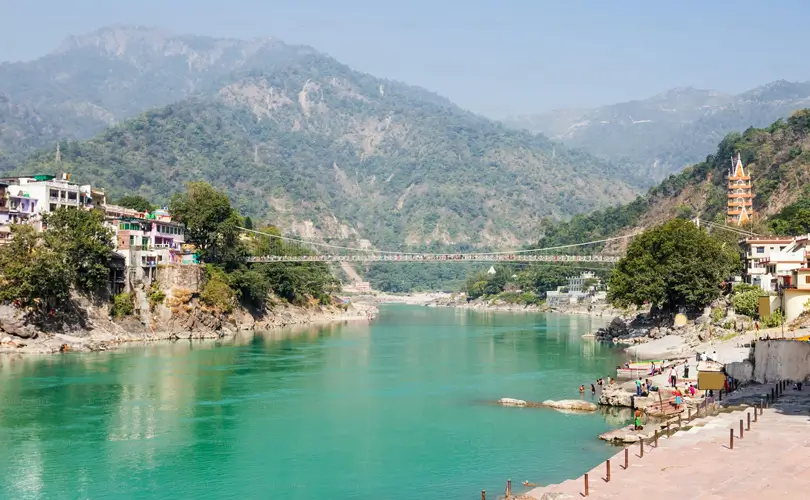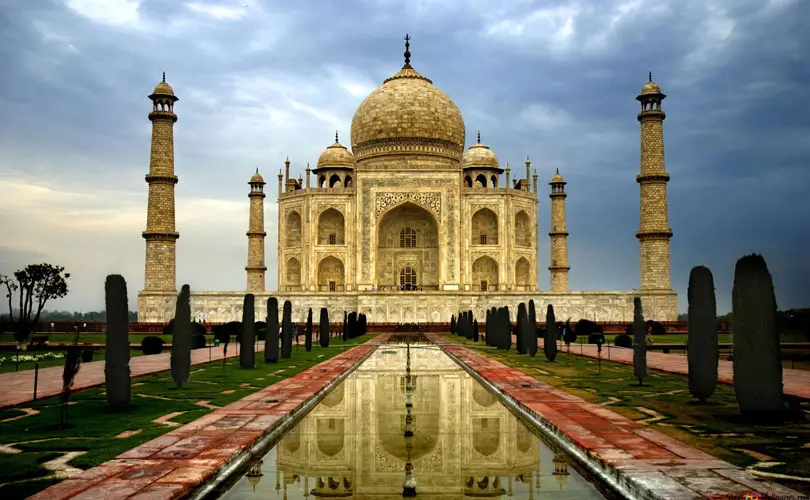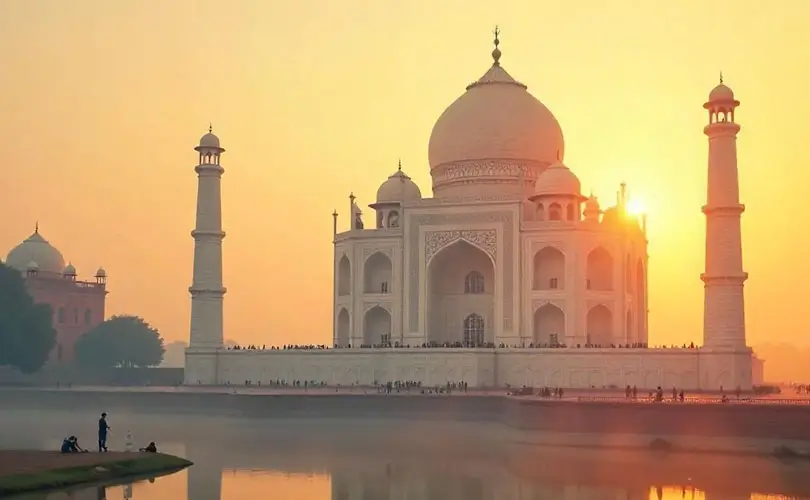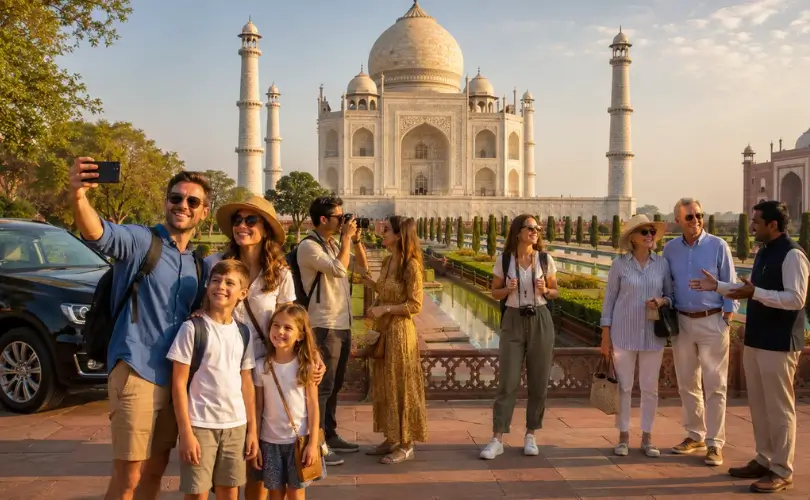
The Taj Mahal gives Agra its worldwide reputation, but treating the city as a single-monument destination leaves a large part of its history unseen. Agra served as an important Mughal capital, and its streets, riverbanks, gardens, tombs and old neighborhoods still contain traces of the imperial city that developed around the Yamuna River. Travelers who spend only enough time to photograph the Taj Mahal and immediately leave for Jaipur miss several places that help explain how Agra became one of northern India's most historically significant cities.
Some of the best places to visit in Agra beyond the Taj Mahal are surprisingly close to the city's famous monument. Mughal tombs display architectural ideas that appeared before the Taj Mahal, riverside gardens reveal how the emperors used landscape and water, while old markets provide a completely different view of modern Agra. These places do not compete with the Taj Mahal. They give it context.
A traveler following a Golden Triangle tour can comfortably include several lesser-known Agra attractions by spending at least one full day in the city rather than treating Agra only as a brief stop between Delhi and Jaipur. Visitors with two nights have even greater freedom because sunrise at the Taj Mahal, Agra Fort and several quieter heritage locations can be spread across different periods of the day.
The strongest Agra itinerary combines the famous monuments with places where the pace is slower and the historical connection is still meaningful. It can include a white-marble Mughal tomb beside the Yamuna, the remains of an imperial garden across the river from the Taj Mahal, an imposing tomb complex at Sikandra and a historic market where the experience is based on ordinary city life rather than monumental architecture.
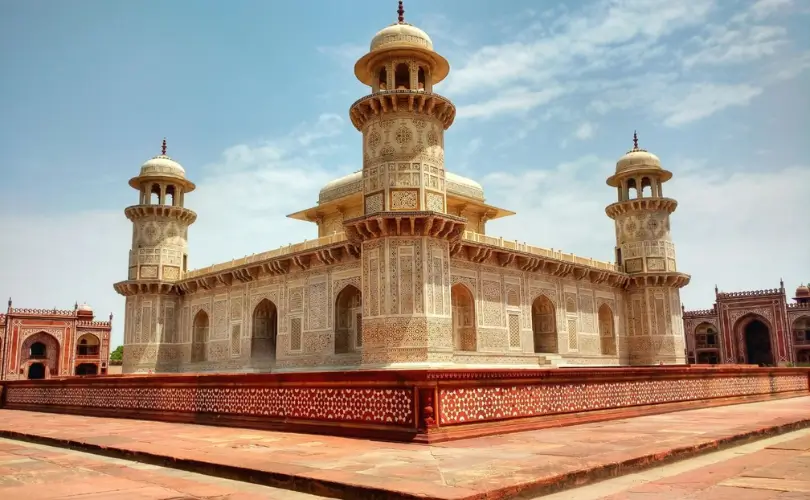
Among the most important hidden gems in Agra, Itmad-ud-Daulah deserves far more attention than it receives from travelers making a quick visit to the city. The tomb stands on the eastern bank of the Yamuna River and is frequently described as a precursor to the Taj Mahal because of its extensive white-marble surfaces, delicate decorative work and role in the development of Mughal funerary architecture.
The monument was commissioned by Nur Jahan for her father, Mirza Ghiyas Beg, an influential figure at the Mughal court who received the title Itmad-ud-Daulah. Construction belongs to the reign of Emperor Jahangir, placing the tomb before Shah Jahan's Taj Mahal. This chronological position makes the monument especially valuable for travelers interested in architecture because they can see techniques and decorative ideas that would later reach an extraordinary scale at the Taj Mahal.
The first impression is very different from entering the Taj Mahal complex. Itmad-ud-Daulah is smaller and more intimate, and the reduced scale makes it easier to examine individual decorative elements. White marble is combined with intricate inlay work, geometric patterns, floral motifs and finely worked screens. The monument demonstrates that Mughal architecture was moving away from the extensive red sandstone associated with earlier imperial buildings toward a stronger use of marble.
This makes Itmad-ud-Daulah Agra particularly worthwhile after visiting Agra Fort. The fort contains architecture from different Mughal periods, including extensive red sandstone and later marble additions. Moving from the fort to Itmad-ud-Daulah allows visitors to see that architectural transition in a more concentrated form before encountering the Taj Mahal.
The surrounding garden also deserves time. Like other important Mughal funerary complexes, the tomb is arranged within a formal garden environment in which pathways, symmetry and landscape form part of the overall design. Visitors who rush directly to the central structure and leave after a few photographs miss part of the architectural intention.
Approximately 45 minutes to one hour is comfortable for many visitors, while architecture enthusiasts and photographers may want longer. Early morning and later afternoon can provide softer light and a more pleasant walking environment, especially during warmer periods. Because ticket prices and official opening hours can change, travelers should check the Archaeological Survey of India's authorized ticketing information close to the visit rather than relying on an old printed rate.
Itmad-ud-Daulah also works well geographically with other Agra sightseeing places on the eastern side of the Yamuna. It can be paired with Mehtab Bagh and additional riverside stops instead of repeatedly crossing the city.
For photographers, the details are the main attraction. The monument does not need the huge scale of the Taj Mahal to be visually impressive. Marble lattice screens, inlay work, symmetrical facades and reflections of changing light provide enough material for a dedicated photography stop. Travelers using a professional camera should still check the current monument rules concerning equipment such as tripods.
The greatest advantage, however, is historical. Seeing Itmad-ud-Daulah before or after the Taj Mahal changes the way a visitor reads Mughal architecture. The Taj no longer appears as an isolated masterpiece that emerged without precedent; it becomes part of a longer architectural development visible across Agra.
Discover the Agra that exists beyond its most famous monument. From the delicate marble artistry of Itmad-ud-Daulah and the riverside views of Mehtab Bagh to Akbar’s Tomb, historic markets and quieter Mughal landmarks.
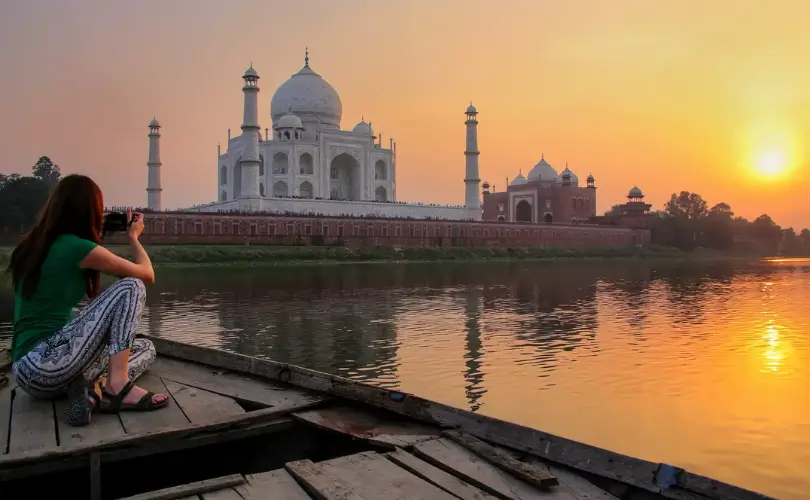
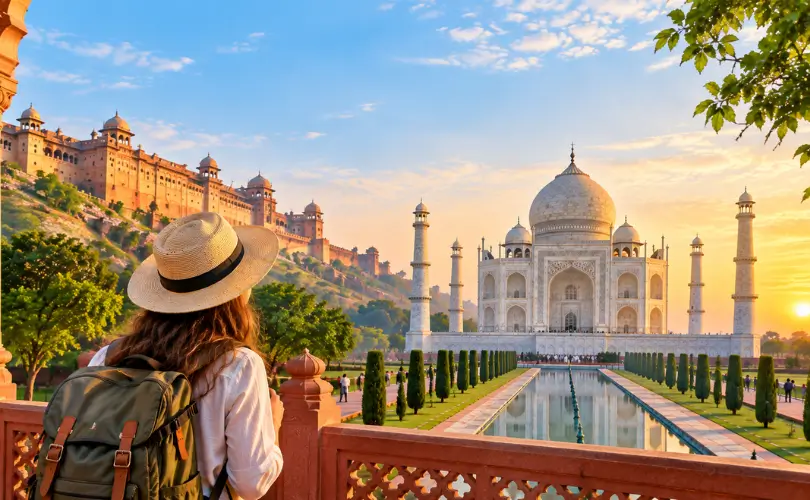
Travelers searching for a Taj Mahal viewpoint in Agra often focus exclusively on rooftop restaurants, but one of the most historically appropriate perspectives lies across the Yamuna River at Mehtab Bagh. The garden occupies the riverbank opposite the Taj Mahal and offers a direct relationship with the monument without requiring another entry into the main Taj complex.
Mehtab Bagh is associated with the Mughal tradition of carefully structured riverfront gardens. Its position becomes particularly interesting when viewed in relation to the Taj Mahal. From the garden side, visitors can appreciate the monument as part of a broader riverside landscape rather than only as a building approached through its formal southern gateway.
The experience varies according to light, weather, river conditions and visibility. On a clear day, the white marble can change character as the sun moves lower. During hazy conditions, the monument may appear softer and less sharply defined. Photography expectations should therefore remain realistic; no location can guarantee a dramatic sunset every evening.
Allow roughly one hour for a relaxed visit, with additional time if photography is a priority. Visitors interested in evening light should arrive early enough to enter comfortably rather than reaching the gate at the last possible moment. Official opening hours and admission charges should be checked before arrival because monument access arrangements can change.
Mehtab Bagh is particularly useful for travelers spending two nights in Agra. A sensible day can include morning sightseeing elsewhere, a midday break and a late-afternoon visit to the garden. This avoids forcing every important Agra experience into the same early-morning period.
The site also gives visitors a better appreciation of the Yamuna's role in Mughal Agra. Modern road travel can make the river seem peripheral because cars move through the city on an entirely different network. Historically, however, the riverfront was central to the positioning of gardens, palaces and tombs.
Travelers sometimes hear stories about Shah Jahan intending to construct a black-marble counterpart to the Taj Mahal across the river. Such stories have become deeply embedded in popular tourism narratives, but visitors should distinguish romantic legends from firmly established historical evidence. The actual value of Mehtab Bagh does not depend on a dramatic legend. Its landscape, archaeological importance and visual relationship with the Taj Mahal are enough.
For a private Agra tour, Mehtab Bagh is easy to combine with Itmad-ud-Daulah because both lie on the eastern side of the Yamuna. A driver can structure these stops together and reduce unnecessary backtracking. Travelers moving independently should account for road distances rather than assuming that two places appearing close across the river are necessarily a short drive apart.
The garden is also a useful alternative for travelers who want another Taj Mahal view without paying for or repeating the complete main-monument visit. It does not replace seeing the Taj Mahal from inside the complex, but it provides a completely different perspective.
Around the wider Agra area, Akbar's Tomb at Sikandra is among the most historically important places frequently omitted from short Golden Triangle itineraries. The tomb belongs to Emperor Akbar, one of the most influential Mughal rulers, whose reign transformed the empire politically, administratively and architecturally.
Sikandra lies away from the immediate Taj Mahal area, so it requires intentional scheduling. That extra effort is worthwhile for visitors interested in the Mughal period because the monument provides a strong contrast with Shah Jahan's white-marble architectural world.
The complex is approached through an impressive monumental gateway decorated with geometric and floral designs. Red sandstone dominates much of the architecture, with marble used as an important decorative material rather than overwhelming the entire composition. The result feels visually connected to the architectural language associated with Akbar's period.
Visitors familiar with the Taj Mahal may immediately notice that Akbar's tomb follows a very different design philosophy. The structure is broader, lower and composed through multiple levels rather than being dominated by one enormous white-marble dome. That difference makes Sikandra particularly valuable on a Mughal architecture tour in Agra because it demonstrates that imperial tomb design was not based on a single formula.
The surrounding grounds add significantly to the experience. The tomb sits within a large garden enclosure, giving the complex a sense of scale that cannot be understood from photographs of the central structure alone. Wildlife can sometimes be seen in the grounds, though visitors should observe animals from an appropriate distance and avoid feeding them.
Travelers should allow approximately one to one-and-a-half hours for the complex. Anyone deeply interested in Mughal history may want longer because the gateway, exterior decoration, garden layout and tomb itself all deserve attention.
Sikandra can work especially well on a road itinerary when entering or leaving Agra depending on the direction of travel and the day's schedule. A private driver familiar with the city can position the visit efficiently rather than treating it as an isolated round trip from the Taj Mahal area.
Ticket prices and opening hours should be confirmed through current official monument information before the visit. International and domestic visitor rates can differ at protected monuments, so foreign travelers should not build a budget using an admission price quoted casually by a local resident or an outdated article.
Akbar's Tomb is not merely a secondary attraction for people who have extra time. For anyone interested in the historical story behind Delhi Agra Jaipur tourism, it provides direct architectural evidence of the emperor whose reign shaped much of the Mughal world later inherited by Jahangir and Shah Jahan.
Travelers who enjoy places that receive fewer visitors can consider Chini Ka Rauza, another Mughal-era tomb near the Yamuna. It is associated with Afzal Khan, a scholar, poet and official connected with Shah Jahan's court. The monument is particularly known for glazed tile decoration, giving it a visual identity distinct from Agra's better-known red sandstone and white-marble structures.
The site should be approached with the right expectations. It does not have the polished visitor experience, monumental scale or extensive preservation visible at the Taj Mahal. Its appeal comes from architectural detail, historical context and the opportunity to see a quieter part of Agra's Mughal landscape.
The term associated with its decorative identity refers to glazed tile work, and remnants of colored ornamentation remain an important reason for architectural enthusiasts to visit. These surfaces provide a reminder that Mughal buildings could use a broader decorative vocabulary than the marble inlay most international visitors associate with Agra.
A visit can generally be shorter than at Sikandra or Itmad-ud-Daulah. Approximately 30 to 45 minutes may be sufficient for many travelers, depending on access conditions and individual interest.
Chini Ka Rauza fits best into an itinerary already visiting the eastern side of the Yamuna. Combining it geographically with Itmad-ud-Daulah can make more sense than crossing the city solely for one short stop.
Its quieter atmosphere also provides a useful contrast with the intensity surrounding Agra's most famous attractions. At the Taj Mahal, visitors are often focused on security procedures, photography positions and crowds. At a lesser-known site, the experience can become more observational.
Travelers should remember that preservation conditions at secondary monuments can change, and access to particular areas may occasionally be restricted. Current local conditions should therefore be checked before making the site essential to a tightly timed itinerary.
For someone spending only a few hours in Agra, Chini Ka Rauza would not normally take priority over the Taj Mahal, Agra Fort or Itmad-ud-Daulah. For a traveler spending two days in the city and specifically seeking offbeat places in Agra, however, it adds another layer to the architectural story.
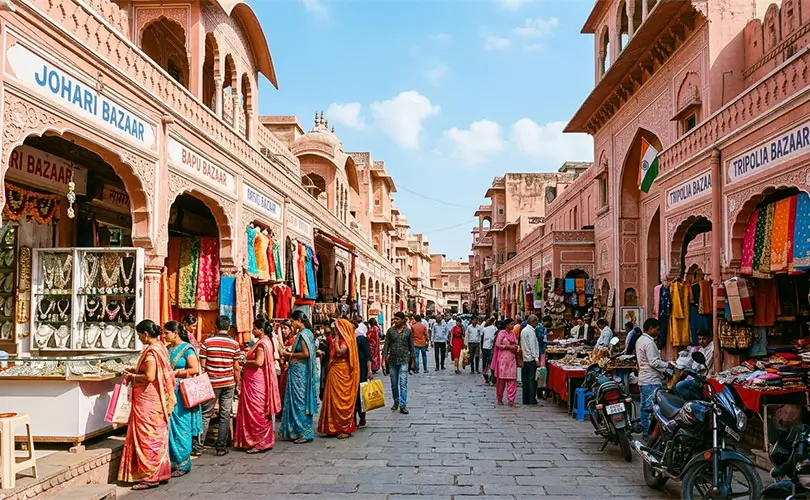
Not every worthwhile Agra experience needs an entrance ticket. Kinari Bazaar in Agra offers something monuments cannot provide: a view of the commercial life of the old city.
The market area consists of busy lanes filled with shops and local activity. Depending on the section and individual stores, visitors may encounter clothing, decorative items, footwear, jewelry-related products, fabrics, wedding goods and everyday merchandise. The attraction is not one famous object but the density of activity.
Travelers expecting a calm modern shopping center will find something completely different. Streets can be crowded, traffic can feel close and the sensory environment is intense. Comfortable walking shoes and minimal luggage make the experience easier.
This is also a place where practical market awareness matters. Keep phones and wallets secure in crowded lanes, ask prices before purchasing and negotiate politely where bargaining is appropriate. Expensive purchases should be made only when the traveler is comfortable with the seller, quality and documentation.
Agra is also associated with petha, a sweet for which the city is widely known. Travelers interested in local food can purchase it from established shops, with varieties ranging from simpler traditional versions to flavored options. Those carrying sweets onward to Jaipur or Delhi should ask about packaging and shelf life.
The old-city experience works best when travelers have enough time to walk rather than trying to see a market through a car window. A private vehicle can drop visitors at an appropriate point and collect them later because driving directly through the busiest lanes may be inefficient.
Kinari Bazaar also helps correct the impression that Agra exists solely for tourists. The city has a large resident population with its own commercial routines, religious life and neighborhood culture. Spending an hour in a functioning local market provides a different perspective from moving only between hotel entrances and monument gates.
For visitors seeking things to do in Agra besides the Taj Mahal, that contrast can be one of the most memorable parts of the stay.
From the marble artistry of Itmad-ud-Daulah and the imperial legacy of Sikandra to Mehtab Bagh, Agra Fort and the vibrant streets of Old Agra, discover the layers of history that surround the Taj Mahal.
Travelers visiting Sikandra can add Mariam-uz-Zamani's Tomb when time permits because it sits within the same broader historical landscape and receives far fewer visitors than Agra's major Mughal monuments. The tomb is associated with Mariam-uz-Zamani, the wife of Emperor Akbar and mother of Emperor Jahangir, making it relevant to travelers who want to follow the Mughal dynasty beyond its most famous rulers. The building has a very different character from the Taj Mahal and Itmad-ud-Daulah. Instead of emphasizing polished white marble, it uses a combination of red sandstone, decorative panels, arches and architectural details that reflect an earlier Mughal vocabulary.
The site is particularly worthwhile when included with Akbar's Tomb at Sikandra because the two places can be seen as part of one historical narrative rather than unrelated sightseeing stops. A traveler visiting only the Taj Mahal may leave Agra with the impression that Mughal history revolves mainly around Shah Jahan, but Sikandra and Mariam-uz-Zamani's Tomb expand that story into the generations that shaped the empire before the Taj Mahal was built.
The atmosphere is generally quieter than at Agra's headline monuments, which makes the site suitable for visitors who prefer slower heritage visits. Approximately 30 to 45 minutes is normally enough for a comfortable stop, although anyone studying Mughal architecture may want additional time for the exterior details and surrounding grounds. Current access conditions, ticket requirements and opening hours should be checked before visiting because arrangements at protected monuments can change.
This is not a monument that should replace the Taj Mahal or Agra Fort for a first-time visitor with only a few hours in the city. Its value appears when a traveler has already allowed enough time for Agra's essential attractions and wants a deeper historical route. For a two-day Agra heritage itinerary, pairing Sikandra with Mariam-uz-Zamani's Tomb creates a more complete picture of the imperial family while also moving the visitor away from the busiest tourist areas.
Agra's history is not limited to imperial tombs and palace complexes. Jama Masjid Agra introduces visitors to the religious and urban life of the historic city. Located close to the old commercial areas, the mosque can be combined naturally with a walk through nearby markets instead of treating it as an isolated monument reached only by car.
The mosque dates to the Mughal period and is associated with Jahanara Begum, the daughter of Emperor Shah Jahan. Its architecture uses red sandstone and decorative elements that give it a completely different atmosphere from the white-marble Taj Mahal. More importantly, it remains a religious place rather than functioning only as an archaeological attraction. Visitors should therefore behave with greater sensitivity than they might at a purely secular heritage site.
Appropriate clothing is important, footwear may need to be removed in designated areas, and photography should never interrupt prayer or religious activity. Travelers should follow instructions provided locally and avoid treating worshippers as photographic subjects without permission. A respectful visit may take approximately 30 to 45 minutes, although the surrounding old-city streets can easily extend the experience.
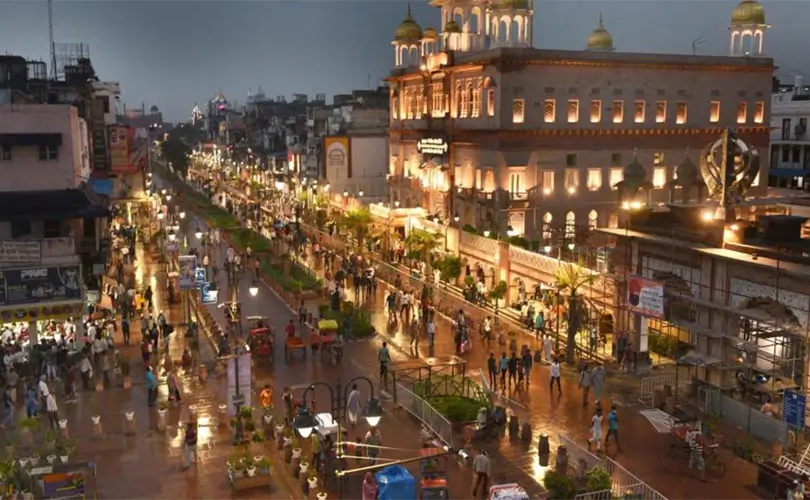
Jama Masjid becomes particularly interesting when linked with Kinari Bazaar because the transition from a Mughal-era religious structure into the commercial lanes of old Agra reveals how historic architecture continues to exist within a living city. The experience is very different from visiting a monument enclosed inside landscaped gardens. Traffic, shopkeepers, worshippers, pedestrians and local residents all occupy the same urban environment.
Travelers should expect congestion. A private vehicle may not always be the most convenient way to move through every narrow lane, so walking short sections can make the visit easier. Keep valuables secure and carry only what is required. Comfortable footwear is important because old-city surfaces can be uneven and busy.
Visitors interested in Old Agra sightseeing should allow enough time to absorb the area rather than arriving only for a quick photograph. The mosque, nearby streets and markets are strongest when experienced together because they reveal a part of Agra that cannot be seen from the manicured grounds of the Taj Mahal.
Travelers interested in landscape architecture can consider Ram Bagh Agra, one of the city's historically significant garden sites. Mughal gardens were not decorative spaces added casually around monuments; they reflected carefully organized ideas involving geometry, water, shade, pathways and controlled views. Agra's position along the Yamuna made garden culture particularly important during the Mughal period.
Ram Bagh is associated with the early Mughal era and is generally linked with Emperor Babur, whose preference for formal gardens became an important part of Mughal landscape design in India. The garden therefore offers a historical contrast with Mehtab Bagh and the later garden settings surrounding major tombs.
Visitors expecting perfectly preserved palace gardens should keep realistic expectations. The primary value of Ram Bagh lies in its history, spatial arrangement and connection with the evolution of Mughal gardens rather than the visual perfection associated with a modern ornamental park. Travelers with a strong interest in architecture, gardens and imperial history are likely to appreciate it more than visitors trying to fit every possible Agra attraction into a short stay.
A visit of approximately 45 minutes to one hour can work well, depending on current access and the traveler's level of interest. Earlier morning hours are generally more comfortable during warmer weather because garden sites involve outdoor walking and limited shade in some sections.
Ram Bagh can be placed within an eastern Agra route that also includes Itmad-ud-Daulah, Chini Ka Rauza and Mehtab Bagh. Grouping locations geographically can save significant road time because Agra's traffic may turn a poorly arranged itinerary into repeated cross-city transfers.
For visitors interested in the development of Mughal design, Ram Bagh adds an important layer. The Taj Mahal's famous garden does not exist in isolation; it belongs to a broader tradition that developed over generations. Seeing another Mughal garden helps travelers read the Taj Mahal complex more intelligently rather than viewing its landscaping only as a beautiful foreground for photographs.
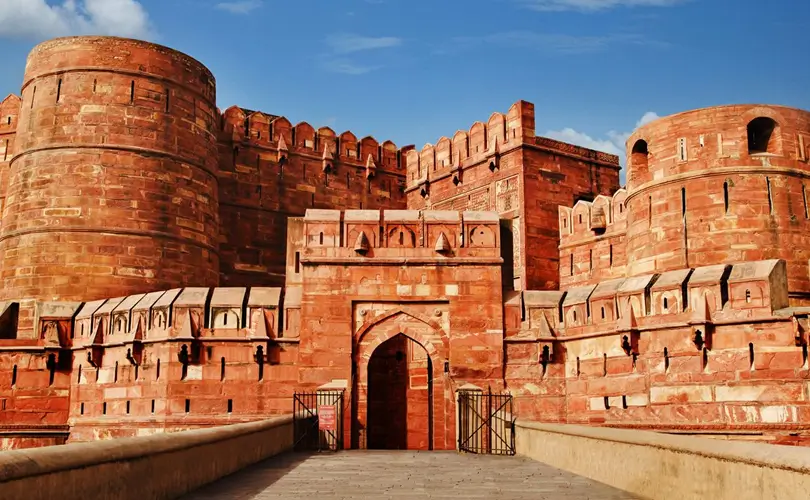
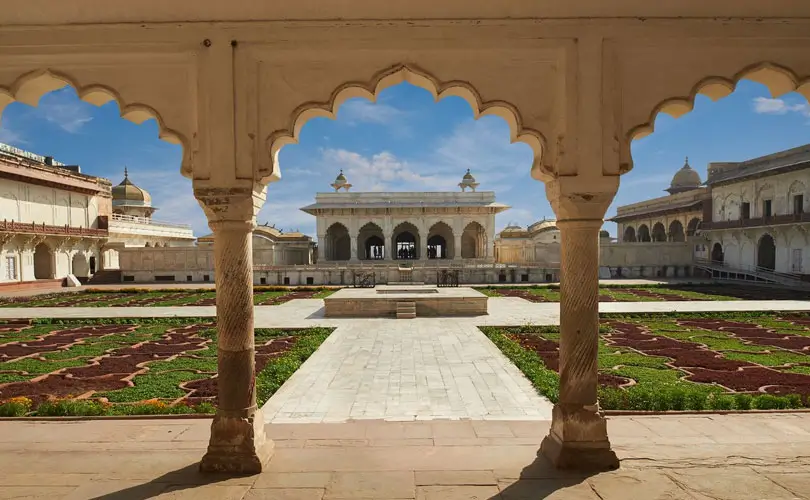
Agra Fort is not truly a hidden attraction, yet many travelers treat it as a secondary stop after the Taj Mahal and move through it too quickly. That is a mistake because Agra Fort is one of the best places in the city for seeing how Mughal political power, domestic life and architecture evolved across different reigns.
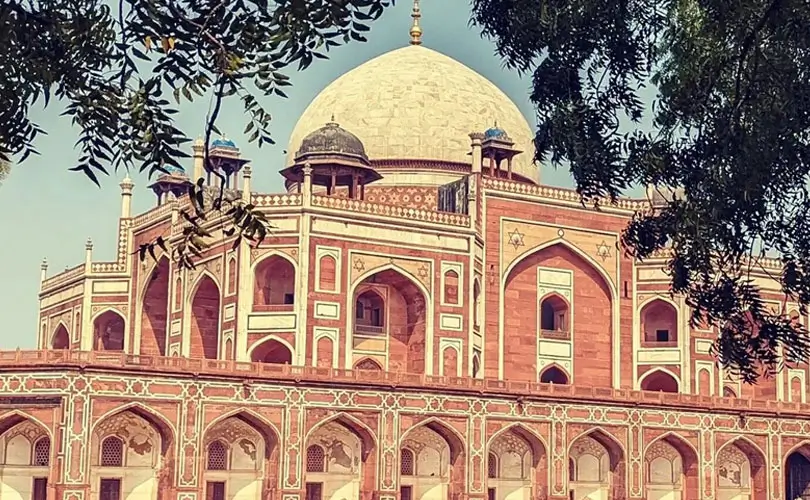
The fort occupies a large complex beside the Yamuna and contains architecture associated with several Mughal rulers. Red sandstone dominates many sections, while later marble additions reflect changing royal tastes. Visitors can see audience halls, courtyards, palace areas and river-facing viewpoints that connect the fort physically and visually with the wider Mughal city.
A rushed group may spend around an hour inside, but travelers who genuinely enjoy history should allow one-and-a-half to two hours. The additional time makes it possible to observe architectural changes instead of simply walking from one famous photo point to another.
One of the fort's strongest features is the relationship with the Taj Mahal. From certain sections, visitors can see the white marble monument in the distance across the river landscape. This view connects the two sites emotionally and historically, especially when discussing Shah Jahan's later years.
International visitors should check the current official admission fee before arrival because protected monument ticket charges can be revised. The Archaeological Survey of India also advises visitors to purchase tickets only from official counters, kiosks, approved online platforms or authorized QR systems, and to follow monument-specific photography and security instructions.
For travelers seeking places to visit in Agra other than the Taj Mahal, the fort should still remain close to the top of the list. The lesser-known sites are valuable because they expand the story, but Agra Fort provides the political and architectural foundation that helps many of those smaller places make sense.
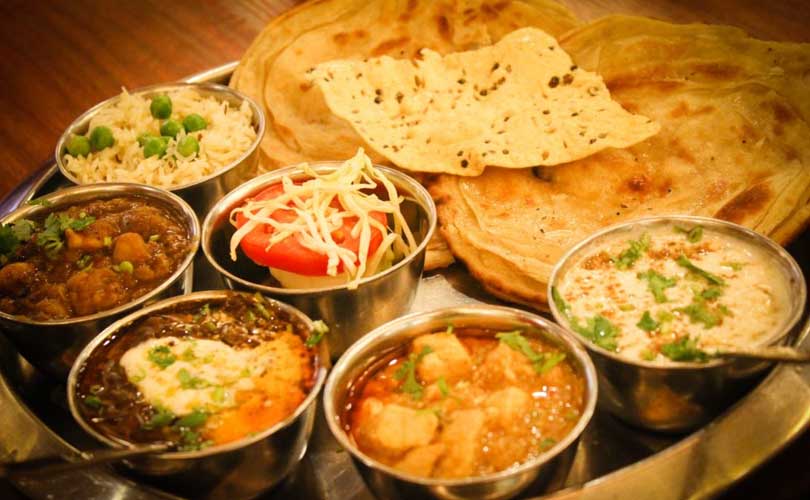
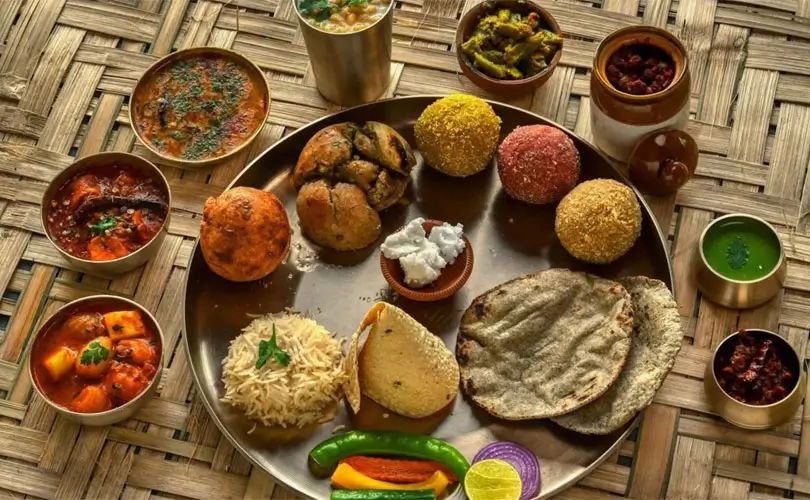
A practical Agra itinerary should include time for food rather than treating every meal as a quick break between monuments. The city has its own culinary identity, and visitors interested in what to eat in Agra can move beyond hotel buffets without needing to take unnecessary food-safety risks.
Agra's best-known sweet is petha, a translucent confection traditionally made from ash gourd and available in several varieties. Established sweet shops sell plain, saffron-flavored, dry and other versions. Travelers taking petha onward should ask about packaging, storage and shelf life because some varieties travel better than others.
Another popular local snack is bedai with potato curry, often eaten in the morning. Freshly prepared versions from busy, reputable outlets can provide a more local breakfast experience than a standard hotel buffet. The combination is rich and spicy, so international visitors who are still adjusting to Indian food may prefer a smaller portion at first.
Agra also has restaurants serving Mughlai dishes, including kebabs, rich gravies and breads associated with northern Indian cooking. Travelers looking for a higher-comfort dining experience can choose established restaurants with strong hygiene standards and recent reviews rather than selecting solely on proximity to a monument.
A realistic food budget can vary considerably. A simple local snack may cost only a few hundred rupees for two people, while a comfortable meal in an established restaurant can reach 800 to 1,500 per person depending on the dishes ordered. Premium hotel dining can move above 2,000 to 4,000 per person once drinks, taxes and service charges are included.
Food becomes more enjoyable when it fits naturally into the sightseeing route. Old-city snacks pair well with a market visit, while an evening meal near the hotel may be preferable after a long road journey. Travelers should avoid forcing multiple restaurant stops into the itinerary simply because they appear on a list of famous places.
A very fast Golden Triangle itinerary may give Agra only one day, but travelers interested in the city beyond the Taj Mahal should consider staying two nights. This does not mean spending two complete days moving from monument to monument. It means having enough time to separate major attractions from quieter experiences.
With one night, a traveler may arrive from Delhi, visit Agra Fort or another site in the afternoon, stay overnight, see the Taj Mahal early the next morning and continue toward Jaipur. This works for visitors whose priority is the core Golden Triangle route.
With two nights, the city changes. A traveler can visit the Taj Mahal without immediately checking out of the hotel, spend additional time at Itmad-ud-Daulah, reach Mehtab Bagh during favorable late-afternoon light, visit Sikandra and still have room for a market or food experience.
Photographers benefit particularly from the extra night because the Taj Mahal can be seen during different light conditions without compressing the entire Agra stay around one morning. History-focused travelers also gain enough time to connect Akbar, Jahangir and Shah Jahan through different monuments.
A sensible two-day Agra itinerary could place the Taj Mahal and Agra Fort on one day, then use the second day for Sikandra, Itmad-ud-Daulah, a riverside monument, market time and Mehtab Bagh. The actual order should depend on opening hours, weather, traffic and the traveler's interests.
Travelers continuing to Jaipur should also remember that Agra to Jaipur is a substantial road journey. Leaving late after an overloaded sightseeing day can make the transfer unnecessarily tiring. A better itinerary leaves enough time for Agra without turning the onward drive into a late-night obligation.
Agra offers excellent photography outside the Taj Mahal, but the strongest images often depend on timing rather than the number of sites visited. Agra photography locations such as Itmad-ud-Daulah, Mehtab Bagh and Sikandra have different visual strengths throughout the day.
Itmad-ud-Daulah benefits from softer morning or late-afternoon light because intricate marble and inlay details can appear flatter under harsh midday sun. Sikandra's red sandstone gateway and garden setting also work well when shadows provide more depth.
Mehtab Bagh is naturally associated with late-afternoon views toward the Taj Mahal, but visitors should not assume that sunset itself will always remain visible from every part of the site or that atmospheric conditions will cooperate. Haze can be common at certain times, and weather may significantly affect visibility.
Old Agra markets require a different photography style. Rather than searching for symmetrical architecture, photographers encounter street activity, signage, merchandise, vehicles and people. Permission should be requested before taking close portraits, especially inside shops or religious areas.
Tripods, professional filming equipment and commercial photography may be subject to monument-specific restrictions. ASI guidance requires visitors to follow written instructions and current rules on filming, videography and restricted photography areas.
A traveler carrying expensive camera equipment should also think practically about crowded markets. Use a secure strap, avoid changing lenses in the middle of dense pedestrian traffic and keep unused equipment inside a closed bag.
The strongest Agra attractions beyond the Taj Mahal include Agra Fort, Itmad-ud-Daulah, Mehtab Bagh, Akbar's Tomb at Sikandra, Chini Ka Rauza, Mariam-uz-Zamani's Tomb, Ram Bagh, Jama Masjid and the old-city market areas. The best combination depends on whether the traveler prefers architecture, photography, local markets or Mughal history.
Yes. Itmad-ud-Daulah is one of Agra's most rewarding smaller monuments because its white marble, inlay work and intimate scale show an important stage in Mughal architectural development before the Taj Mahal. Most visitors should allow around 45 minutes to one hour.
Mehtab Bagh is popular for late-afternoon views toward the Taj Mahal from across the Yamuna. Actual sunset conditions depend on weather, haze and seasonal light, so dramatic photographs are never guaranteed. Arriving before the final entry period allows enough time to find a comfortable viewpoint.
Approximately one to one-and-a-half hours is suitable for most visitors to Akbar's Tomb at Sikandra. The monumental gateway, garden and tomb structure all deserve time, particularly for visitors interested in Mughal history and red-sandstone architecture.
Several can be combined in one day, but trying to see every site creates an unnecessarily rushed schedule. A practical route can group Itmad-ud-Daulah, Chini Ka Rauza and Mehtab Bagh on the eastern side of the Yamuna, while Sikandra and Mariam-uz-Zamani's Tomb can be grouped separately.
One night is enough for travelers primarily interested in the Taj Mahal and Agra Fort. Two nights in Agra are better for visitors who want additional Mughal monuments, local markets, food stops, photography and a more relaxed pace before continuing toward Jaipur.
Yes, particularly for travelers interested in local markets in Agra rather than only monuments. The area offers clothing, decorative goods, everyday market activity and access to the historic urban environment. Visitors should expect crowds, keep belongings secure and bargain politely when appropriate.
Agra is especially known for petha, while bedai with potato curry is a popular local breakfast or snack. The city also has restaurants serving Mughlai dishes and northern Indian food. International visitors should choose busy, reputable outlets and favor freshly prepared food.
Yes. A Golden Triangle tour with extra Agra sightseeing can easily include Itmad-ud-Daulah, Sikandra or Mehtab Bagh when the itinerary allows enough time. Travelers using a private car have greater flexibility because sites can be grouped by location rather than following a fixed coach schedule.
For most first-time visitors, Itmad-ud-Daulah is the strongest single addition after the Taj Mahal and Agra Fort. Its architectural quality, manageable size and connection with the development of Mughal marble decoration make it valuable even on a relatively short Agra stay.