Peak demand on the Delhi-Agra-Jaipur circuit is strongest through the cooler months, around major holiday periods, and during dates when weddings, festivals, conferences or long weekends tighten hotel and vehicle supply. The practical problem is rarely that every room or car disappears. The bigger issue is that the best-located rooms, experienced drivers, preferred vehicle categories and sensible sightseeing sequences become harder to secure together. This is the context in which Golden Triangle tour booking should be judged. A traveler is not buying a collection of isolated reservations; the quality of the trip depends on whether transport, hotel location, entry timing and human support work together. A couple arriving in Delhi may still find a hotel a few days before travel, yet the room can be far from the area they expected, the preferred SUV may have been allocated elsewhere, and a good local guide in Agra may already be committed to another early-morning assignment. That example shows why a practical decision should be based on the operating details rather than a headline promise.
For international visitors, the most useful question is often what happens between the visible parts of the trip. Who is monitoring the airport arrival? Who can move a pickup when immigration takes longer than expected? Who confirms the driver knows the correct hotel entrance? Who notices that a monument is closed on a particular day? Strong peak season India travel arrangements reduce these small points of friction. They do not remove spontaneity; they protect the parts that are difficult to repair after the day has started.
The same standard applies to private Golden Triangle tour. Ask for specifics in ordinary language. A professional answer should explain what is included, what is not included, which parts are fixed and which can change. It should not depend on vague phrases such as “everything will be taken care of.” Details such as pickup location, vehicle type, hotel address, guide status, entry requirements and support contacts are more useful than decorative promises.
A good travel decision also accounts for fatigue. Delhi, Agra and Jaipur can involve early starts, security checks, walking, traffic and several hours on the road. A choice that looks efficient on a spreadsheet may feel poor after an overnight flight. Build comfort into the decision by reducing unnecessary transfers, allowing realistic road time and keeping the most important visit at a time when the traveler is likely to enjoy it. This is especially relevant to Delhi Agra Jaipur tour, where the same route can feel relaxed or exhausting depending on the quality of the logistics.
A useful way to apply this to best time to book a golden triangle tour for peak season travel is to make the decision from the traveler's day backward. Start with the non-negotiable event, then allow enough time for transfer, security, check-in or rest. Confirm who owns each handoff. This prevents a common mistake in India travel: choosing each component separately and only later noticing that the timings conflict. For Golden Triangle tour booking, coordination is often more valuable than adding another optional stop. For private Golden Triangle tour, quality is visible in punctuality, accurate information and the willingness to correct a problem quickly.
Travelers should also keep expectations realistic. Road time is affected by city traffic, security restrictions and rest breaks. Hotel rooms can differ within the same category. A guide's value depends on knowledge and communication, not merely presence. A vehicle that is adequate on paper can be uncomfortable when luggage fills the cabin. The practical standard is therefore not perfection; it is whether the supplier has anticipated ordinary travel variables and communicated them clearly.
For fixed international flights, reserve the core ground arrangements early enough to receive named hotels or clearly stated hotel standards, vehicle category, pickup details and cancellation terms in writing. Keep optional shopping stops and minor sightseeing flexible rather than leaving the essential logistics unresolved. This is where the difference between a reservation and a dependable arrangement becomes clear. The traveler should be able to see a written chain of responsibility. If a service is being supplied by another company, that does not automatically make it poor, but the traveler should know who to contact when a change is needed.
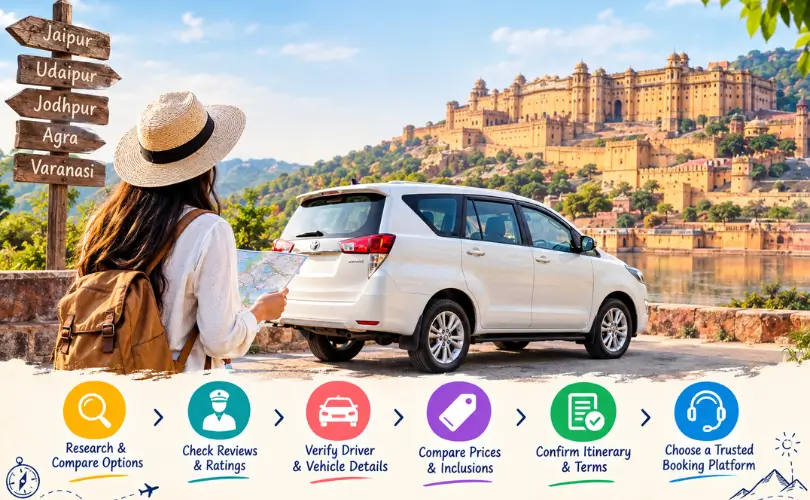
Practical comparison works best when like is compared with like. For Golden Triangle tour booking, do not compare one offer that names the hotel, vehicle and service scope with another that uses broad category labels and assume the cheaper or more expensive option is equivalent. The same applies to peak season India travel. Read the conditions that affect the real trip: cancellation, amendment procedure, pickup waiting time, luggage capacity, guide assignment, monument closure, check-in timing and emergency support.
Communication before confirmation is a useful rehearsal for communication during travel. Ask one or two detailed questions and notice whether the answer addresses them. A good operator or supplier should be willing to say “that is not included” when necessary. Clear limits are more trustworthy than automatic agreement to every request. If the traveler has mobility needs, dietary concerns, children, large luggage or a late flight, those details should be raised before confirmation rather than after the vehicle arrives.
For private Golden Triangle tour, written records matter. Keep the final service summary, payment receipt and key contact details available offline on the phone. International visitors should also keep hotel names and addresses accessible in case mobile data is unavailable. These simple habits make the journey easier without turning the holiday into an administrative exercise.
Golden Triangle Tours India can use this same standard when communicating with guests: give realistic timings, state the service scope, avoid hidden assumptions and make it easy for the traveler to know who is responsible. The goal is not to overload a guest with paperwork; it is to remove uncertainty from the moments where uncertainty causes stress.
A useful way to apply this to best time to book a golden triangle tour for peak season travel is to make the decision from the traveler's day backward. Start with the non-negotiable event, then allow enough time for transfer, security, check-in or rest. Confirm who owns each handoff. This prevents a common mistake in India travel: choosing each component separately and only later noticing that the timings conflict. For Golden Triangle tour booking, coordination is often more valuable than adding another optional stop. For private Golden Triangle tour, quality is visible in punctuality, accurate information and the willingness to correct a problem quickly.
Travelers should also keep expectations realistic. Road time is affected by city traffic, security restrictions and rest breaks. Hotel rooms can differ within the same category. A guide's value depends on knowledge and communication, not merely presence. A vehicle that is adequate on paper can be uncomfortable when luggage fills the cabin. The practical standard is therefore not perfection; it is whether the supplier has anticipated ordinary travel variables and communicated them clearly.
The last check is whether the choice still makes sense when the day does not run perfectly. Traffic can be heavier than expected, a flight can be late, weather can change visibility, and a guest may simply want more rest. A robust Golden Triangle tour booking decision has enough flexibility to absorb normal travel disruption without creating a chain of missed appointments.
Travelers should also separate convenience from pressure. A recommendation from a hotel, driver, guide or online platform can be useful, but the guest should remain free to decline optional shopping, upgrades or extra stops. For peak season India travel, consent and clarity matter. If a stop is commercial, it should be described as such. If an entry ticket or guide is optional, that should be stated before the traveler reaches the gate.
Another useful test is whether the arrangement respects time. Long drives should include sensible breaks. Early starts should have a clear reason. Sightseeing should not be compressed merely to create space for retail stops. When a traveler has paid for private Golden Triangle tour, the service should be centered on the traveler's stated priorities. That is particularly important for first-time visitors, who may not know which changes are normal and which are being made for someone else's convenience.
Before the trip begins, read the final confirmation once from the perspective of the actual day: where do I meet the driver, what do I carry, how long will the transfer take, what is closed, who has my ticket, where will luggage be kept, and who do I call if something changes? If those questions have sensible answers, most avoidable friction has already been removed.
The strongest travel arrangements are often the least dramatic. The car arrives when expected, the room matches the description, the guide is properly identified, the guest knows what is optional, and support answers when needed. That quiet reliability is the standard travelers should seek when evaluating Delhi Agra Jaipur tour and related services in India.
A useful way to apply this to best time to book a golden triangle tour for peak season travel is to make the decision from the traveler's day backward. Start with the non-negotiable event, then allow enough time for transfer, security, check-in or rest. Confirm who owns each handoff. This prevents a common mistake in India travel: choosing each component separately and only later noticing that the timings conflict. For Golden Triangle tour booking, coordination is often more valuable than adding another optional stop. For private Golden Triangle tour, quality is visible in punctuality, accurate information and the willingness to correct a problem quickly.
Travelers should also keep expectations realistic. Road time is affected by city traffic, security restrictions and rest breaks. Hotel rooms can differ within the same category. A guide's value depends on knowledge and communication, not merely presence. A vehicle that is adequate on paper can be uncomfortable when luggage fills the cabin. The practical standard is therefore not perfection; it is whether the supplier has anticipated ordinary travel variables and communicated them clearly.
A good decision about best time to book a golden triangle tour for peak season travel should leave the traveler with fewer unanswered questions, not more. Confirm the parts that affect safety, timing and accountability, and keep optional choices flexible. For fixed international flights, reserve the core ground arrangements early enough to receive named hotels or clearly stated hotel standards, vehicle category, pickup details and cancellation terms in writing. Keep optional shopping stops and minor sightseeing flexible rather than leaving the essential logistics unresolved. Read the final confirmation carefully and keep it accessible during the trip.
For guests speaking with Golden Triangle Tours India, the same rule applies: ask direct questions and expect direct answers. A professional travel relationship works best when the traveler knows what has been reserved, what remains optional and who will respond if circumstances change. That is the practical foundation for a comfortable Delhi, Agra and Jaipur journey.
As soon as international travel dates are fixed, settle any part that affects scarce hotel rooms, specific vehicle categories, early-entry visits or named guides. Less important local choices can remain flexible.
No. Reviews are useful evidence, but they should be combined with written service details, a traceable business identity, clear communication and payment terms that match the company providing the service.
Not automatically. Private service gives more control over timing and stops, while shared service can suit travelers who prefer a fixed structure. The better fit depends on comfort, independence and the importance of flexibility.
Ask for the service scope, pickup details, vehicle or hotel category where relevant, cancellation terms, payment record, support contact and any important exclusions. Fixed arrangements should be stated clearly.
Normal travel changes can occur because of traffic, operational issues, weather or closures. A reliable supplier should explain the change, offer a reasonable alternative and keep the traveler informed rather than making silent substitutions.
They can be, especially when the company uses the property regularly, but travelers should still check recent independent reviews, location and room details. Ask for the actual hotel name whenever possible.
State in writing before arrival that shopping is not required. Repeat the preference to the guide or driver at the start of the day. Optional commercial stops should never be presented as compulsory sightseeing.
Usually they benefit from it because airport arrival, local transport practices and monument procedures are unfamiliar. Having core logistics confirmed reduces decisions during the most tiring part of the trip.
Contact the operating company immediately and describe the specific mismatch. Give the company a chance to correct it while the service is still in progress, and keep the written confirmation available.
Golden Triangle Tours India can be asked for a written proposal covering relevant ground services. Travelers should review the proposal, inclusions, exclusions and operating details before confirming, just as they should with any travel provider.