Money works differently on an India trip depending on where you are standing. A hotel in Delhi may accept an international credit card without hesitation, a restaurant in Jaipur may display a QR code at the counter, while a small shop near a local market may make cash the easiest option. That mix is one reason international travelers should know how money in India for tourists actually works before arriving.
The official currency is the Indian Rupee, commonly written as INR and represented by the ₹ symbol. Notes and coins are used throughout Delhi, Agra and Jaipur, but digital payments have become deeply embedded in everyday transactions. Cards remain useful at established hotels, restaurants, larger shops and many tourist businesses, while cash continues to matter for smaller purchases, tips and places where an international card may not work.
For someone taking a Golden Triangle trip, budgeting should cover much more than hotels and transportation. Monument tickets, meals, drinks, local transport, guide services, shopping, gratuities and personal expenses can change the actual cost considerably.
A traveler who understands these expenses can carry less unnecessary cash, avoid poor currency exchanges and make better decisions when comparing a modest trip with a premium private journey.
The Indian Rupee is the currency travelers should expect to use for ordinary purchases throughout the Golden Triangle. Prices at restaurants, shops, attractions and local services are normally quoted in rupees, even when an international hotel or tour company also displays prices in dollars, pounds or euros for convenience.
International visitors should avoid carrying an entire holiday budget as physical cash.
A sensible approach is to arrive with access to more than one payment method. That might mean an international credit card, a debit card, some foreign currency for exchange and a modest amount of Indian cash once available. If one card is blocked or an ATM refuses a transaction, another payment method prevents a small problem from affecting the day.
Foreign currency should be exchanged through an authorized foreign exchange dealer or money changer rather than an unknown individual offering an unusually attractive rate. Airports provide currency exchange facilities and can be useful when a traveler needs rupees immediately after landing, although travelers concerned about getting the best rate can compare the applicable rate and charges with authorized exchange facilities elsewhere.
Keep exchange receipts where appropriate, especially when dealing with substantial amounts.
Travelers bringing large amounts of foreign exchange into India should also know the declaration rules. Indian Customs guidance states that a Currency Declaration Form is not required when the aggregate value of foreign exchange in the form of currency notes, bank notes or travelers' cheques does not exceed US$10,000 or equivalent and the value of foreign currency notes alone does not exceed US$5,000 or equivalent. Above the applicable thresholds, declaration requirements become relevant.
For an ordinary one-week Delhi Agra Jaipur trip, there is rarely a practical reason to arrive carrying thousands of dollars in banknotes. ATMs, cards and digital-payment options make a mixed-payment strategy far more convenient.
Cash nevertheless remains useful.
A traveler may need ₹100 or ₹200 for a small purchase, bottled water, a modest tip or another low-value expense where using an international card is inconvenient. Keeping smaller denominations separately is more practical than repeatedly presenting large notes for minor purchases.
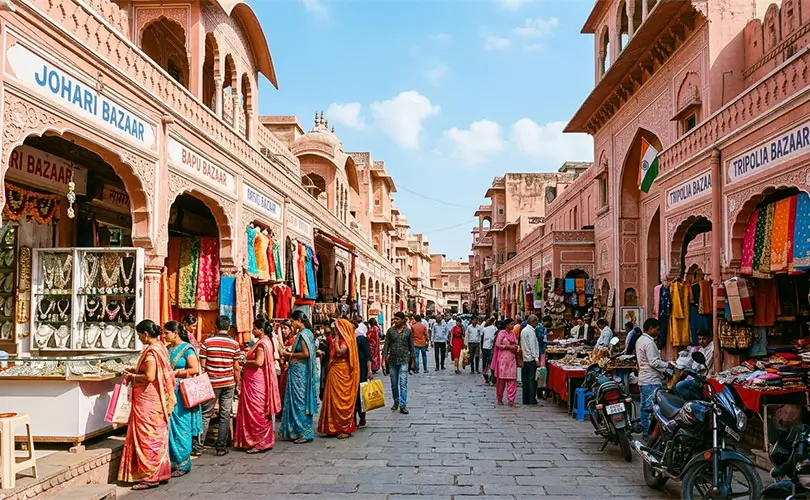
Consider a typical morning in Agra. A traveler may have already paid the hotel by card and the private car may be included in a tour package. The monument ticket might be purchased electronically, but a small purchase later in the day may still be easier with cash. In Jaipur, the same traveler could pay a restaurant bill by card and then buy inexpensive souvenirs from a small market seller using rupees.
That is the practical reality behind currency in India for tourists: there is no need to choose exclusively between cash and cards.
Use both.
Another important habit is counting cash discreetly after an exchange or ATM withdrawal rather than handling a thick stack of notes openly in a busy public place. Keep the majority of the day's money secured and carry only the amount likely to be needed during sightseeing.
Planning your India trip becomes easier when you know where your money is going. From hotels and private transportation to sightseeing, meals, guides and memorable local experiences.
International cards can be extremely useful during a Golden Triangle India tour, particularly at established hotels, quality restaurants, larger retail stores and businesses accustomed to foreign visitors. Visa and Mastercard acceptance is widespread in the formal tourism economy, although acceptance should never be assumed at every small merchant.
Before leaving home, travelers should check their bank's international transaction policy.
Three charges can affect what appears on the statement: the Indian merchant's transaction amount, a foreign transaction fee charged by the card issuer and the exchange rate used to convert rupees into the card's home currency. ATM withdrawals can create additional fees from the home bank or ATM network.
For that reason, withdrawing tiny amounts every few hours can be inefficient.
If an ATM charges a fee and the home bank also charges for international cash withdrawals, several small withdrawals may cost considerably more than fewer carefully managed withdrawals. Travelers should still avoid carrying excessive cash simply to save a minor banking charge.
Use ATMs attached to reputable banks or located in secure, well-trafficked areas whenever possible. Shield the keypad when entering a PIN, collect the card before leaving and check the account if anything unusual occurs.
Travelers may also encounter a payment terminal or ATM asking whether the transaction should be converted into dollars, pounds, euros or another home currency. This type of currency conversion can sometimes involve an unfavorable rate or additional markup. Read the screen carefully before accepting conversion rather than automatically pressing the highlighted option.
India's digital-payment environment deserves special attention because UPI payments in India are visible almost everywhere. QR codes appear in restaurants, stores and numerous other businesses.
International visitors should not assume that their ordinary foreign banking application can scan every Indian UPI QR code.
However, a specific facility called UPI One World is available for international visitors through participating providers. NPCI states that the service allows eligible international travelers to use a prepaid UPI-linked wallet for merchant payments in India without needing an Indian bank account or Indian mobile number.
The current NPCI instructions state that travelers can download a participating UPI One World application, complete onboarding and load the wallet using an international debit or credit card. Payments can then be made at compatible merchant QR codes. NPCI also states that UPI One World has zero transaction and onboarding fees, subject to the applicable provider conditions.
This can be particularly useful on a Delhi Agra Jaipur holiday because QR-based merchant payments are common in all three cities.
Imagine finishing dinner in Jaipur and seeing a UPI QR code at the counter. A traveler relying exclusively on a foreign credit card may need to ask whether the card terminal is available. Someone properly onboarded onto an eligible visitor UPI service may have another option.
UPI should still be treated as one payment method rather than the only one.
Keep an international card and some rupee cash available. Phones lose battery, networks occasionally fail and individual merchants can have payment problems. Redundancy is far more useful than trying to make every transaction through a single system.
There is no honest single answer to how much a Golden Triangle trip costs because two travelers can follow almost the same route and spend completely different amounts.
A traveler staying in straightforward hotels, eating mostly at inexpensive restaurants and limiting shopping may spend relatively little beyond the core tour cost. Another visitor staying at luxury heritage hotels, booking private guides, dining at premium restaurants and purchasing jewelry or textiles can spend several times as much.
The most useful method is to separate the budget into accommodation, transportation, sightseeing, food, guide services and personal spending.
For daily personal expenditure excluding prepaid hotels and long-distance transportation, a budget-conscious international visitor could reasonably keep approximately 2,500 - 4,000 per person per day available for meals, local expenses, modest sightseeing extras and small purchases.
A comfortable mid-range traveler could allow approximately 5,000- 8,000 per person per day beyond prepaid major services.
Someone seeking premium restaurants, cocktails at luxury hotels, frequent shopping and high-end experiences can easily spend 10,000 - 20,000 or considerably more per person per day.
These figures are practical budgeting ranges, not fixed prices.
Accommodation makes an even larger difference.
Basic but acceptable accommodation can sometimes be found at relatively low rates, while reliable mid-range hotels in Delhi, Agra and Jaipur commonly cost considerably more depending on location, season and demand. A traveler seeking established four-star or five-star accommodation should budget on the higher side rather than assuming that every hotel marketed as luxury offers the same standard.
For practical budgeting, an international traveler could think in broad nightly bands such as 3,000 - 6,000 for simpler accommodation, 6,000 - 12,000 for stronger mid-range options, and 12,000 - 30,000+ for premium accommodation. True luxury palace properties and top international hotels can cost substantially more, particularly during peak dates.
Food is more flexible.
A simple local meal can cost only a few hundred rupees, while a comfortable meal at a reputable tourist-oriented restaurant might run around ₹700-₹1,500 per person depending on what is ordered. Dinner at a premium hotel restaurant can easily reach 2,000 - 5,000+ per person, particularly when beverages and taxes are included.
The difference becomes clear over a six-day journey.
A couple spending 1,500 per person per day on food would spend roughly ₹18,000 across six days. At ₹4,000 per person per day, the same six-day food budget becomes ₹48,000.
Neither traveler is necessarily overspending. They are simply buying different experiences.
This is why a useful Golden Triangle travel budget needs ranges rather than one artificially precise number.
A first-time visitor can easily underestimate sightseeing costs because individual entrance tickets appear small compared with international airfare and hotel bills. Once several monuments are visited across three cities, however, the total becomes meaningful.
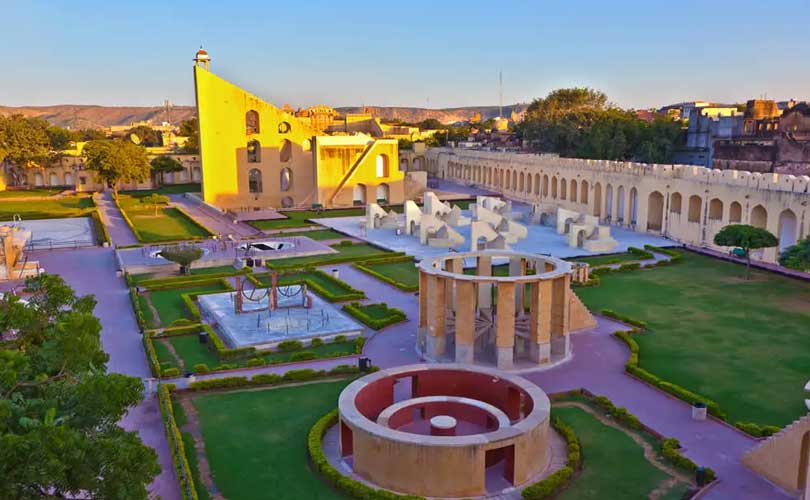
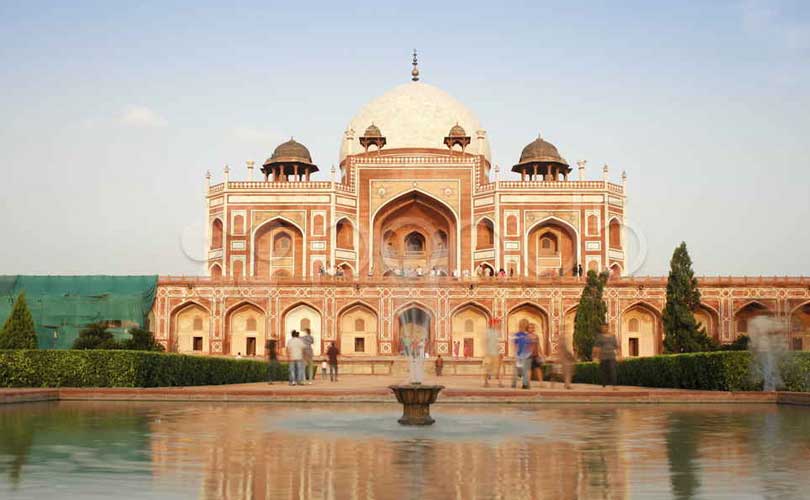
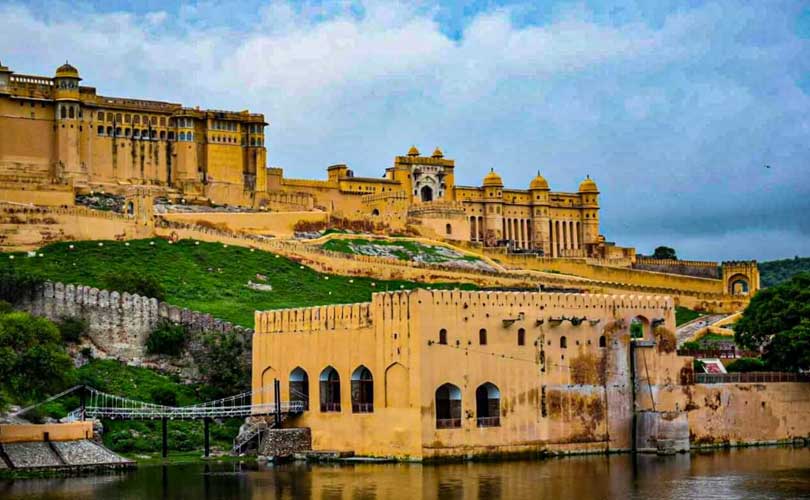
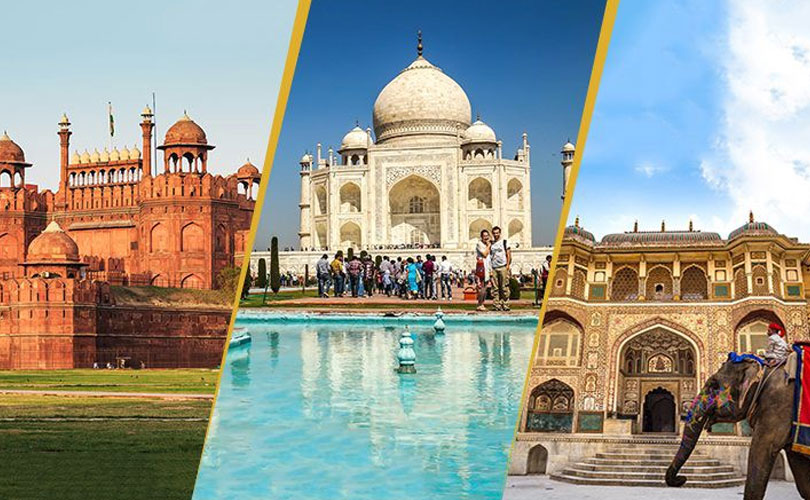
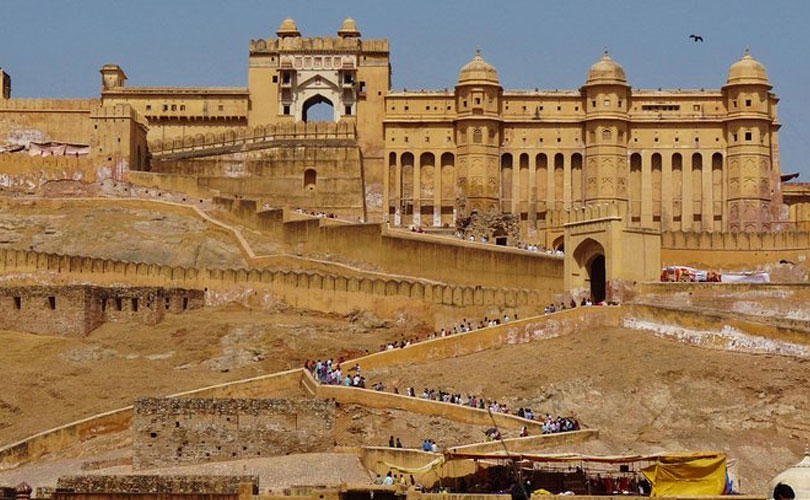
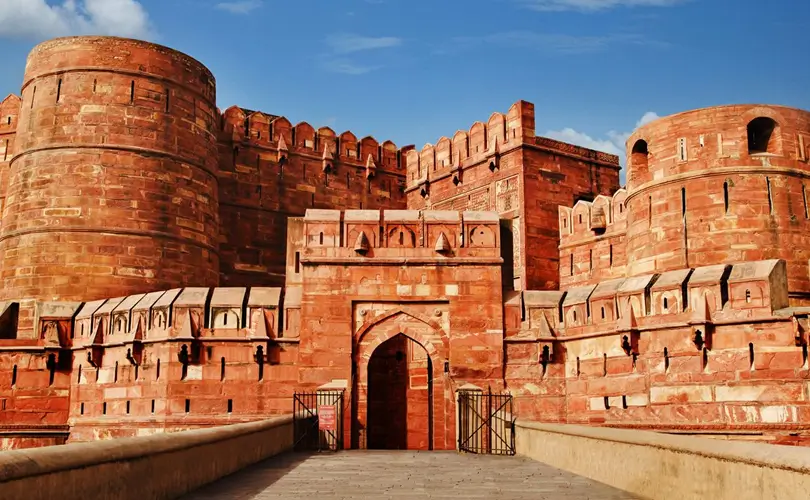
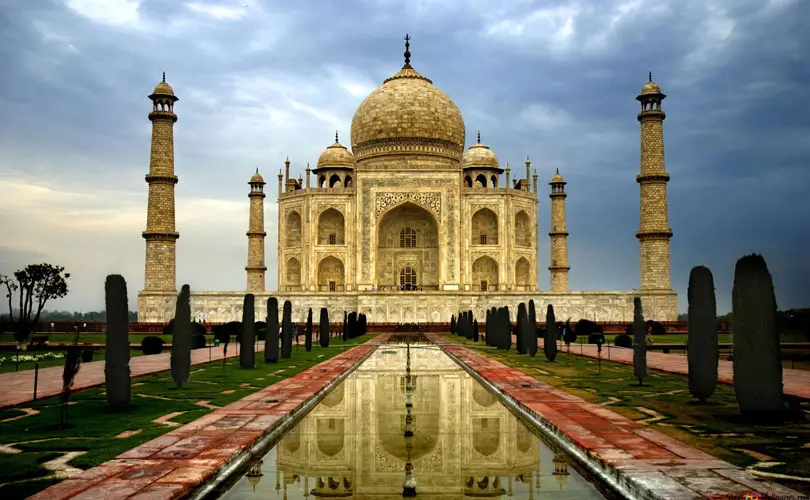
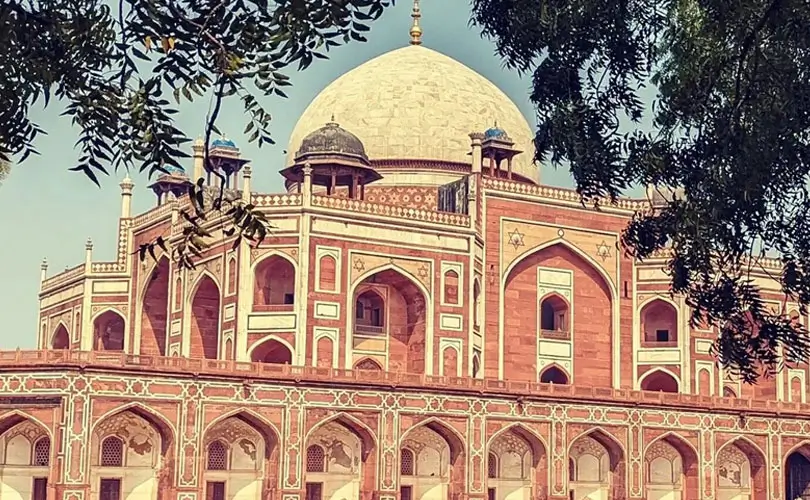
Delhi alone can include major ticketed attractions such as Qutub Minar, Humayun's Tomb and the Red Fort, depending on the itinerary. Agra normally places the Taj Mahal at the center of the visit, often alongside Agra Fort and other Mughal sites. Jaipur may include Amber Palace, City Palace, Jantar Mantar and additional attractions.
Foreign visitor ticket prices are frequently higher than domestic visitor prices, so an international traveler should never calculate a sightseeing budget from a local resident's ticket screenshot.
A realistic sightseeing allowance for the principal Golden Triangle attractions should therefore be kept separate from the daily food budget.
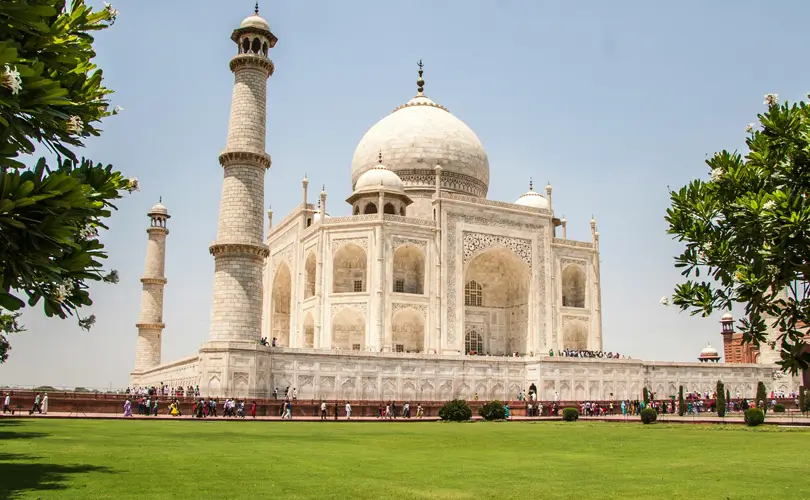
The Taj Mahal ticket price is a good example. International visitors have historically paid a higher admission rate than Indian citizens, and entry to the main mausoleum requires an additional ticket beyond general entry. Since monument fees can be revised, the actual rate should be checked on the authorized ticketing platform before the visit rather than relying on an old travel article.
Guide services create another variable.
A knowledgeable private guide can add considerable value in Old Delhi, at the Taj Mahal, Agra Fort or Jaipur's historic sites because the visitor receives context rather than simply moving through buildings. Guide pricing depends on the city, duration, language and service arrangement. Travelers who value detailed historical interpretation should allocate money for qualified guiding rather than selecting solely on the lowest price.
Transportation can be structured in several ways.
Someone buying a complete private Golden Triangle tour may already have an air-conditioned car, driver, fuel, parking, tolls and interstate charges included. Another traveler booking each segment separately will need to account for Delhi local transportation, Delhi-to-Agra travel, Agra sightseeing, Agra-to-Jaipur transport and the final Jaipur or Delhi transfer.
When comparing tour prices, ask what is actually included.
A cheap quotation that excludes tolls, parking, driver allowances or airport transfers may not remain cheap once the trip begins. A higher quotation that clearly includes the major road expenses can be easier to budget.
Shopping is the least predictable category.
A visitor who buys only postcards and small souvenirs may spend ₹1,000-₹3,000 during the entire trip. Someone interested in Jaipur jewelry, hand-block textiles, carpets, leather goods, marble work or custom clothing can spend tens of thousands of rupees or much more.
Set a separate India shopping budget before entering markets or showrooms. It prevents souvenir spending from quietly consuming money intended for meals, sightseeing or transportation.
The objective is not to restrict spending. It is to know which part of the holiday budget is paying for which experience.
A truly memorable India journey isn't defined by how much you spend—it's defined by how thoughtfully you spend it.
The total Golden Triangle tour cost depends heavily on hotel category, transportation standard, number of travelers, sightseeing preferences, restaurant choices and shopping habits. A traveler should therefore be cautious when a website presents one figure as the normal cost of a Delhi, Agra and Jaipur holiday.
A useful budget begins with the type of trip the traveler actually wants.
A cost-conscious visitor using straightforward hotels, trains or economical private transportation and inexpensive restaurants can keep expenses relatively controlled. A couple seeking clean accommodation, dependable private transportation and comfortable restaurants will need a larger budget. At the premium end, heritage hotels, luxury properties, private guides, high-end dining and upgraded vehicles can increase the total considerably.
For a typical six-day Golden Triangle journey, a budget traveler might allocate approximately 30,000 - 50,000 per person, excluding international flights and major shopping. This range assumes economical accommodation, controlled food spending and relatively modest transportation arrangements.
A more comfortable mid-range Golden Triangle budget can fall around 55,000 - 90,000 per person for a six-day journey. This provides more room for reliable hotels, private road transportation, established restaurants, major monument tickets and guided sightseeing.
A premium traveler should consider approximately 100,000 - 180,000+ per person for the same general duration. The upper limit can rise substantially if the itinerary includes famous luxury hotels, suites, premium dining, specialized private experiences or extensive shopping.
For two people traveling together, private transportation becomes more economical per person because the vehicle cost is shared. A solo traveler pays the entire car and driver cost alone, while a family of three or four can divide that cost across more passengers.
Season also affects the budget. Hotel rates in Delhi, Agra and Jaipur can increase significantly during high-demand periods, major holidays, wedding dates and popular winter travel months. Booking a premium Jaipur hotel during a busy period can cost much more than staying at the same property during a quieter period.
This is why a Golden Triangle India budget should include a contingency amount rather than allocating every rupee before arrival.
Keeping an additional 10-15% of the expected trip expenditure available is sensible. It can cover a better restaurant, an additional attraction, a transportation change, a larger-than-expected card charge or another legitimate expense without disturbing the rest of the journey.
A realistic example makes the numbers easier to interpret.
Consider two international travelers spending six days across Delhi, Agra and Jaipur. They want good mid-range accommodation, an air-conditioned private car with a professional driver, major sightseeing, comfortable restaurants and some modest shopping.
If accommodation averages 8,000 per room per night, five nights would cost approximately 40,000. Taxes or breakfast arrangements may affect the final hotel amount, so travelers should check whether quoted rates are inclusive.
Private transportation for the complete route can vary according to vehicle type, starting point, final drop-off, tolls, parking, interstate charges and driver allowance. Instead of assuming an unrealistically cheap rate, the couple could keep approximately 25,000 - 35,000 available for a properly structured multi-day private road arrangement in a comfortable standard vehicle. A larger SUV or premium vehicle can cost more.
Food at approximately 2,000 per person per day would produce a six-day food budget of about 24,000 for two people. This is enough for comfortable eating without assuming luxury hotel dining at every meal.
Major sightseeing tickets across the three cities can add several thousand rupees per international visitor. A couple should keep roughly 8,000 - 12,000 available as a practical sightseeing allowance rather than trying to calculate the entire journey around one monument ticket. Actual expenditure will depend on which sites are visited and current admission charges.
Private guide services can add another 6,000 - 12,000 or more across the trip depending on the number of guided days, languages required and service level.
Add perhaps 10,00- 20,000 for tips, local expenses, drinks, small purchases and modest souvenirs.
The resulting six-day expenditure for two travelers can therefore sit roughly around 113,000 - 143,000, before international flights and substantial shopping.
This is not a package quotation or fixed market rate. It is a practical illustration of how accommodation, transportation, meals and sightseeing combine into the cost of a Golden Triangle trip.
A traveler staying at ₹20,000-per-night hotels would immediately add ₹60,000 across five nights compared with the ₹8,000 example. Someone choosing luxury palace accommodation could add considerably more.
Likewise, a traveler eating inexpensively can reduce the food budget, while someone having dinner at premium restaurants every evening can easily double it.
The key is to calculate each major category separately.
International travelers frequently ask how much to tip in India because gratuity practices are less standardized than in some countries.
Tipping is not a substitute for an agreed service price. A driver, guide or hotel should quote the actual service cost, while a gratuity is an additional amount given when the traveler is satisfied with the service.
For a private driver working with travelers across several Golden Triangle days, approximately 500 - 1,000 per day from a couple or small traveling party can be a reasonable reference range for good service. Travelers can give more when a driver has provided exceptional assistance, handled unusually long days or consistently made the journey easier.
For a private local guide, around 500 - 1,000 for a good sightseeing day can serve as a practical reference, with higher amounts possible for excellent specialist service.
Hotel porters can generally be given a modest cash tip such as 100 - 200, depending on the amount of luggage and standard of property. Housekeeping staff can also be tipped according to the length of stay and quality of service.
Restaurants require a little more attention.
Some establishments include a service charge on the bill. Travelers should read the bill before automatically adding another percentage. Where no service charge is included and service has been good, a modest gratuity can be left according to the restaurant standard and personal preference.
Small rupee notes are particularly useful for these situations. A traveler carrying only 2,000 or 500 notes may find it awkward to give a 100 tip.
A sensible India tipping budget for a six-day private Golden Triangle journey could be approximately 4,000 - 8,000 per couple, depending on how many guides, drivers and hotel services are used. It is an allowance rather than a compulsory amount.
Shopping is part of the Golden Triangle experience for many visitors, but market spending requires a different mindset from paying a fixed hotel bill.
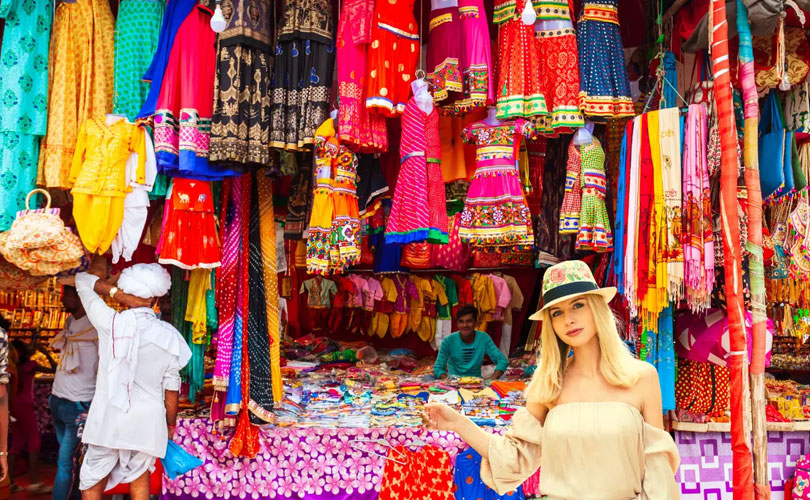
Delhi has major shopping areas ranging from formal malls to traditional markets. Agra is known for marble handicrafts, leather products and decorative items. Jaipur has a particularly strong reputation for gemstones, jewelry, textiles, block printing, carpets and handicrafts.
Prices in established branded shops may be fixed. Prices in traditional markets can sometimes be negotiable.
Bargaining should remain polite and realistic. A seller quoting 1,500 for an item does not mean that every buyer should immediately insist on paying 150. Ask the price, decide what the item is genuinely worth to you and negotiate calmly when bargaining is appropriate.
Cash can sometimes be convenient for smaller market transactions, while established shops may accept cards or UPI. International travelers making expensive purchases should request a proper invoice and check card receipts before leaving.
Jewelry deserves additional care.
Jaipur has a major gemstone and jewelry industry, but a tourist should not purchase an expensive stone simply because a seller says it is an investment. If authenticity, certification, metal purity or resale value matters, buy from a reputable business and request appropriate documentation.
The same principle applies to carpets, antiques and high-value handicrafts.
Travelers should be especially careful when someone claims that an item can easily be resold abroad for a guaranteed profit. A holiday purchase should be made because the buyer wants the item, not because of an unsolicited promise of investment returns.
For ordinary souvenirs, set a daily limit. A traveler with a 10,000 shopping budget might reserve 3,000 for Delhi, 2,000 for Agra and 5,000 for Jaipur if Jaipur is the main shopping destination. Another traveler may decide to spend nothing until reaching Jaipur.
Either method is better than making untracked purchases throughout the trip.
Delhi, Agra and Jaipur receive large numbers of domestic and international visitors, and ordinary travel precautions are more useful than carrying large amounts of emergency cash.
Do not keep every card and every rupee in one wallet.
A traveler carrying two international cards can keep the primary card accessible and store the backup separately in a secure place. The same applies to cash. Losing one wallet should not mean losing access to the entire holiday budget.
Hotel safes can be useful for passports, backup cards and excess cash when appropriate, although travelers should still maintain secure digital copies of important documents.
Avoid displaying large quantities of currency in public. If an ATM dispenses a substantial amount, put the money away before walking into a crowded market.
Use bank ATMs or machines in secure locations. If a card is retained by an ATM, contact the bank or card issuer promptly rather than accepting assistance from an unknown person who claims to know how to retrieve it.
Card transaction alerts are valuable. A mobile notification showing the rupee amount charged allows a traveler to identify an incorrect or duplicate transaction quickly.
Public Wi-Fi should also be treated carefully when accessing banking applications. Mobile data or another trusted connection is preferable for sensitive financial activity.
A Golden Triangle money strategy should also include emergency access to funds. Keep the bank's international contact number available separately from the card. Know how to freeze a card through the banking application and make sure the registered phone can receive any security codes required during international transactions.
These steps take only a few minutes before departure but can save hours if a payment problem occurs.
The most common budgeting mistake is converting too much cash at once without comparing the rate and charges.
The second is carrying too little payment flexibility.
A traveler who arrives with one card and no alternative may face difficulty if that card is declined. Someone carrying only cash creates a different security problem. A mixture of Indian Rupees, international cards and an eligible digital-payment option provides better flexibility.
Another mistake is accepting every currency conversion offered by a payment terminal without checking the rate. When a machine offers to charge a foreign card in the traveler's home currency, read the terms rather than assuming that familiarity means a better deal.
Travelers also underestimate taxes and service charges.
A restaurant menu price, hotel quotation or transport offer may not always represent the final payable amount unless taxes and inclusions are clearly stated. Ask whether a quotation is inclusive before making comparisons.
Another major error is comparing two private tours only by the headline price.
Suppose one operator quotes ₹30,000 and another quotes ₹38,000. The cheaper offer may initially look better. If it later adds tolls, parking, driver allowance, airport pickup and taxes, the final cost may exceed the second quotation.
Compare inclusions, not just numbers.
Shopping commissions can also affect spending. Travelers should never feel obligated to buy something because a driver, guide or another person recommends a store. A genuine sightseeing day should not turn into a sequence of unwanted shopping stops.
Finally, avoid building the budget around the lowest possible online price for every service. A reliable vehicle, clean hotel and knowledgeable guide have real operating costs. The cheapest option is not automatically the best value, particularly for a first visit to India.
Airport exchange facilities are convenient when immediate rupees are required after landing. Travelers exchanging a larger amount can compare rates and charges with authorized money changers or other legitimate exchange options rather than converting the entire holiday budget automatically at the airport.
The official currency is the Indian Rupee (INR), represented by the ₹ symbol. The same currency is used throughout Delhi, Agra, Jaipur and the rest of India.
Yes, but there is usually no reason to carry the entire travel budget in cash. Keep a modest amount of rupees for smaller purchases, tips and situations where cards are inconvenient, while using secure card or digital-payment options for suitable transactions.
International cards are commonly accepted by established hotels, larger restaurants, major stores and many tourism businesses. Acceptance is less predictable at small merchants. Carry a backup payment method in case a card is declined.
Eligible international visitors can use services such as UPI One World through participating providers after completing the required onboarding. The service allows merchant QR payments without requiring a conventional Indian bank account. Availability and provider requirements should be checked before relying on it.
There is no fixed amount, but approximately ₹2,000-₹5,000 in accessible cash can be sufficient for many travelers whose hotels, transportation and major expenses are already paid or payable by card. Higher spending days may require more.
A broad reference range might be around ₹30,000-₹50,000 per person for economical travel, ₹55,000-₹90,000 for comfortable mid-range travel, and ₹100,000-₹180,000+ for premium travel, excluding international flights and substantial shopping. Actual costs depend heavily on accommodation and transportation choices.
A traveler eating at straightforward restaurants may manage with roughly ₹1,000-₹1,500 per person per day, while approximately ₹2,000-₹3,500 provides more flexibility for comfortable restaurants. Premium hotel dining can push daily food expenditure above ₹5,000 per person.
For good service on a multi-day private trip, approximately ₹500-₹1,000 per day from a couple or small party is a useful reference range. Tipping remains discretionary and can reflect service quality and the circumstances of the journey.
It can be inexpensive or extremely expensive depending on what is purchased. Small handicrafts may cost only a few hundred rupees, while jewelry, carpets, gemstones and premium textiles can cost tens of thousands of rupees or more. Set a separate Golden Triangle shopping budget and request proper documentation for high-value purchases.
A successful Golden Triangle travel budget is not about choosing the cheapest hotel, meal or vehicle. It is about knowing where money will be spent and keeping enough flexibility to pay comfortably without carrying unnecessary cash.
For most international visitors, the strongest combination is a modest amount of Indian Rupees, at least two usable international cards and access to a suitable digital-payment option where available. Accommodation, transportation, monument tickets, meals, guide services, tips and shopping should be treated as separate budget categories.
That approach makes the numbers easier to control while allowing Delhi, Agra and Jaipur to remain the focus of the journey rather than constant calculations about the next payment.